
Deputy Coordinating Minister Says Halal Certification Could Protect the Domestic Market
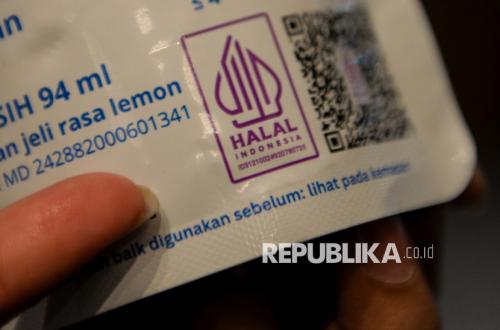
JAKARTA — The government says the implementation of halal certification can be a strategy for protecting the domestic market. However, the policy must take account of the readiness of businesses in Indonesia. The government will therefore consider both businesses’ preparedness and the capacity of the Halal Product Assurance Agency (BPJPH) as it implements mandatory halal certification through 17 October 2026.
Deputy Coordinating Minister for Economic Affairs Dradjad Hari Wibowo said product standards are commonly applied in international trade, but must be implemented fairly and with consideration for businesses’ circumstances.
“So, yes, it becomes a barrier. But every country uses standards. If those standards are fair and applied justly, there is no problem,” Dradjad said after the opening of the 2026 Indonesia Sharia Economic Festival (ISEF) at the Jakarta International Convention Center (JICC) on Wednesday (14 October 2026).
Dradjad cited sustainability standards in Europe and biological standards in the United States as examples. Every country, he said, has its own trade standards. The challenge is to ensure that their implementation does not overlook businesses’ readiness.
He said the government would continue with mandatory halal certification while taking into account the readiness of businesses and BPJPH’s systems. Implementation would be phased in accordance with conditions on the ground.
“Implementation will be adjusted to readiness — both the readiness of businesses and that of BPJPH’s systems,” Dradjad said.
BPJPH is also providing a quota of 1.35 million free halal certificates for micro and small enterprises through its Free Halal Certification programme (SEHATI). The scheme is intended to help businesses meet certification requirements.
Strengthening halal certification is also part of a strategy to boost the competitiveness of national industry. Halal value chains accounted for around 24.8 per cent of gross domestic product (GDP), equivalent to Rp1,524 trillion, in the fourth quarter of 2025. Indonesia’s halal product exports reached US$63.4 billion in 2025, up 23 per cent from the previous year.
As of 14 October 2026, Indonesia had 123 mutual recognition arrangements (MRAs) on halal certification with foreign halal bodies, covering 43 countries. The agreements form part of efforts to expand international recognition of Indonesian halal certification.
Source: jawawa.id (https://jawawa.id/newsitem/deputy-coordinating-minister-says-halal-certification-could-protect-the-domestic-market-1792032673)
Originally published by Republika (https://halalhub.republika.co.id/berita/tmxf5m490/wamenko-perekonomian-ungkap-sertifikasi-halal-bisa-jadi-alat-proteksi-pasar-ini-penjelasannya), translated from Indonesian