
Deputy Coordinating Minister Otto: Criminal Law Reform Emphasises Democratisation Mission
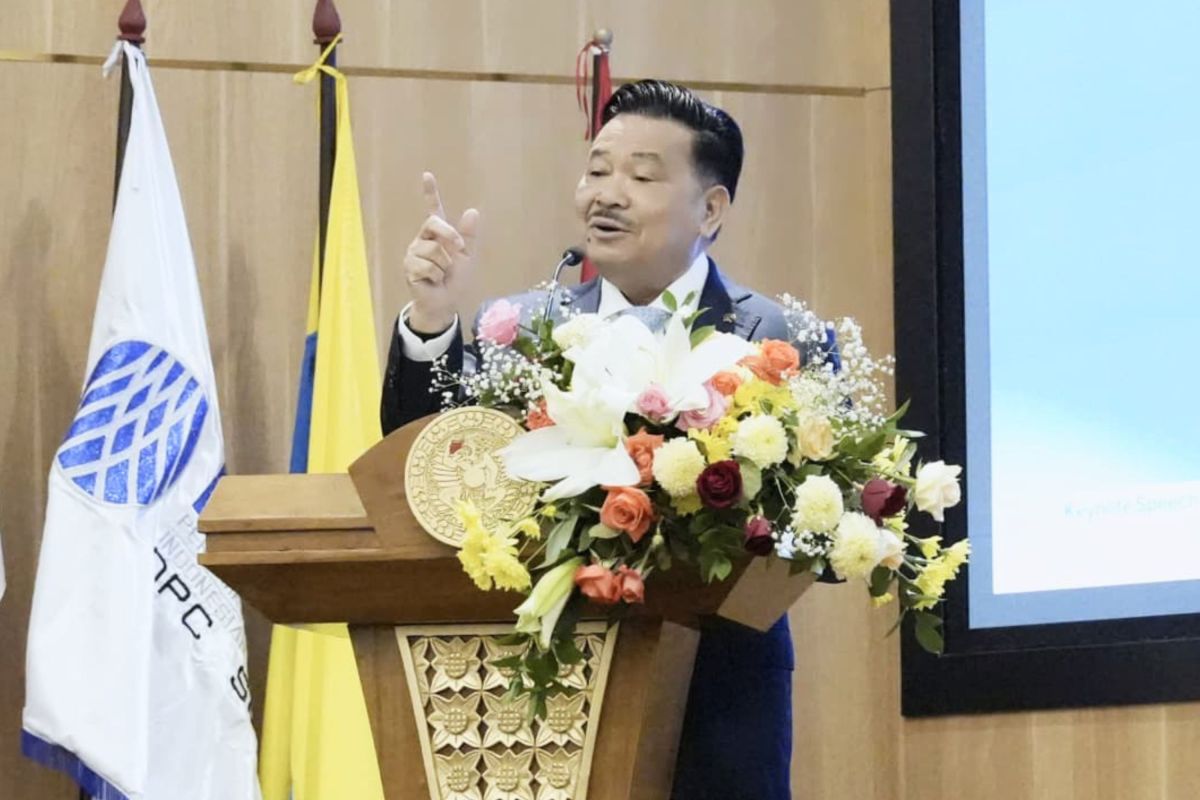
Jakarta (ANTARA) – Deputy Coordinating Minister for Legal Affairs, Human Rights, Immigration and Corrections, Otto Hasibuan, said the reform of criminal law through the new Criminal Code (KUHP) and Criminal Procedure Code (KUHAP) emphasises the mission of democratisation.
Otto said democratisation is pursued by placing the protection of human rights as an essential part of criminal law reform.
“The new criminal justice system must increasingly guarantee respect for human dignity and the rights of every person in the legal process,” Otto said when contacted in Jakarta on Monday.
Earlier, on Friday (4/9), Otto Hasibuan spoke at a national seminar at Airlangga University in Surabaya, East Java.
Beyond democratisation, he noted that there are three other core missions in the criminal law reform that serve as an important foundation for understanding the direction and new paradigm of national criminal law, namely decolonisation, consolidation of national criminal law, and adaptation and harmonisation.
Otto explained that the decolonisation mission is aimed at freeing Indonesian criminal law from colonial mindsets and values that are no longer relevant to the development of society and the needs of the Indonesian nation.
Meanwhile, the consolidation of national criminal law is intended to organise the various criminal provisions that have until now been scattered across numerous regulations.
As for the adaptation and harmonisation mission, Otto said it is directed at enabling Indonesian criminal law to keep pace with legal developments, including international law, whilst retaining national characteristics and values.
He added that these four missions simultaneously bring about a paradigm shift in Indonesia’s criminal justice system.
The Deputy Coordinating Minister said the previous approach, which was oriented towards the crime control model, is now shifting towards the due process model.
Under the new paradigm, law enforcement is no longer solely oriented towards the effectiveness of handling criminal acts, but must also guarantee fair proceedings and the protection of human rights.
In addition, Otto said, the paradigm shift is also reflected in the objectives of sentencing.
“Criminal law is no longer placed merely as an instrument of retribution, but is directed towards restoring social order and balance through a corrective paradigm, social reintegration, and restorative justice,” he said.
Otto stated that the corrective paradigm positions sentencing as a means of reforming and rehabilitating offenders so they can return to life in society.
Social reintegration, meanwhile, provides space for a person who has served their sentence to be accepted back into community life.
The Deputy Coordinating Minister said restorative justice pays attention not only to offenders but also to the restoration of victims’ rights and sense of justice.
He also cautioned that its implementation must be carried out carefully so that it does not drift towards purely transactional settlements.
On the other hand, he continued, the new paradigm also positions imprisonment as a last resort or ultimum remedium, with the new Criminal Code providing room for alternative sentencing, including supervised sentences, community service, and fines.
According to Otto, these changes show that the reform of the Criminal Code and the Criminal Procedure Code concerns not only changes to legal norms, but also brings a change in how criminal law, offenders, victims, and the purposes of sentencing are viewed.
“Our greatest challenge now lies no longer in formulating the norms, but in implementing them,” Otto asserted.
To support that implementation, the government is mandated to issue more than 25 implementing regulations, including a Draft Government Regulation (RPP) on the Implementation of the Criminal Procedure Code covering 22 technical matters, an RPP on Restorative Justice that cuts across institutions, and a Presidential Regulation on the Technology-Based Criminal Justice System (SPPT-TI).
He expressed hope that all stakeholders can understand and adapt to this new vision, mission, and paradigm so that the reform of the Criminal Code and Criminal Procedure Code can be realised optimally within the national criminal justice system.
Source: jawawa.id (https://jawawa.id/newsitem/deputy-coordinating-minister-otto-criminal-law-reform-emphasises-democratisation-mission-1788771715)
Originally published by Antara (Indonesian) (https://www.antaranews.com/berita/5729585/wamenko-otto-pembaruan-hukum-pidana-tekankan-misi-demokratisasi), translated from Indonesian