
Deputy Coordinating Minister Highlights Indonesia’s Investment Challenge: Links Between MSMEs and Big Corporations Remain Weak
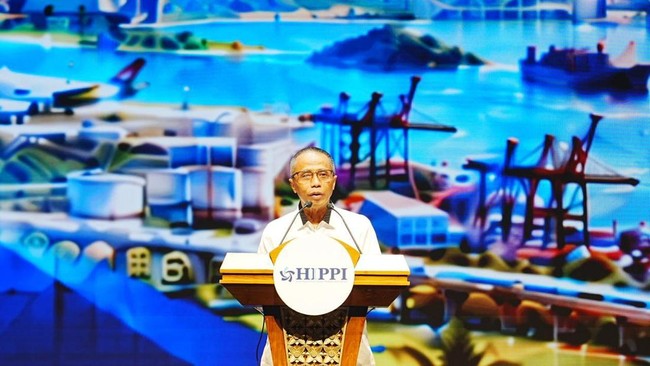
Jakarta, CNBC Indonesia – The government has highlighted weak links between large-scale investment, mid-sized industries and micro, small and medium-sized enterprises (MSMEs). Such connections are one of the keys to ensuring that investment growth benefits the wider national economy.
Deputy Coordinating Minister for Economic Affairs Dradjad Hari Wibowo said Indonesia needed to strengthen ties between businesses of different sizes and across industries so that economic opportunities were not enjoyed only by large companies.
He said Indonesia must become a production base, rather than merely a market for products sold domestically.
“Business opportunities are widespread, and Indonesia needs to become a production base, not just a market. What we need to improve is the link between large-scale investment, mid-sized investment and small and micro businesses,” Dradjad said at the opening of the third national working meeting of the Indonesian Indigenous Entrepreneurs Association (HIPPI) in Jakarta on Monday (12 October 2026).
He said links between businesses of different sizes and across industries remained a challenge that needed to be addressed collectively.
Strengthening these links is considered important to ensure that large investments create opportunities for local businesses, whether through supply chains, production partnerships or wider market access.
Amid global uncertainty, the government is also encouraging domestic production and the competitiveness of local businesses. Measures include maximising the use of domestic products, including through government spending, simplifying Domestic Component Level (TKDN) certification, and strengthening collaboration between the government, industry and financing institutions.
Downstreaming investment reaches Rp300 trillion
The government recorded downstreaming investment of Rp300.1 trillion in the first half of 2026. The figure rose by 6.9 per cent and accounted for 29.7 per cent of total national investment.
However, the substantial investment must be followed by faster conversion into production activity and greater involvement of local businesses. To this end, the government is accelerating efforts to resolve business obstacles through deregulation and debureaucratisation, as well as reviews of barriers associated with each Harmonized System (HS) code.
By 22 September 2026, 135 of the 190 complaints submitted by businesses to the Task Force for Accelerating Government Programmes to Support Economic Growth had been resolved.
The 129 complaints concerned investment worth more than Rp625 trillion and around 31,000 jobs.
In addition to promoting investment, the government is seeking to expand access to international markets and increase the value added of exports. Indonesian exports remain dominated by several commodities, including palm oil, coal and ferroalloys.
The Indonesia-European Union Comprehensive Economic Partnership Agreement (CEPA) is expected to open access to nearly 15 per cent of the global market. Meanwhile, the Indonesia-Canada CEPA could add up to US$1.1 billion in exports.
Tariff negotiations with the United States are also said to have the potential to increase exports by up to US$2.3 billion a year, particularly for labour-intensive industries that employ around five million people.
Dradjad also stressed the importance of pairing access to finance with empowerment and guidance, enabling small businesses to develop and scale up.
He said the experience of businesses supported by PNM Mekaar showed that unsecured financing accompanied by guidance could help small businesses grow.
The government is also encouraging businesses to seize opportunities to expand by building links with financing institutions and gaining wider market access.
At the same time, stronger governance and compliance are needed to create a healthy business ecosystem, ensure fair competition and provide equal opportunities for all businesses.
As HIPPI marks its 50th anniversary, Dradjad said he hoped the organisation would produce more local entrepreneurs capable of driving the economy and creating quality jobs.
“Inclusive and self-reliant economic growth requires a resilient business community. God willing, HIPPI members will drive the people’s economy and create quality jobs,” he said.
Source: jawawa.id (https://jawawa.id/newsitem/deputy-coordinating-minister-highlights-indonesias-investment-challenge-links-between-msmes-and-big-1791856284)
Originally published by CNBC Indonesia (https://www.cnbcindonesia.com/news/20261013071933-4-775555/wamenko-ungkap-pr-investasi-ri-link-umkm-korporasi-besar-belum-kuat), translated from Indonesian