
Deputy Coordinating Minister for Economic Affairs Urges Retail Investors to Check Share Valuations Before Investing
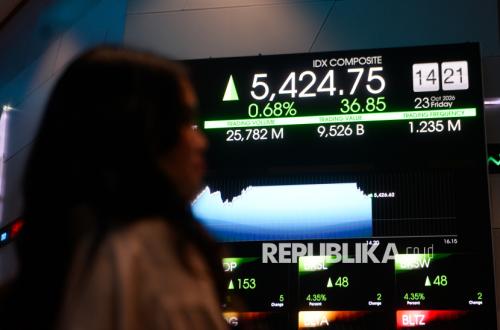
JAKARTA — Deputy Coordinating Minister for Economic Affairs Dradjad Hari Wibowo has urged retail investors to calculate share valuations before making investment decisions. Investors should not simply follow market sentiment, but should also examine valuation ratios and companies’ financial performance.
Dradjad said investors could assess whether a share price was reasonable by looking at its price-to-book value (PBV) and price-to-earnings ratio (PER), as well as the issuer’s performance in its published financial statements.
“I would simply say: look at the PBV, look at the PER, look at performance, then look at the August report, because the third-quarter report has not yet been released. The August report—and perhaps September’s, if it is available—check it yourselves and do your own calculations, because it is your own money,” Dradjad said at a Monday evening discussion hosted by the INSAN CITA Forum of Professors and Doctoral Graduates, entitled “MSCI Pressure and Prabowo’s Response: What Is the Impact on the Public?”, on 26 October 2026.
Dradjad said investors should rely on their own data and calculations when making investment decisions. He said it would be unethical for a state official to recommend particular shares to the public.
“As a state official, it would of course be unethical for me to name share A or share B as ones people should buy,” he said.
Dradjad also highlighted shares that he considers to be undervalued despite improvements in their companies’ financial performance. He cited issuers that had recorded increases in profit and revenue but whose PBV was below one.
“Does it make sense for an issuer to show an increase in profit and revenue, yet have a PBV below one? Clearly it doesn’t make sense, does it?” he said.
Dradjad said investors should consider such situations in light of companies’ financial performance. However, valuations still need to be assessed on a company-by-company basis and should not rely on a single ratio alone.
He also said the Indonesian stock market’s PER was about nine times, compared with around 18 times in Singapore. In his view, the difference indicates there is still room for Indonesian share prices to rise.
“What is needed is confidence,” he said.
Dradjad added that recently he had met several retail investors to share data and encourage them to assess market conditions rationally. He said data-based education was important to prevent investors from being easily swayed by negative sentiment.
He also cautioned the public against immediately believing extreme predictions of rupiah weakness without checking the basis of the analysis. Economic conditions, he said, should be discussed objectively, without exaggerating risks or overlooking existing challenges. Dradjad said he hoped investors would make well-considered decisions, helping to maintain confidence in the capital market.