
Deputy Coordinating Minister for Economic Affairs: Aiming for 6 Per Cent Growth, Business Obstacles Will Be Addressed
The government is preparing various instruments to drive economic growth to reach the 6 per cent target by 2027. In addition to optimising existing stimuli, the government will focus on reducing various issues that have long hindered investment and private sector business activities.
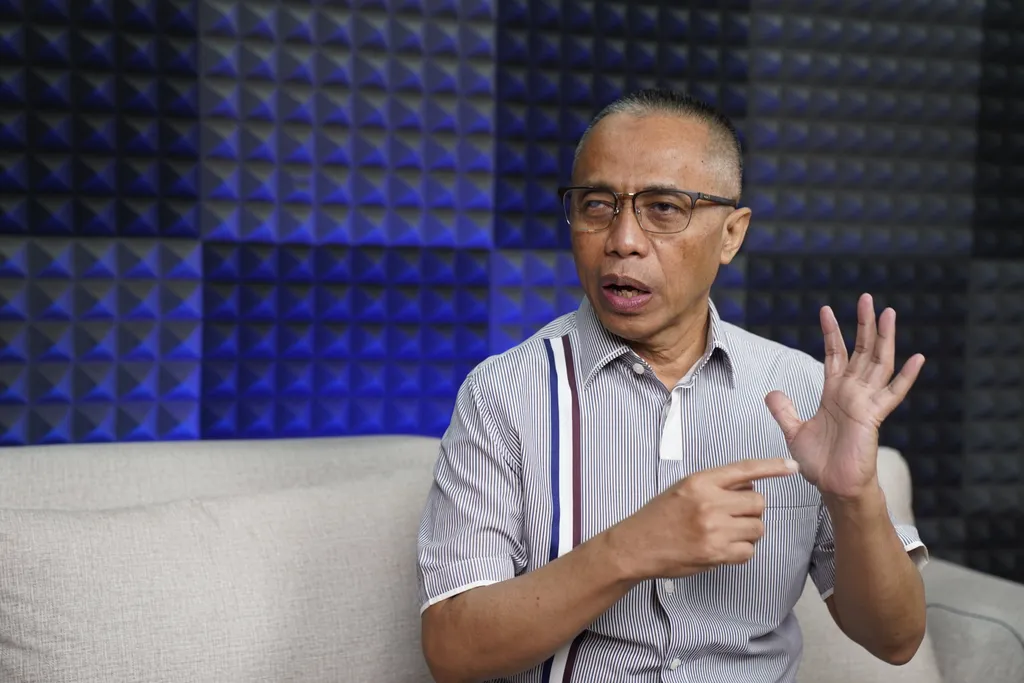
Deputy Coordinating Minister for Economic Affairs, Drajad Hari Wibowo, stated that the government has identified several economic growth sources that need to be optimised moving forward, ranging from tourism and manufacturing industries to the development of special economic zones.
“We will use various instruments, including stimulus, standardisation, and statistics. We will utilise all of them to drive growth so that in 2027 we can reach the 6 per cent GDP target. Hopefully, we can even exceed it,” said Drajad at the Coordinating Ministry for Economic Affairs office in Jakarta on Wednesday (7/10/2026).
The government will also optimise several previously announced stimuli, including wage subsidies, free bank account opening programmes, internship programmes, and food assistance.
While the stimulus package serves as an instrument to maintain economic activity, the government will continue to strengthen growth sources from the production side. Therefore, Drajad noted that one of his focuses as Deputy Minister is to assist the Coordinating Minister for Economic Affairs in reducing various obstacles faced by the private sector, both in investment and business operations.
These obstacles include issues related to licensing and the lack of synchronisation in policies between institutions. The government has also identified several sectors deemed to have potential as growth drivers. “The private sector’s role in driving growth is immense. However, the private sector is often hindered by various bottlenecks and obstacles,” he said.
Drajad added that the development of the people’s economy is also part of the government’s strategy. Low- and middle-income groups will be further empowered, not only through access to cheap credit but also through empowerment and the development of group-based businesses.
Furthermore, the government will accelerate the development of special economic zones by resolving emerging obstacles, including policy discrepancies between ministries and agencies, as well as between the central and regional governments.
According to Drajad, resolving investment and business development obstacles is crucial because the 6 per cent growth target for 2027 requires more diverse growth sources. “If we work hard, work fast, and work smart, we might even achieve slightly more than 6 per cent,” he said.
The 6 per cent growth target for 2027 comes as Indonesia’s economic prospects for 2026 begin to show improvement. In its October 2026 East Asia & Pacific Economic Update, the World Bank raised its projection for Indonesia’s economic growth this year from 4.8 per cent to 5.2 per cent.
This revision is driven by the impact of rising energy prices being lighter than previously estimated. Domestic economic activity is also considered stronger, supported by the government’s priority programmes, state-related investments, and energy subsidies that support consumption.
The World Bank’s estimate aligns with projections from the Asian Development Bank (ADB) and the Organisation for Economic Co-operation and Development (OECD) in September 2026, which both projected Indonesia’s economy to grow by 5.2 per cent this year. Despite the optimism, these projections remain below the government’s target of 5.4 per cent.
Coordinating Minister for Economic Affairs Airlangga Hartarto stated that the revision of international agency projections shows that Indonesia’s economic resilience remains intact amidst global pressures, particularly due to geopolitical uncertainty and energy price fluctuations.
The government remains optimistic that economic growth in the second half of 2026 will not differ significantly from the 5.45 per cent achieved in the first half of 2026. This optimism is supported by a stimulus in the fourth quarter of 2026 worth approximately Rp 31 trillion, aimed at strengthening purchasing power and consumption.
“We hope the figures for the second semester will not be far different from the first semester of 2026,” Airlangga said in Jakarta on Tuesday (6/10/2026).
Improved growth projections do not mean that economic challenges have been fully overcome. The government must ensure that growth is supported by investment and productive business activities, rather than just consumption and government spending.
Vice Chairman of the Indonesian Chamber of Commerce and Industry (Kadin), Kamrussamad, said that the mix of fiscal and monetary policies has so far helped maintain the balance between growth and stability.
However, several risks still need to be anticipated, including global economic uncertainty, public purchasing power, the acceleration of investment, and access to financing for the productive sector.
“Fiscal policy, monetary policy, and the real sector must move in unison: maintaining purchasing power, Rupiah stability, and inflation; ensuring liquidity flows to the productive sector; accelerating investment; and providing policy certainty,” said Kamrussamad.
Economist from the Centre of Reform on Economics (CORE) Indonesia, Yusuf Rendy Manilet, observed that public consumption in the second half of 2026 still has the potential to grow strongly, supported by government stimuli, year-end spending, and credit growth.
Nevertheless, rising benchmark interest rates need to be monitored as they may affect economic activity. Food inflation also has the potential to pressure purchasing power again, while the government’s fiscal space is becoming increasingly limited.
Source: jawawa.id (https://jawawa.id/newsitem/deputy-coordinating-minister-for-economic-affairs-aiming-for-6-per-cent-growth-business-obstacles-will-be-1791395466)
Originally published by kompas.id (https://www.kompas.id/artikel/wamenko-perekonomian-mengurai-hambatan-investasi-swasta-kunci-pertumbuhan-6-persen?open_from=Section_Terbaru), translated from Indonesian