
Deputy Communications Minister Highlights Three Critical Issues in Population Administration Bill
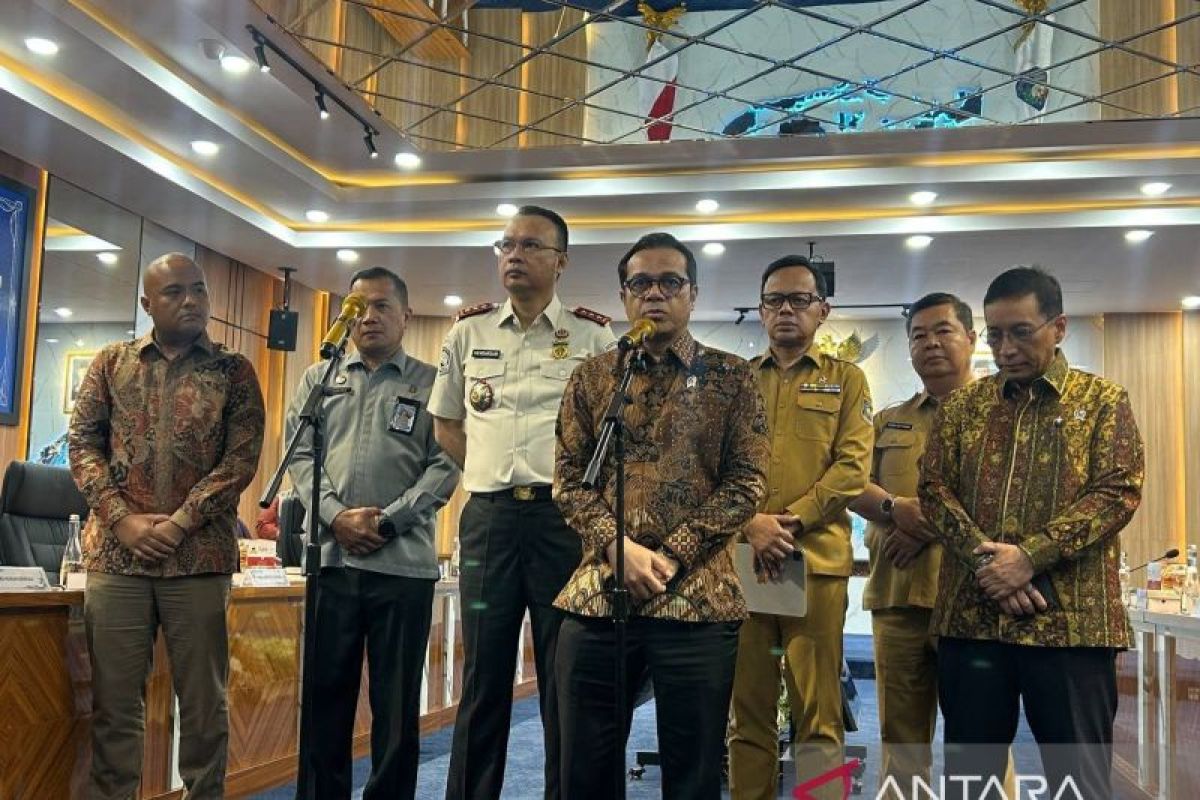
Jakarta (ANTARA) - Deputy Communications and Digital Minister Nezar Patria has highlighted three critical issues that are a key focus in drafting the Population Administration Bill: data interoperability, personal data protection and clear data classifications.
“The bill will cover data integration and interoperability, personal data protection, electronic identity cards, digital population identity, and the expansion of services for all residents,” Nezar said at a coordination meeting on the bill’s Inventory of Issues (DIM) at the Ministry of Home Affairs in Jakarta on Tuesday.
Nezar explained that the bill was initially conceived as a limited revision to strengthen the Population Identification Number (NIK) as a single identity. Its scope has since expanded to replace the current Population Administration Law.
On the first critical issue, Nezar welcomed the inclusion of data integration within an interoperability framework aligned with the One Data Indonesia Law. He said a key point in the bill’s DIM was the clarification that connecting to the population administration information system (SIA) would not transfer ownership of the data.
“This alignment needs to be maintained so that it can be implemented in accordance with other laws, in this case the One Data Indonesia Law,” he said.
He said the alignment would include limiting the purposes for which data may be used and excluding medical records from reciprocal data.
Nezar identified at least three technical aspects of personal data protection that still required joint consideration: applying the data minimisation principle; the scope of the definition of “every person”, which would no longer include corporations; and allowing an exception, with residents’ consent, to the ban on requesting copies of population documents.
On the third issue, Nezar stressed the importance of clearly defining levels of classification for population data as a basis for granting access rights, in a way that is consistent with data governance across legislation.
The meeting was attended by Deputy Home Affairs Minister Bima Arya, Deputy Head of Bappenas Febrian Alphariyanto Ruddyard, Immigration Director General Hendarsam Marantoko, Home Affairs Ministry Population and Civil Registration Director General Teguh Setyabudi, Law Ministry Director General of Legislation Dhahana Putra, and representatives of the Foreign Ministry’s legal bureau. Nezar thanked the Home Affairs Ministry for intensive coordination on the DIM, which had been under way from 13 to 20 October 2026.
“Our ministry fully supports the drafting of this bill. We hope these discussions will produce robust legislation capable of establishing governance for this highly strategic area of population administration,” Nezar said.
The Home Affairs Ministry and six related ministries—the Law Ministry, Communications and Digital Ministry, National Development Planning Ministry/Bappenas, Immigration and Corrections Ministry, Foreign Ministry and State Secretariat—had earlier initialled the bill’s DIM in a coordination process at the Home Affairs Ministry.
Following the initialling, the government is targeting 8 November 2026 to submit the bill’s 1,027-item DIM to the House of Representatives (DPR RI) for further deliberations.
The Population Administration Bill is included in the 2026 priority National Legislation Programme (Prolegnas). According to the House Legislation Body, it was proposed by the House Commission II.