
Deputy Chief of Police Prepares Police Trainees to Support Digital Social Protection Programme
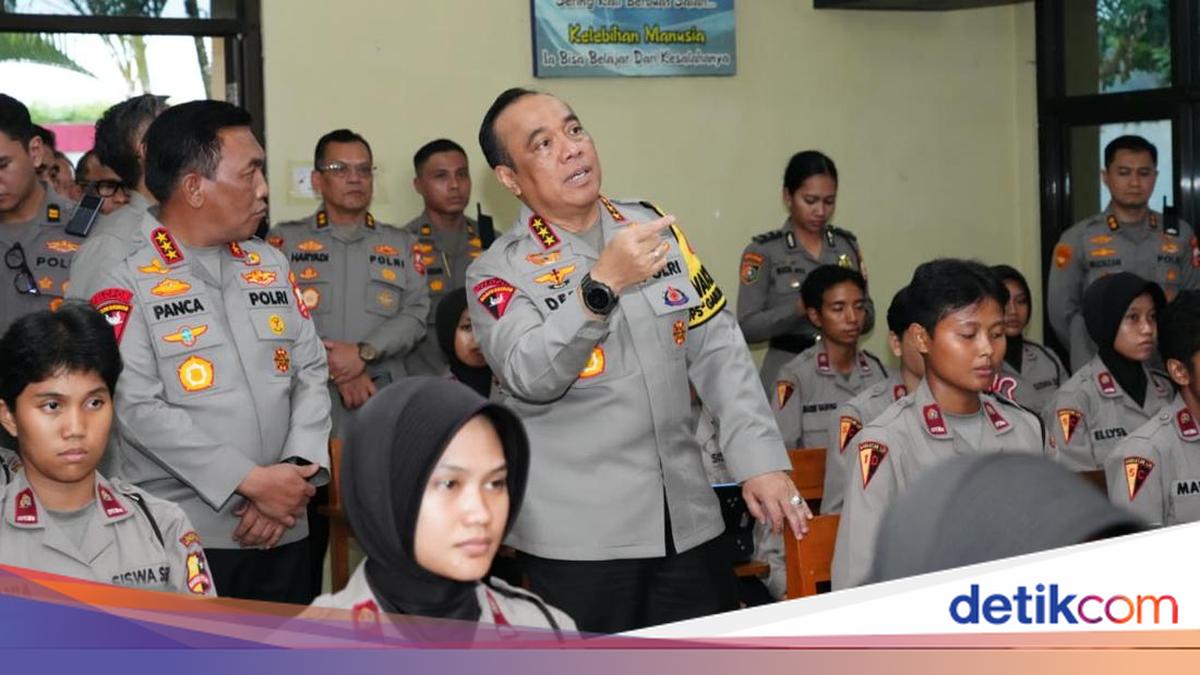
The Indonesian National Police (Polri) is preparing students from various educational institutions to support the digital Social Protection (Perlinsos) programme. This is part of an effort to expand public access to government services.
Deputy Chief of Police, Commissioner General Dedi Prasetyo, has urged the Polri Education and Training Command (Lemdiklat) to prepare students from the Police Inspector School (SIP), the Women’s Police School (Sepolwan), the National Police School (SPN), and the Police Academy (Akpol) to integrate Social Protection into their community-based field training.
Field training for SIP students is scheduled to begin in October 2026, while students from Sepolwan, SPN, and Akpol will be prepared according to their respective academic calendars in November 2026. These instructions were issued by the Deputy Chief of Police during a visit to the Women’s Police School on 24 March 2026.
This move follows directives from the Minister of Social Affairs, Saifullah Yusuf, and the Chairman of the Government Digital Transformation Acceleration Committee, Luhut Binsar Pandjaitan, regarding the acceleration of Social Protection at the Polri Headquarters Command Centre on the same day.
The Minister of Social Affairs emphasised the importance of expanding agents to reach the target of 48 million families registered and digitally verified by 30 November 2026. Meanwhile, Luhut encouraged the involvement of the TNI-Polri network to assist the public in accessing digital services while simultaneously maintaining security and data sovereignty.
The Deputy Chief of Police requested that Lemdiklat utilise field training as both a learning space and a tangible contribution from the police. “We must start from educational institutions. We must prepare students going into field training to be able to use gadgets, conduct data collection, and communicate with the community. This serves as a learning opportunity for them to support government programmes,” said the Deputy Chief.
He noted that Social Protection is not merely an additional task but a core component of the field training curriculum. Training will focus on three key competencies: operating digital devices and applications, data collection, and community communication. Students will be trained to use digital tools for service, understand registration and data update processes, perform verification according to procedure, and safeguard National Identity Number (NIK) and personal data security. They must also be able to explain the programme in simple language and assist citizens facing difficulties accessing digital services.
“We are not just teaching them how to operate applications. They must understand the data collection process, maintain the security of public data, and be able to explain it to citizens in an easy-to-understand manner,” explained the Deputy Chief.
The Deputy Chief emphasised that students will only assist in the registration, collection, and updating of data; they do not have the authority to determine an individual’s eligibility for assistance. “The data must be accurate, and the process of obtaining data must be correct. Students must understand that they are assisting the data collection process, not deciding who receives aid,” he asserted.
The Minister of Social Affairs previously reminded that the digitalisation of Social Protection must realise the principles of accurate data and precise targeting. He also stressed that technological limitations should not prevent citizens from being registered. “Technological limitations must not be an excuse for them not to be recorded,” said the Minister.
Luhut noted that the TNI-Polri network, which has direct contact with the public, can help accelerate data collection. “We request the support of our colleagues in the TNI and Polri to mobilise agents to work alongside local governments,” said Luhut.
Head of Polri Education and Training, Commissioner General RZ Panca Putra Simanjuntak, stated that this preparation aligns with the transformation of police education to be adaptive to technology. Students are already accustomed to using laptops and learning systems based on Outcome-Based Education (OBE) and Learning Management Systems (LMS).
“Students today are a generation very close to technology. Therefore, the ability to use technology must become a professional competency. However, that ability must go hand-in-hand with communication skills,” said the Head of Lemdiklat. He added that field training provides an opportunity for students to test these skills directly, including accurate data collection, programme explanation, and building community trust.
The Deputy Chief of Police concluded that the involvement of SIP, Sepolwan, SPN, and Akpol students in Social Protection represents a paradigm shift in police education. “We want what is learned in educational institutions to be truly applied in the field. They learn policing, technology, data collection, and communication. All of it must culminate in service to the community.”
Source: jawawa.id (https://jawawa.id/newsitem/deputy-chief-of-police-prepares-police-trainees-to-support-digital-social-protection-programme-1790797929)
Originally published by detikcom (https://news.detik.com/berita/d-8686921/wakapolri-siapkan-siswa-sip-sepolwan-dan-taruna-akpol-dukung-perlinsos), translated from Indonesian