
Deputy Chief of Indonesian Police: Disaster Response and Public Security Disruptions to Prioritise Prevention
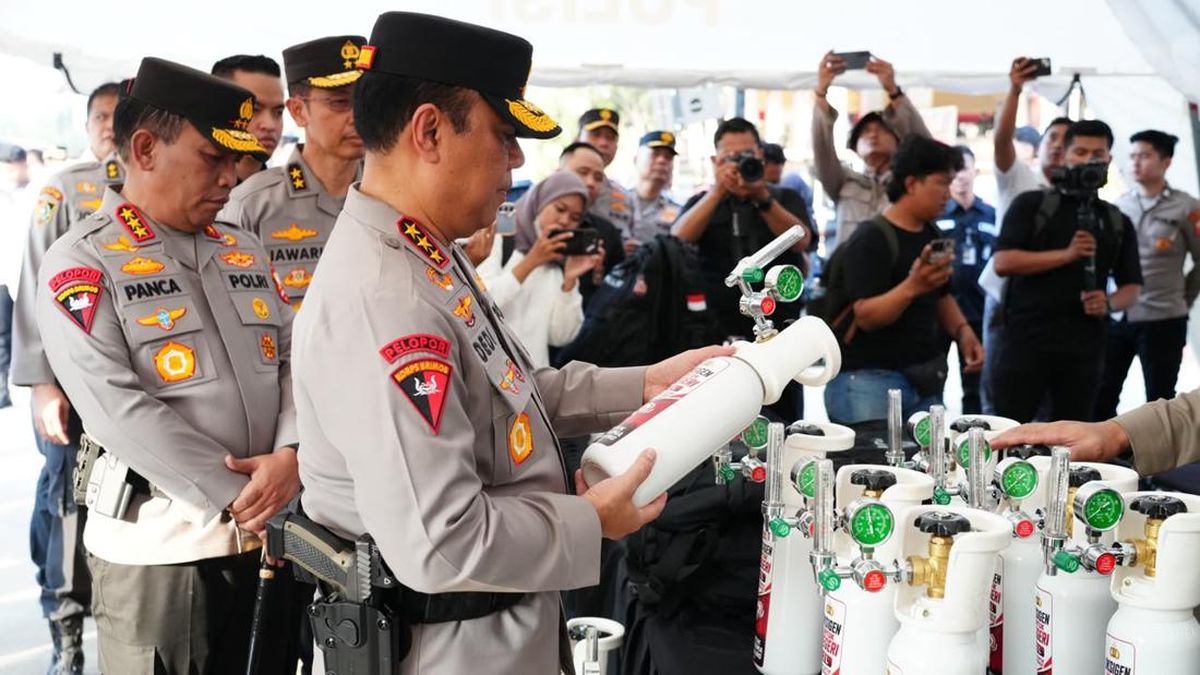
Deputy National Police Chief Commissioner General Dedi Prasetyo has emphasised the importance of preventive measures in facing potential disasters as well as threats to public security and order.
According to him, preparedness and the capacity for early mitigation are key to preventing broader impacts on the community.
Dedi conveyed this at a Troop Parade marking Readiness for Facing Disasters and Public Security and Order Disruptions in 2026, held in Cikeas, West Java, on Monday (7/9).
Dedi said Indonesia has a high level of disaster vulnerability due to its complex geological, geographical and climatological conditions. Indonesia’s position within the Pacific Ring of Fire also increases the risk of earthquakes, tsunamis and volcanic eruptions.
“This series of phenomena serves as a reminder that natural disasters can occur at any time and anywhere. Therefore, preparedness must be built during the pre-disaster phase, during emergency response, and after the disaster,” Dedi said in his statement in Cikeas.
He noted that, according to data from the National Disaster Management Agency (BNPB), 1,730 natural disasters have occurred in Indonesia from January 2026 to date. Dominated by floods, extreme weather, landslides and forest and land fires (karhutla), these disasters have killed 397 people and displaced more than four million residents.
Amid these conditions, the National Police (Polri) is ensuring the readiness of personnel and infrastructure to provide a rapid response through Operation Aman Nusa II. Handling covers the evacuation and search for victims, securing locations, managing traffic and evacuation routes, and providing humanitarian services for affected communities.
“With prepared personnel, infrastructure and swift action, Polri must always be present among the people, providing a sense of security, easing the burden on affected communities, and delivering the best service in every disaster situation,” Dedi said.
Beyond disaster response, Dedi reminded police personnel to enhance preparedness against various potential public security and order disruptions that could be triggered by political, economic, socio-cultural or security issues. Such disruptions, he said, could also develop through digital spaces if not properly managed.
To this end, through Operation Aman Nusa I, the police are asked to strengthen early detection, early warning systems, vulnerability mapping and monitoring of digital spaces for provocative narratives that could disturb public security and order.
A persuasive approach also needs to be reinforced by involving community figures, religious leaders, regional governments and all stakeholders.
“In implementing Aman Nusa I, prioritise preventive steps to mitigate all risks and potential impacts. Understand the root of the problems in your respective regions and build closeness with community figures to prevent potential public security disruptions from developing,” Dedi said.
Dedi stressed that expressing opinions in public is a constitutional right of the people that must be respected and protected. Nevertheless, the police must remain prepared to prevent potential escalation so it does not develop into public security disruptions, violence or unlawful acts.
In situations requiring security operations, police personnel must be able to keep the situation conducive, protect the public and vital objects, and enforce the law professionally, proportionately and justly.
Meanwhile, in the recovery phase, the police also play a role in restoring security stability, rebuilding public trust and ensuring the security and order situation is maintained so similar disruptions do not recur.
Dedi gave two key emphases to all personnel involved in Operations Aman Nusa I and Aman Nusa II.
In disaster response through Aman Nusa II, every stage must be oriented towards the safety and recovery of victims, from emergency alert to emergency response and post-disaster recovery.
“Accurate data is the foundation, swift movement is the demand, and careful work is the guarantee of safety,” he said.
Meanwhile, in implementing Aman Nusa I, personnel are asked to prioritise prevention, understand the root of problems, strengthen early detection and build closeness with the community. Should the situation require firm action, enforcement must be carried out in a measured and professional manner, upholding the principle of ultimum remedium, or law enforcement as a last resort.
Through this readiness, Polri is committed to ensuring the presence of the state is felt by the people, both when facing disasters and various potential public security disruptions, while continuously maintaining security and public order.
Source: jawawa.id (https://jawawa.id/newsitem/deputy-chief-of-indonesian-police-disaster-response-and-public-security-disruptions-to-prioritise-prevention-1788792806)
Originally published by CNN Indonesia (https://www.cnnindonesia.com/nasional/20260907211134-12-1401204/wakapolri-penanganan-bencana-gangguan-kamtibmas-utamakan-pencegahan), translated from Indonesian