
Deputy Agriculture Minister Saleh: Food Sovereignty Will Make Indonesia Prosperous and Just
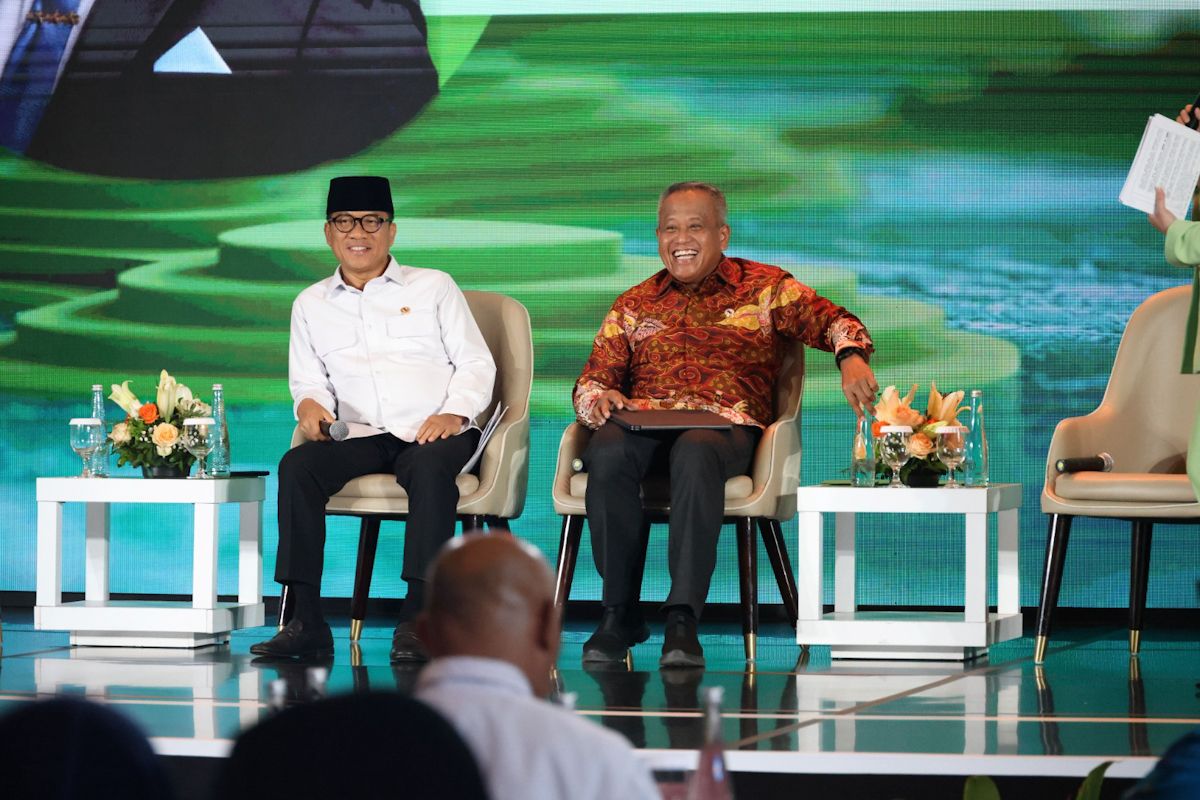
Jakarta (ANTARA) – Deputy Agriculture Minister Muhammad Saleh Mustafa said food sovereignty was the foundation for making Indonesia prosperous, just and equitable through increased food production and reforms to the national trading system.
“Strengthening national food production must go hand in hand with improving food trade so that farmers and consumers alike can benefit from agricultural development,” Saleh said in Jakarta on Tuesday.
He made the remarks at the Agri Food Forum in Jakarta. He stressed that achieving food self-sufficiency meant more than being able to produce commodities domestically.
Sound trade governance, fair prices and support for farmers were also important to building national food independence, he said.
According to Saleh, Indonesia had achieved self-sufficiency in eight of the 12 staple food commodity groups during the first two years of President Prabowo Subianto and Vice-President Gibran Rakabuming Raka’s administration.
That achievement was an important foundation for strengthening food security. However, the government still needed to increase production of four commodities for which the country was not yet fully self-sufficient: soybeans, garlic, cow’s milk and beef.
“Eight commodities are already self-sufficient. But our challenge now is to increase production of the other four: soybeans, garlic, cow’s milk and beef,” Saleh said.
In addition to boosting production, the deputy minister highlighted the importance of reforming food trading arrangements.
He said abundant harvests would not automatically improve farmers’ welfare if trade governance was unsound and prices at the producer level did not provide a decent return.
Intermediaries, or tengkulak, in the food trade chain needed to be viewed proportionately. They could help connect farmers with markets and address distribution problems.
However, their role had to be carried out fairly, without creating new problems that harmed farmers or consumers.
Saleh said it was important to encourage “benevolent intermediaries” — traders who helped resolve problems in the supply chain rather than profiting at others’ expense.
This would allow food trading to accommodate businesses while safeguarding the interests of producers and consumers.
“We must be benevolent intermediaries who solve problems without leaving problems behind,” he said.
To create a sound food trading system, Saleh said stronger regulations needed to be accompanied by targeted oversight and law enforcement.
Enforcement should focus on those who controlled or organised practices that breached the rules, rather than stopping at people caught carrying them out on the ground.
This approach was needed to address the root causes and deter further violations, he said.
At the same time, government policy needed to balance farmer protection, smooth distribution, business continuity and affordable food prices for the public.
Saleh was optimistic that agriculture would play an increasingly important role in improving public welfare if all stakeholders worked together.
Collaboration among the government, farmers, businesses and the public was key to sustaining production and strengthening food sovereignty.
“In the future, agriculture will become a sector of choice and bring prosperity to every farmer, as long as we work together. If agriculture is sovereign, I am confident Indonesia will be prosperous, just and equitable,” Saleh said.