
Deputy Agriculture Minister Saleh: Downstream Processing Is Key to Increasing Value for Farmers
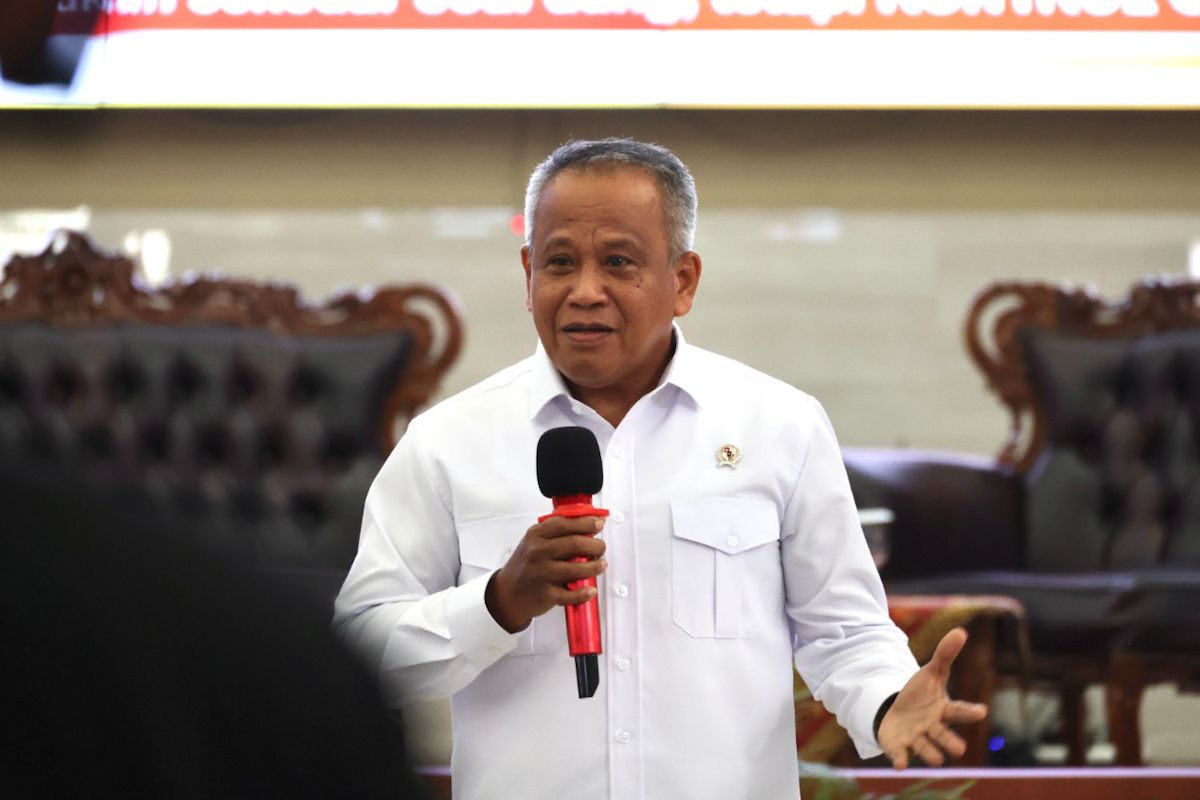
Jakarta (ANTARA) – Deputy Agriculture Minister Muhammad Saleh Mustafa has stressed that agricultural downstream processing is key to increasing the value of commodities, strengthening product competitiveness and improving farmers’ welfare through the processing of produce.
“Downstream processing is important so that farmers can be more prosperous in the future,” Saleh said at the 3rd International Conference on Agricultural, Nutraceutical and Food Science (ICANFS) at Tidar University in Magelang, according to confirmation received in Jakarta on Monday.
Alongside strengthening production, Saleh said downstream processing was important to ensure Indonesian agricultural commodities were not sold only as raw materials, but turned into value-added products capable of competing in global markets.
He cited coffee as an example of a commodity that could generate greater economic value through processing, packaging and brand development.
He said the success of agricultural development should not be measured solely by production figures and income, but should also be reflected in farmers’ welfare, including their access to education, healthcare and basic infrastructure.
Saleh highlighted three keys to a sustainable agricultural and food system: the availability of resources, good governance and regulation, and the creation of added value for the public.
Earlier, Agriculture Minister Andi Amran Sulaiman proposed an additional Rp5 trillion in funding to strengthen strategic plantation sectors in 2027, supporting industrial supplies, farmers’ welfare and export competitiveness.
“On 18 August 2026, the Agriculture Ministry sent a letter to the Finance Minister proposing an additional Rp5 trillion in spending, focused on developing strategic plantation commodities,” Amran said at a working meeting with Commission IV of the House of Representatives in Jakarta on Tuesday, 1 September.
The additional funding would be directed towards developing coconut, pepper, nutmeg, sugar cane, coffee, cocoa and cashew, and would include the provision of 1,250 tractors to boost sugar-cane production.
The Agriculture Ministry’s draft priority programmes for 2027, aimed at sustaining food self-sufficiency, include providing land and water infrastructure; supplying quality seeds and seedlings; supporting agricultural production facilities and infrastructure; downstream processing; agricultural modernisation; and agricultural extension services and farmer regeneration.
The ministry’s 2027 production targets for commodities under the National Priority Work Programme (PKPN) include 34 million tonnes of rice, 18 million tonnes of maize, 392,000 tonnes of soya beans, 17.79 million tonnes of cassava, 245 million tonnes of palm oil, 42 million tonnes of sugar cane, and 791,000 tonnes of coffee.
Further targets include 2.9 million tonnes of coconut, 633,000 tonnes of cocoa, 41,000 tonnes of nutmeg, 64,000 tonnes of pepper, 922,000 tonnes of milk, 8.08 million tonnes of eggs, five million tonnes of meat, two million tonnes of shallots, 40,000 tonnes of garlic and 3.13 million tonnes of chillies.
Under a joint letter from the Minister of National Development Planning and head of Bappenas and the Finance Minister, dated 5 August 2026, on ministry and agency spending ceilings and Special Allocation Funds for the 2027 fiscal year, the Agriculture Ministry’s budget ceiling was set at Rp23.23 trillion, rising to Rp28.02 trillion.
Source: jawawa.id (https://jawawa.id/newsitem/deputy-agriculture-minister-saleh-downstream-processing-is-key-to-increasing-value-for-farmers-1793598714)
Originally published by Antara (Indonesian) (https://www.antaranews.com/berita/5825859/wamentan-saleh-hilirisasi-kunci-tingkatkan-nilai-tambah-bagi-petani), translated from Indonesian