
Deputy Agriculture Minister Reveals Several Countries Targeting Indonesia's Fertiliser Amid Geopolitical Crisis
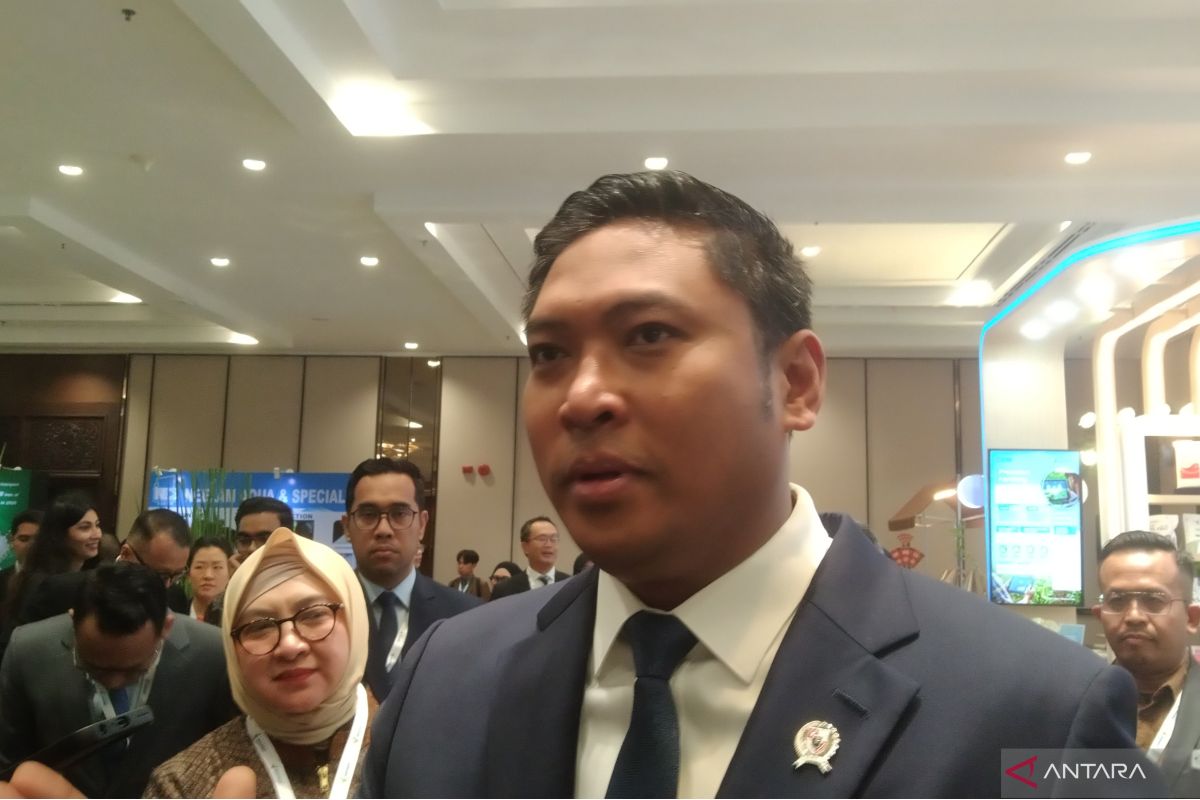
Nusa Dua, Bali (ANTARA) - Deputy Agriculture Minister Sudaryono has revealed that several countries are now targeting fertiliser from Indonesia as a result of the geopolitical crisis in the Middle East, which has triggered disruptions in the global urea supply.
“They want to import fertiliser from Indonesia, no matter how much they have to pay,” said the Deputy Minister after opening the Asia Fertiliser Conference 2026 in Nusa Dua, Badung Regency, Bali, on Wednesday.
The Deputy Minister disclosed that among the six countries interested in importing fertiliser from Indonesia are India, Brazil, Australia, and the Philippines.
The conflict in the Middle East has impacted global trade routes in the Strait of Hormuz, including fertiliser supplies, with around 30 per cent of the world’s fertiliser passing through this vital route.
As a result, there has been a significant price increase; for instance, according to data from Trading Economics accessed on Wednesday (1/4/2026) at 1:00 PM WITA, the urea price per tonne has reached $690, up from around $350-380 in early January 2026.
Sudaryono explained that Indonesia has great potential to become a stabiliser for the global fertiliser supply amid this geopolitical crisis, after the government has ensured that domestic agricultural fertiliser needs are met.
“During the crisis (geopolitical), fertiliser matters are safe; we can fulfil the (domestic) urea needs,” he said.
To that end, he urged farmers not to worry about the domestic fertiliser supply because the geopolitical crisis does not affect supplies in the country.
According to him, Indonesia’s current fertiliser production capacity reaches around 14.5 million to 15 million tonnes per year.
Meanwhile, state-owned enterprise PT Pupuk Indonesia is one of the largest fertiliser producers domestically and contributes to supplying the global market.
Pupuk Indonesia’s President Director Rahmad Pribadi explained that the company exports an average of 1.5 million to two million tonnes per year.
The red-plate company recorded total urea fertiliser production of 9.4 million tonnes per year, with average domestic needs of around seven million tonnes.
With this realisation, he assured that domestic urea needs are secure, thus having the potential to fill the export market.
In addition to urea, the company also produces nitrogen, phosphate, and potassium (NPK) fertiliser at an average of 4.6 million tonnes per year, and other fertilisers at 0.8 million tonnes per year.
The countries that are export destination partners for the corporation include the Philippines, Japan, the United States, South Korea, Australia, Mexico, China, Thailand, India, Vietnam, and countries in the Asia Pacific, Middle East, and Africa.
Source: jawawa.id (https://jawawa.id/newsitem/deputy-agriculture-minister-reveals-several-countries-targeting-indonesias-fertiliser-amid-geopolitical-crisis-1775029853)
Originally published by Antara (Indonesian) (https://www.antaranews.com/berita/5504829/wamentan-ungkap-sejumlah-negara-incar-pupuk-ri-imbas-krisis-geopolitik), translated from Indonesian