
Deputy Agriculture Minister pushes for tighter import controls and strengthened sugar downstreaming
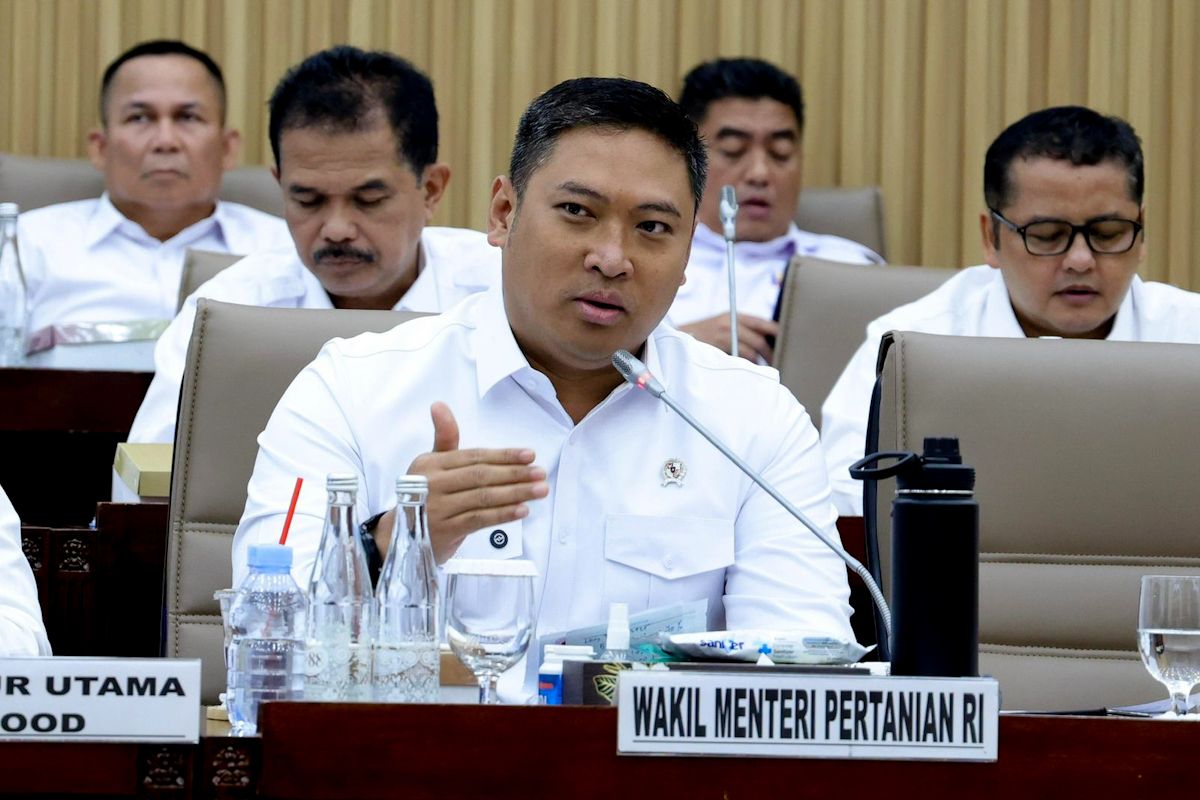
Jakarta (ANTARA) - Deputy Agriculture Minister Sudaryono is pushing for tighter import controls and strengthened downstreaming of sugar to ensure that products from domestic sugarcane farmers are maximally absorbed.
“The key to sugar self-sufficiency is planting more, harvesting more, and producing more. But what’s happening now is a paradox: we’re still importing sugar while farmers’ sugar isn’t selling,” said the Deputy Minister in a statement in Jakarta on Thursday.
Sudaryono highlighted the flood of refined sugar imports that is preventing the absorption of domestically produced sugar from sugarcane farmers. This situation is also pressuring prices at the farmer level and disrupting the stability of the national sugar market.
He emphasised the importance of strengthening the downstream sector as a strategic step to ensure optimal absorption of farmers’ production and sustainable added value.
He explained that the government’s efforts to increase sugarcane production through various upstream sector programmes are already running massively. However, weaknesses in downstream sector regulation are causing paradoxes in the field.
According to him, this condition is triggered by the influx of refined sugar into the consumer market, which should be intended for industrial needs.
This is instead causing farmers’ sugar prices to become uncompetitive and reducing farmers’ motivation to plant sugarcane.
“If sugar imports are limited, farmers’ sugar should sell well. But in reality, it doesn’t, because there’s leakage of refined sugar into the household market. This is what we must fix together,” he stressed.
Deputy Minister Sudaryono, familiarly known as Mas Dar, emphasised the importance of strengthening regulations in the downstream sector, including monitoring the distribution of refined sugar so it does not enter the consumer market.
He also welcomed proposals for sugar trading to be regulated through a single channel by a state-owned enterprise to ensure more controlled distribution.
“If distribution is regulated through a single channel via a state-owned enterprise, we can ensure that refined sugar does not flood the consumer market. This is important to protect farmers,” he said.
On the upstream side, the government has rolled out various supports for sugarcane farmers, including the ratoon dismantling programme with a budget of Rp2.5 trillion to increase productivity.
In addition, support in the form of fertiliser subsidies, agricultural tools and machinery, and expansion of planting areas is targeted to reach 200,000 hectares.
With total interventions estimated at Rp4 trillion, the government targets an increase in national sugar production of up to 1 million tonnes.
“If we can close the leakages in the downstream sector, then the Rp4 trillion investment can produce an additional 1 million tonnes of sugar. Assuming a price of Rp17,000 per kilogramme, the potential added value generated could reach Rp17 trillion,” explained the Deputy Minister.
He added that increased domestic production would not only impact import reduction but also have multiplier effects on the national economy, including improving farmers’ welfare and contributions to Gross Domestic Product (GDP).
“Import substitution is important. Imports are not ideal, but if we can replace them with domestic production, it’s far better. In addition to increasing farmers’ income, it also strengthens the national economy,” he added.
Furthermore, the Deputy Minister affirmed that the Ministry of Agriculture is ready to carry out President Prabowo Subianto’s directives in achieving food self-sufficiency, including for sugar commodities, through integrated policies from upstream to downstream.