
Deputy Agriculture Minister Orders Former Fire-Damaged Land in Central Kalimantan Not to Be Planted with Oil Palm
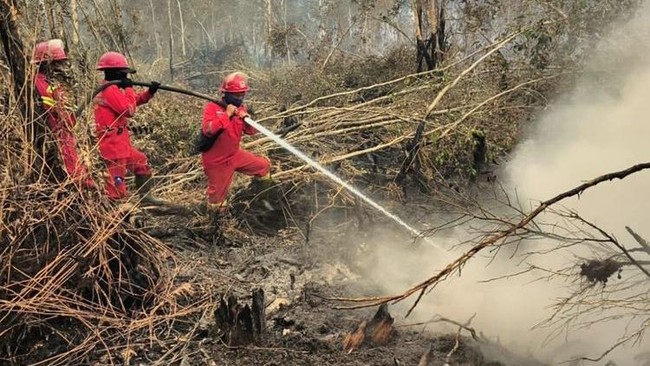
Deputy Agriculture Minister Muhammad Saleh Mustafa has urged the Central Kalimantan provincial government to use land affected by forest and land fires for agricultural activities. He proposed planting food crops such as chillies and maize, particularly on privately owned land.
Saleh said burned land could be used to increase regional food production. The move is also intended to prevent the land from being converted into oil-palm plantations, whose benefits, he said, are felt by only a small number of people.
“Central Kalimantan is not yet able to meet its own food needs, so we will work towards that. I have been monitoring the land that was burned, and it is mostly for oil palm, or what else, sir?” Saleh said during a teleconference with Central Kalimantan provincial government representatives at the Affordable Food Movement event on Thursday (22 October 2026).
Saleh said he had coordinated with Agriculture Minister Amran Sulaiman to find a solution for using land affected by fires in a way that would benefit the wider community.
One option under discussion is for local governments to begin farming the land before it is planted with oil palm.
“If possible, as we discussed yesterday, I have spoken with the Agriculture Minister about whether we could farm the burned land. We should act before it is planted with oil palm; once that happens, it may benefit only a few people,” he said.
Saleh said the soil conditions after a fire could also be suitable for cultivation. He therefore called on local authorities and communities to make the most of the land by growing crops that could support local farmers.
“But if it is planted with chillies or maize, or something else that helps farmers in Central Kalimantan, then let us discuss it. The head of the provincial agriculture office can report back to the central government,” he said.
He added that burned land exposed to water could have carbon content that supports the formation of soil humus. However, its use should be directed towards generating economic value for farmers.
“When land has been burned and then gets wet, its carbon is usually good. The humus in the soil will be very good. We can work on this together and find the best solution for the farmers there,” Saleh said.
According to the latest data from the Coordinating Ministry for Food Affairs, more than 23,000 hectares have burned in Palangka Raya, Central Kalimantan.
Most of the fire hotspots in Palangka Raya’s forest areas are within peatland concession zones. These concession areas serve various purposes, ranging from protected forest to cultivation areas.
Source: jawawa.id (https://jawawa.id/newsitem/deputy-agriculture-minister-orders-former-fire-damaged-land-in-central-kalimantan-not-to-be-planted-with-oil-1792666247)
Originally published by CNBC Indonesia (https://www.cnbcindonesia.com/news/20261022154308-4-778641/wamentan-perintah-lahan-bekas-karhutla-di-kalteng-tak-ditanami-sawit), translated from Indonesian