
Deputy Agriculture Minister emphasises accelerated planting to anticipate El Niño impacts
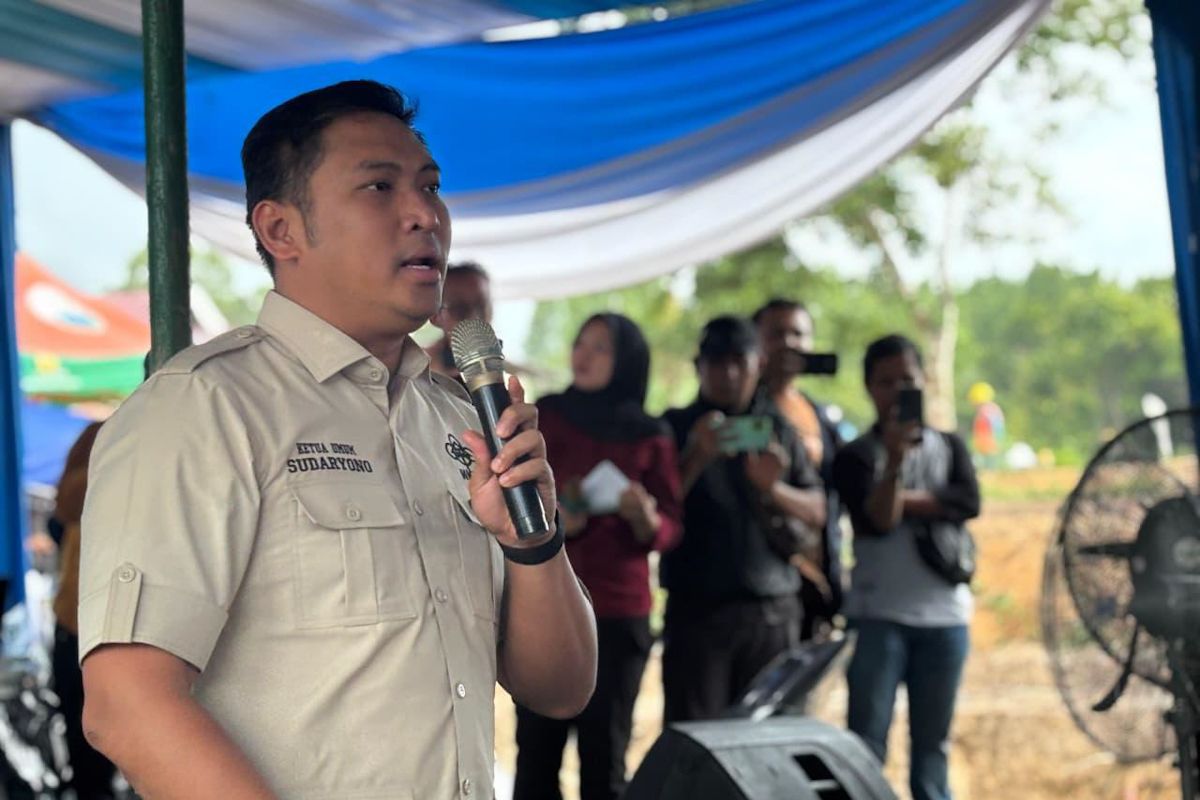
Jakarta (ANTARA) - Deputy Minister of Agriculture Sudaryono has emphasised that accelerated planting is a strategic step by the government to anticipate climate change, particularly the threat of El Niño, in order to maintain production stability and national food security.
“Accelerated planting is a strategic step by the government to anticipate the impacts of climate change, especially the threat of El Niño which has the potential to disrupt food production,” said the Deputy Minister in a statement in Jakarta on Wednesday.
Sudaryono emphasised this while leading the Simultaneous Rice Planting Movement carried out in 16 provinces, centred at the People’s Paddy Field Printing (CSR) site in Muara Bulian Subdistrict, Batang Hari Regency, Jambi.
Deputy Minister Sudaryono, or familiarly known as Mas Dar, encouraged the acceleration of utilising CSR land in Jambi Province to make it productive immediately, with a target of 5,000 hectares of land entering the planting cycle directly.
He also called on all regional governments to act quickly to increase food production during the remaining rainy season.
“Now is the right moment. While there is still rain, we accelerate planting. If we plant earlier, we harvest earlier. The more we plant, the greater our harvest,” said Sudaryono.
According to him, the key to CSR success is not only in land printing but ensuring that the land is immediately utilised. Therefore, the Ministry of Agriculture has deployed extension workers, the Food Brigade, and support for agricultural tools and machines so that the planting process runs quickly and efficiently.
In the field, added Sudaryono, accelerated planting is carried out simultaneously by utilising mechanisation such as rice transplanters and drones. This approach is part of agricultural modernisation while addressing the challenge of limited labour.
Deputy Minister Sudaryono, who is also the General Chairman of the Indonesian Farmers Harmony Association (HKTI), emphasised that the use of agricultural tools and machines must be maximised to make the planting process faster and more efficient.
“With the support of extension workers and the involvement of farmers and the Food Brigade, we ensure that the printed land can be planted immediately and yield real results,” he explained.
In addition, the government is also maximising water resource support to face potential drought due to El Niño. All water sources are identified and utilised to ensure the sustainability of crops on CSR land.
“We identify water sources, prepare pumps, bore wells, and utilise river water so that the printed land can still be planted,” he said.
He emphasised that utilising planting time is an important factor in maintaining production.
“We can help with seeds, we can provide fertiliser. But water and rain cannot be summoned. So utilise the available time to plant immediately,” he asserted.
Sudaryono also opened opportunities for farmers and regional governments to convey field needs, from seeds to agricultural tools and machines, to ensure the planting process runs optimally.
In the event, the Deputy Minister, along with farmers and young people in the ‘Food Brigade’, carried out mass planting using modern agricultural technology, such as rice transplanter tools to seed/fertiliser sowing drones.
According to him, the use of agricultural tools and machines (alsintan) is important to increase efficiency and accelerate the planting process.
“The utilisation of agricultural tools and machines must be maximised so that the planting process is faster and more efficient. With the support of extension workers and the involvement of farmers and the Food Brigade, we ensure that the printed land can be planted immediately and yield real results,” said Sudaryono.