
Deputy Agriculture Minister calls for stronger farmer regeneration to achieve sustainable self-sufficiency
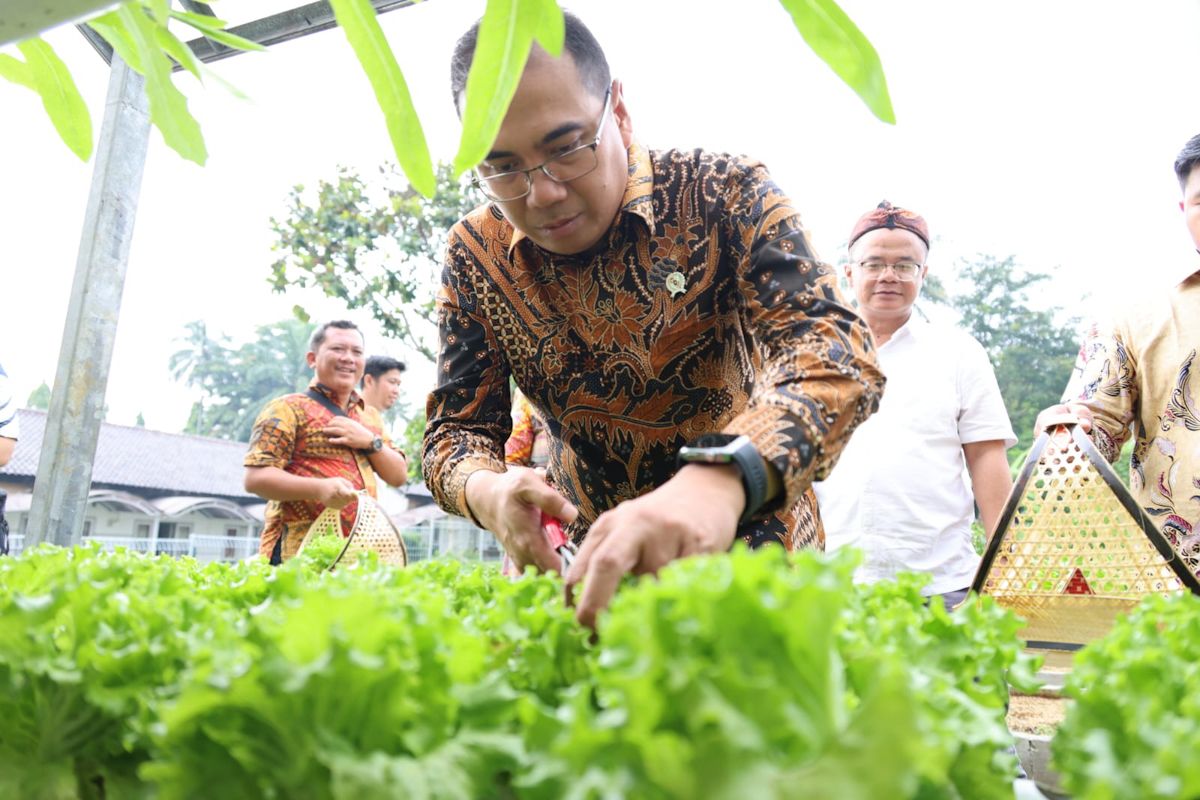
Jakarta (ANTARA) - Deputy Agriculture Minister Alim Setiawan Slamet has called for stronger farmer regeneration and agricultural human-resource development to accelerate sustainable food self-sufficiency and improve the welfare of Indonesian farmers.
“Strengthening human resources, innovation and farmer regeneration is key to achieving sustainable food self-sufficiency while improving farmers’ welfare,” Alim said in Jakarta on Sunday.
He said the direction of agricultural development must align with the national strategic programmes of President Prabowo Subianto and Agriculture Minister Amran Sulaiman.
“In the context of the President’s and the Agriculture Minister’s national strategic programmes, we must achieve sustainable food self-sufficiency, improve farmers’ welfare and develop downstream processing of farmers’ products,” Alim said.
He said achieving those targets would require skilled agricultural human resources and innovation capable of addressing needs on the ground.
The Ministry of Agriculture’s Agricultural Extension and Human Resources Development Agency (BPSDMP) therefore has a strategic role in building a stronger agricultural ecosystem.
“BPSDMP has an important role in strengthening the extension ecosystem, particularly in developing skills and capabilities,” he said.
According to the deputy minister, stronger agricultural extension services cannot be separated from farmer regeneration. As the farming population ages, bringing in a new generation has become an important task that must be taken seriously.
“Farmer regeneration is very important for the future because our farmers are getting older,” he said.
The government is also encouraging more people to become entrepreneurs in agriculture. Alim said the sector must be developed into an attractive business offering sound economic prospects for young people.
“We must also develop agricultural entrepreneurs so that farming businesses become more attractive and economically promising, encouraging young people to take up activities in agriculture,” he said.
The Ministry of Agriculture is strengthening cooperation with universities, including IPB University. The partnership covers a range of activities, from internships and business incubation to community service.
Alim said collaboration with universities was important to bring together academic expertise, innovation and the practical needs of agricultural development.
“We are working with universities, particularly IPB, on internships, business incubation, community service and many other activities,” he said.
He also viewed facilities that could support human-resource development and agricultural innovation, including training and innovation centres and various field facilities.
These include a feed factory, an animal clinic, livestock facilities and facilities to support halal certification.
Alim said these facilities and programmes were valuable assets for strengthening agricultural development, but stressed that they must not operate in isolation.
“We have a good foundation. The key is to ensure that these programmes are not fragmented, but consolidated into one ecosystem to promote farmer regeneration, strengthen agricultural extension, develop agricultural businesses and more,” he said.
In addition to human-resource development, Alim highlighted the importance of using innovation and technology to raise productivity and improve the efficiency of agricultural businesses.
He said a number of innovations were already being adopted and used in the agricultural sector. The government is also preparing to launch 1,000 applied technologies, which are expected to speed up the adoption of innovation by farmers.
“We have 1,000 applied technologies that are already beginning to be adopted,” Alim said.
He added that innovation must go beyond the development stage: technology must reach users and deliver tangible benefits to farmers.
Strengthening an ecosystem linking researchers, universities, extension workers, farmers, young people, businesses and the government is therefore important to ensure that innovation can be applied widely.
“The most important thing is to ensure that these innovations are adopted and benefit the agricultural sector,” the deputy minister said.
Source: jawawa.id (https://jawawa.id/newsitem/deputy-agriculture-minister-calls-for-stronger-farmer-regeneration-to-achieve-sustainable-self-sufficiency-1794761427)
Originally published by Antara (Indonesian) (https://www.antaranews.com/berita/5855999/wamentan-perkuat-regenerasi-petani-demi-swasembada-berkelanjutan), translated from Indonesian