
Deputy Agriculture Minister Asserts PT DSI Will Not Profit from Single-Door Natural Resource Export Policy
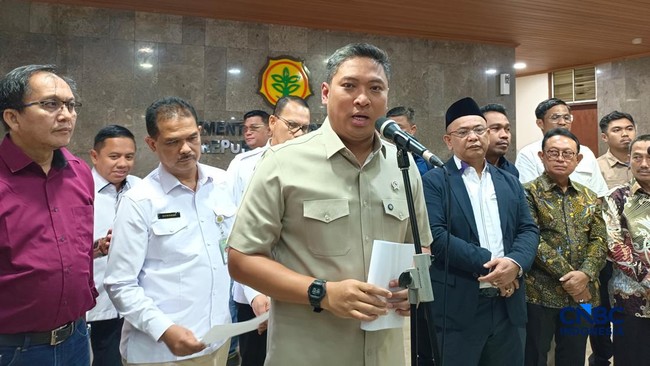
Deputy Agriculture Minister Sudaryono stated that PT Danantara Sumberdaya Indonesia (DSI) would not profit from managing the single-door export policy for natural resources, including palm oil, coal, and iron alloy. He also dismissed claims that PT DSI would profit from natural resource exports, assuring that the company would manage and oversee the export policy to ensure transparency, accountability, and responsibility. ‘If there are claims that PT DSI will profit, that is not the case. PT DSI does not take profit; it manages and oversees our natural resource exports. It does not charge additional fees or take extra profits,’ Sudaryono said during a press conference at his office in Jakarta on Tuesday, 26 May 2026. He said the single-door export policy would be implemented in phases during a transition period from 1 June to 31 August 2026. During this time, export activities would continue normally while undergoing evaluation. ‘A transition period has been provided for the single-door export policy, with the initial phase from 1 June to 31 August. This three-month transition period allows commodity exports to continue while being evaluated,’ he added. ‘By 1 September, if companies are ready, the transition can be completed and operations handed over to PT DSI,’ he continued. Sudaryono reiterated that PT DSI would only function as an exporter manager and overseer. ‘Once again, DSI does not take profit; it merely manages and oversees export activities,’ he stressed. The government aims for full implementation by 1 January 2027. ‘Following the three-month transition period, we will continue evaluations, leading to full implementation on 1 January 2027. This applies not only to palm oil but also the other two commodities, though we are focusing on palm oil here,’ Sudaryono said. He also assured the government would not harm farmers or the palm oil industry under the new rules. ‘This policy benefits both farmers and entrepreneurs. The transition period and psychological effects will be explained, along with the steps involved,’ he said. ‘The government would never sacrifice economic interests, farmers, or the industry, as farmers cannot sell without a supported industry,’ he added. Sudaryono further mentioned allegations of export practices harming the nation, which prompted the single-door export policy. ‘Allegations of transfer pricing and under-invoicing, among others, prompted this regulation,’ he said. He stated that businesses operating ethically would not be harmed by the new rules. ‘This is beneficial for our economy. Ethical businesses will not suffer; in fact, they should receive support and assistance,’ he added. Meanwhile, Apkasindo Chairman Gulat Manurung said the government meeting clarified PT DSI’s role for palm oil farmers. ‘Clarity is needed, as the Ministry of Agriculture has not provided detailed explanations. This meeting highlights the bottleneck issue,’ Gulat said after the press conference. He added that many misunderstood PT DSI’s role due to insufficient government publicity. ‘PT DSI is not at fault; people interpret it differently—some focus on one part, like the ear or tail, without seeing the whole picture. PT DSI should promptly clarify its role, which this meeting addresses,’ he said. Gulat stressed PT DSI is not a middleman profiting from palm oil trade. ‘No, not at all. After the Deputy Minister’s explanation, it makes sense. It’s reasonable to centralise exports instead of selling freely to Malaysia and abroad without fixed prices. PT DSI would act as Indonesia’s palm oil conductor,’ he explained. He said both independent and contract farmers support PT DSI’s formation, provided the government clarifies implementation. ‘Both independent and contract farmers support PT DSI, but the government must clarify quickly. We shouldn’t be left in the dark, becoming victims of unclear explanations about PT DSI,’ Gulat said. He noted that unclear information has allowed speculators to suppress fresh fruit bunch (TBS) prices for farmers. ‘Without official government explanations, speculators exploit the ambiguity to buy cheap. While not all, about 80% are speculators,’ he concluded.