
Depok Government to Revitalise Unroadworthy Angkots, Monitor Cross-Regional Routes
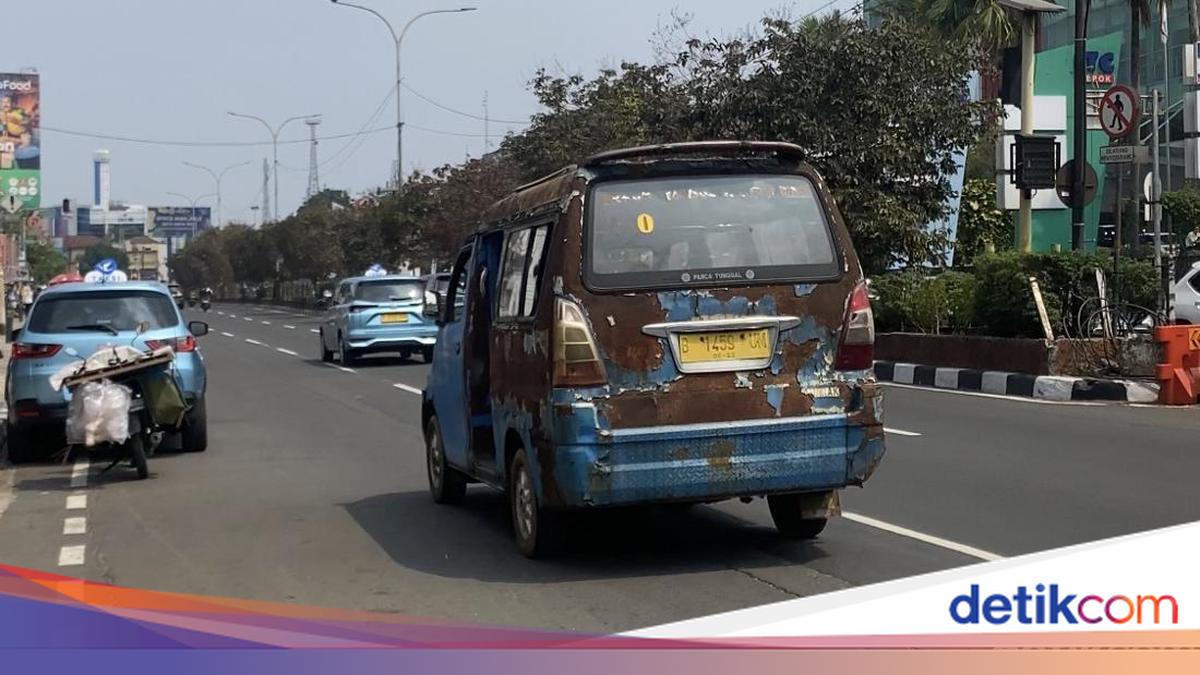
The condition of urban public minivans (angkot) in Depok, West Java — battered vehicles, some even running without number plates — has drawn complaints from passengers. Depok’s Transport Agency (Dishub) will revitalise the condition of these vehicles in stages.
“The Depok City Government is working slowly but surely to improve the condition of urban transport in the city,” said Mathaeous Ericson Siahaan, Head of the Urban Transport Section at Dishub Depok, when contacted by detikcom on Tuesday (14/7/2026).
Eric explained that the effort would begin with the imminent introduction of electric transport on the Depok Terminal-Jatijajar Terminal route.
“We are starting by bringing in electric-based transport on the Depok Terminal-Jatijajar Terminal route via GDC, which will be introduced soon,” he said.
Eric explained that the unroadworthy angkot on routes D05, D04 and D41 are cross-border vehicles, meaning Dishub Depok’s role is limited to supervision.
“D05 is under a cooperative based in Depok and Bogor Regency. D41 is under a cooperative in DKI Jakarta and a cooperative in Bogor Regency. D04 is under a cooperative in DKI Jakarta,” he said.
“Angkot D05, D04 and D41 are cross-boundary urban transport. Depok City is merely part of their route, and we at the Transport Agency have a supervisory role,” he added.
Eric said Dishub Depok would soon coordinate with the transport agencies of DKI Jakarta and Bogor Regency to monitor these angkot in accordance with applicable regulations.
“In the near future we will certainly coordinate with Dishub DKI Jakarta and Dishub Bogor Regency to conduct field supervision, in line with the minimum service standards already established under the prevailing rules,” he concluded.
On Tuesday (14/7), detikcom travelled along Jalan Margonda Raya to Citayam in Depok, West Java. Angkot 04 on the East Depok-Pasar Minggu route was seen without a rear bumper.
The vehicle’s number plate was also illegible. Angkot 05 on the Depok Terminal-Citayam-Bojonggede route was also observed.
The condition of the angkot 05 fleet was largely alarming. The roofs were faded and rusted, and several vehicles lacked number plates altogether.
Some angkot were also missing windows and doors. Their exhausts belched unpleasant fumes. Yet these vehicles continued to serve passengers.
Complained About by Passengers
One passenger, Rifki (30), said the condition of angkot in Depok had become unroadworthy. He said the front of the vehicles was also worrying.
“As a passenger, sometimes the condition is already unfit. Many angkot are worrying even just from the front of the body. Some don’t even have a rear bumper,” Rifki told detikcom on Tuesday (14/7).
Because of these conditions, Rifki said he was afraid to board an angkot, fearing the vehicles could cause accidents.
“The front alone is worrying, let alone the engine. As a passenger, I’m afraid an accident might happen, or the brakes might fail, something like that,” he said.
Rifki hopes the Depok City Government will deal with the unroadworthy angkot, and also offer solutions so the system improves while the vehicles keep operating.
“My hope is that the Depok City Government enforces order but also gives solutions. So, yes, tidy up the bad angkot, but provide a solution — perhaps a TransDepok-style system or something like that,” he said.
“These drivers still need to earn a living, right? But how can the angkot be made comfortable for passengers while the operators can still run their business? That’s all,” he added.
Another resident, Dewi (61), said the condition of angkot in Depok was generally poor.
“Yes, the condition of angkot is mostly bad. There are a few good ones, but most are bad,” Dewi said.
Dewi hopes angkot in Depok can become more modern and orderly. She would like Depok’s angkot to resemble Jakarta’s JakLingko, to avoid being overcharged by drivers.
“I want them to be good and cheap. Ideally like the trains — regular passengers using a card, like JakLingko. That way it would be orderly. Because sometimes there are rogue drivers who ask for more,” she added.