
Depok City Government Plants Tabebuya Trees on Cleared Illegal Building Sites to Prevent Erosion and Pollution
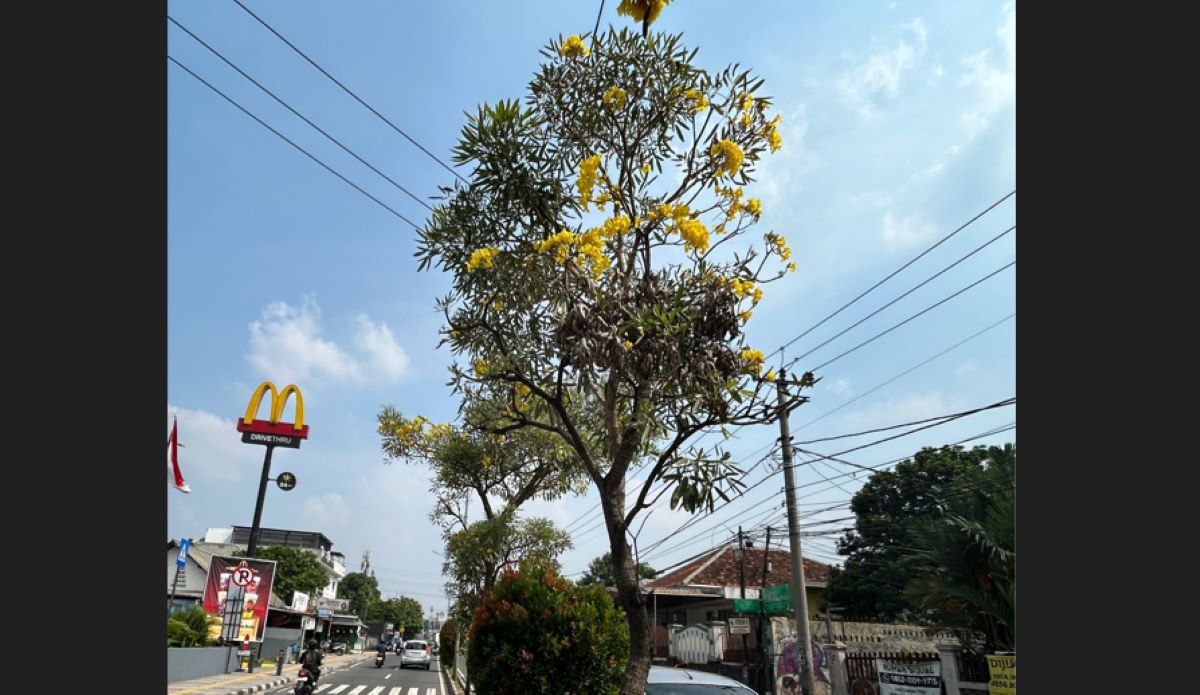
The Depok City Government in West Java, through its Environmental and Hygiene Agency (DLHK), is proactively clearing debris from thousands of demolished illegal buildings. This step is followed by greening efforts on social and public facility land to prevent illegal land conversion, restore water absorption functions, reduce pollution, and create a more beautiful environment. “We clear the rubble and leftover materials, broken cement, nails, and paint from the enforcement sites so they do not disturb the roots of the trees we plant,” said Head of DLHK Depok City, Reni Siti Nuraeni, on Saturday (4/7). Reni stated that clearing building debris and planting trees not only creates a beautiful environment but also holds the value of a continuous charity, the rewards of which flow as long as the tree grows and provides benefits. The step of planting trees on former illegal building sites is part of a city planning programme to prevent the conversion of land from which buildings have been demolished. “We are regreening and beautifying the former demolition land. Today we are targeting thousands of Tabebuya trees for planting. This location has long been suitable for this type of plant because its function is appropriate for water absorption,” she said. The atmosphere along Depok City’s main roads now looks different, highlighting aesthetic aspects. The beauty resulting from Tabebuya trees planted on former demolition land along Jalan Raya Margonda, RA Kartini, Grand Depok City, Jalan Raya Bogor, and Jalan Juanda is now blooming beautifully, displaying captivating gradients of yellow and pink. The expanse of golden yellow, pink, purple, and magenta colours serves as a refreshing visual attraction as well as a selfie spot for residents. “The blooming of Tabebuya flowers on these protocol roads is the result of DLHK’s long-term commitment and dedication to presenting public spaces that are not only ecologically shady but also visually pleasing. This is part of our continuous effort to make Depok a beautiful, comfortable, and environmentally conscious city. Behind this visual beauty lies mature and measured environmental planning,” explained Reni. Reni added that the Tabebuya tree is highly drought-resistant. This popular ornamental plant, known for its dense, trumpet-shaped flowers, represents the commitment of Depok City, which carries the motto ‘Maju Bersama Depok’. “The Tabebuya trees we plant in open spaces and along roadsides are hardwood plants, and their roots do not damage pavements and are capable of absorbing air pollution well,” she added. Head of Environmental Planning and Conservation at DLHK Depok City, Tri Sakti Anggoro, added that the selection of trees from the Handroanthus genus was based on specific urban silviculture techniques. “Technically, the selection of Handroanthus chrysotrichus (yellow Tabebuya) and Handroanthus heptaphyllus (pink Tabebuya) is based on their high adaptability to urban stress, including air pollution and hot asphalt road temperatures,” explained Tri. According to him, the root system of the Tabebuya tree is ideal for road corridors because it does not damage pavement or asphalt structures. In addition, its leaves function as a carbon sink. “This carbon sink can also reduce the urban heat island effect in the city centre,” he said. Tri emphasised that the planting of Tabebuya trees is designed for city beautification while integrating ecological functions, infrastructure safety, and community-friendly urban landscaping. “The placement of Tabebuya on road medians is designed to create a directed visual line for drivers while strengthening the identity of Depok City’s main roads as modern green corridors,” he concluded.