
Depleted Regional Budget: Palangka Raya Government States Inability to Further Manage Forest Fires
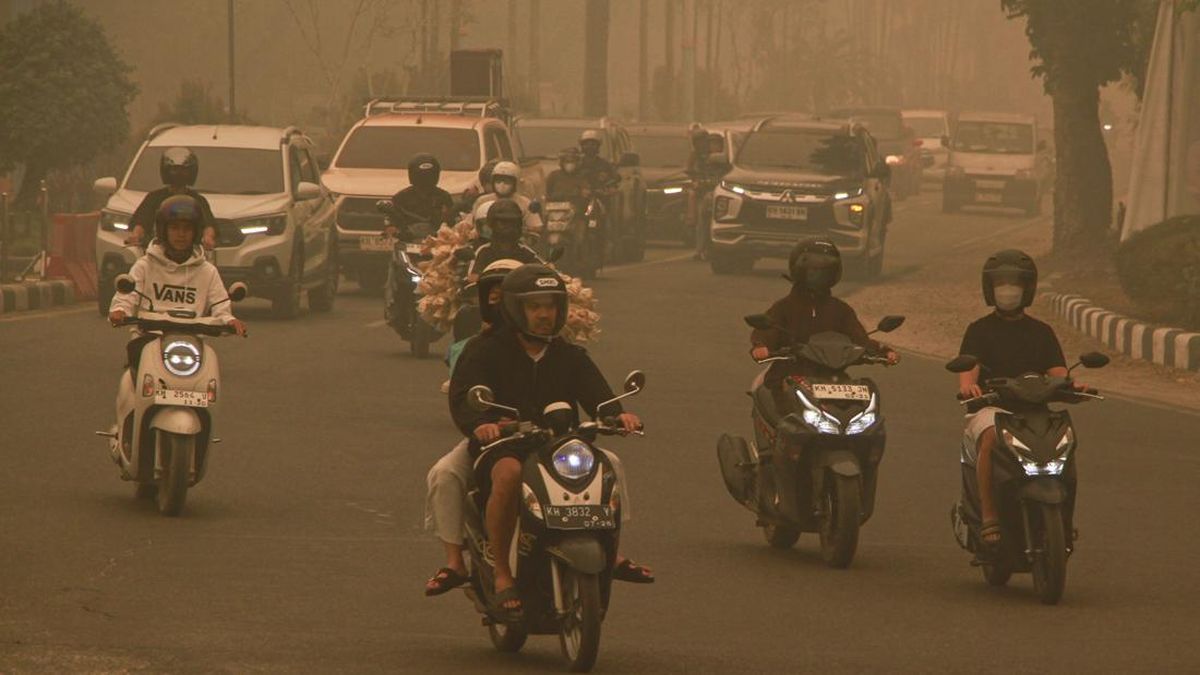
The management of forest and land fires (karhutla), which has been ongoing for months, is beginning to drain the financial capabilities of the Palangka Raya City Government in Central Kalimantan. The Regional Secretary of Palangka Raya, Arbert Tombak, stated that the regional budget (APBD) condition is becoming increasingly heavy and is threatened to fall into a deficit by early October 2026.
“Our regional budget is no longer capable. In fact, by early October, our budget has already gone into deficit,” said Arbert on Wednesday (30/9), as reported by detikKalimantan. He explained that this reflects the massive budgetary burden the Palangka Raya City Government has had to bear for fire management since the emergency status was declared in June 2026.
He noted that over the past several months, the regional budget has been a primary source to support various operational needs for handling forest fires on the ground, ranging from firefighting support to the operational costs of personnel involved. “However, the prolonged duration of the management means budgetary needs continue to run, while the regional financial capacity has its limits,” Arability said.
According to Arbert, the impact is not only felt in operational management. The rights of officers who have been struggling in the field have also been affected, with payments being delayed. He stated that daily allowances or wages for personnel involved in fire management have yet to be paid. Arbert noted that this situation is a major concern for the Palangka Raya City Government, as field personnel still require support to carry out their duties amidst the ongoing fire management.
Regarding the Revised Regional Budget (APBD Perubahan), Arbert explained that the Palangka Raya City Government had previously prepared budget strengthening through the revised budget to support fire and disaster management. However, the continuous nature of the crisis makes additional budgetary support and coordination with both provincial and central governments essential. “This issue shows that prolonged forest fires not only exhaust the strength of officers in the field but also pressure the fiscal capacity of the local government,” he added.
The Palangka Raya City Government is now faced with the need to maintain ongoing operations while ensuring that the rights of the personnel involved can be fulfilled amidst increasingly limited regional funds.
Meanwhile, the distribution of high-confidence hotspots in Central Kalimantan has reportedly seen a decline. Based on the latest data from the Ministry of Forestry via the Forest and Land Fire Control Information System (SiPongi), the number of hotspots in Central Kalimantan dropped from 134 points to 37 points in a single day. This represents a decrease of 97 points, or approximately 72.4 per cent, compared to the previous day.
This data was presented by the Ministry of Forestry in a press release on Tuesday. Central Kalimantan remains one of the priority provinces for fire control by the Ministry. After experiencing an increase of up to 523% as of Monday (28/9), the Ministry recorded the largest decrease in hotspots in Central Kalimantan. On Sunday (27/9), 134 high-confidence hotspots were still detected in Central Kalimantan, which then reduced to 37 points the following day.
Despite the decline, Central Kalimantan remains a priority region for the central government, alongside South Sumatra, Jambi, South Kalimantan, and West Kalimantan. Among the six priority provinces, the total number of high-confidence hotspots decreased from 204 to 162 points. Conversely, South Sumatra saw an increase from 29 to 96 points, while Jambi increased from 5 to 25 points. South Kalimantan also saw a decrease from 25 to 4 points, West Kalimantan dropped from 11 to zero, and Riau remained at zero.
The Ministry of Forestry stated in its press release that operations will continue to be strengthened in areas experiencing increases or high hotspot activity, including Central Kalimantan. The Ministry clarified that while numbers have decreased, hotspots do not necessarily represent the number of fire incidents. Hotspots are indicators of surface temperature anomalies detected by satellites, and each indication requires verification through ground checks to confirm actual fire occurrences.