
Dependence on Private Vehicles Remains Dominant During Eid Homecoming
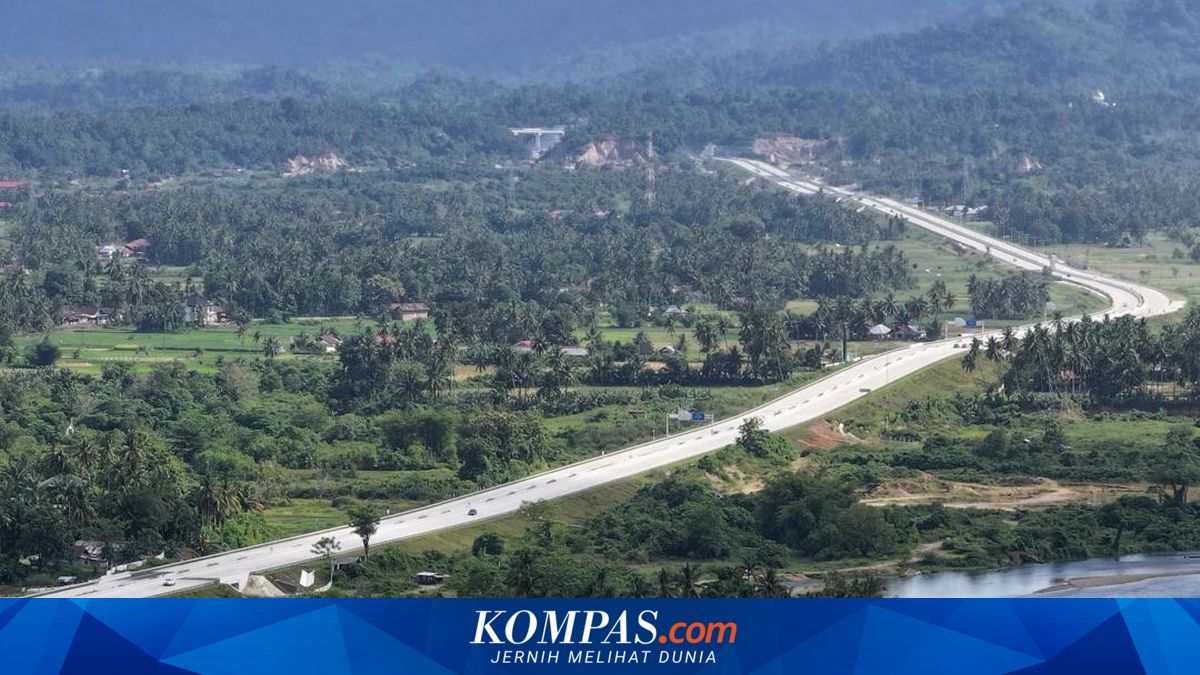
JAKARTA, KOMPAS.com - A major transformation in the face of Eid homecoming in Indonesia has occurred over the past decade, particularly since the massive construction of tol roads.
However, behind the increasingly smooth traffic flow, a new challenge has emerged in defining the true success of homecoming, namely the high dependence of the public on private vehicles.
Based on the 2026 Eid Transport Survey conducted by the Ministry of Transportation (Kemenhub) together with the Central Statistics Agency (BPS), the Ministry of Communication and Digital (Komdigi), and LAPI ITB, it is estimated that 143.9 million people will undertake homecoming trips.
Of that number, 69.72% or around 100.32 million people still rely on private vehicles.
Private cars are the dominant mode with a share of 52.98%, followed by motorcycles at 16.74%.
Meanwhile, the use of public transport remains relatively limited. Buses are the primary choice with 16.22% (23.34 million people).
Academic from the Civil Engineering Programme at Unika Soegijapranata and Advisor to the Indonesian Transportation Society (MTI) Djoko Setijowarno assesses that this phenomenon shows that the success of Eid homecoming cannot be measured solely by traffic smoothness.
Djoko states that so far, indicators of Eid homecoming success have focused more on aspects of comfort, safety, and security on the road.
Indeed, since the connection of the Trans-Java Tol Road from Jakarta to Surabaya, plus the implementation of traffic engineering such as contraflow and one way, the homecoming flow has become much more controlled and extreme congestion has almost ceased to occur.
However, according to him, this achievement has created a “false satisfaction”. The high satisfaction level of homecomers does not necessarily reflect the overall quality of the transport system, but only shows that the minimum standard of traffic smoothness has been met.
“Indicators of homecoming success need to be redefined. Not just smooth on tol roads, but to what extent the public shifts to public transport and the reduction in motorcycle use for long-distance trips,” he said.
The government itself continues to increase infrastructure capacity. For the 2026 Eid Homecoming, six new functional tol sections are prepared, both on Java and Sumatra, to ease density.
The presence of tol roads indeed provides more comfort because of minimal side obstacles such as roadside markets, local traffic, to traditional vehicles.
Nevertheless, the root of the problem lies outside the tol roads, namely the limitations of public transport services in destination areas.