
DePA-RI Urges Revision of Advocates Law to Strengthen Professional Quality
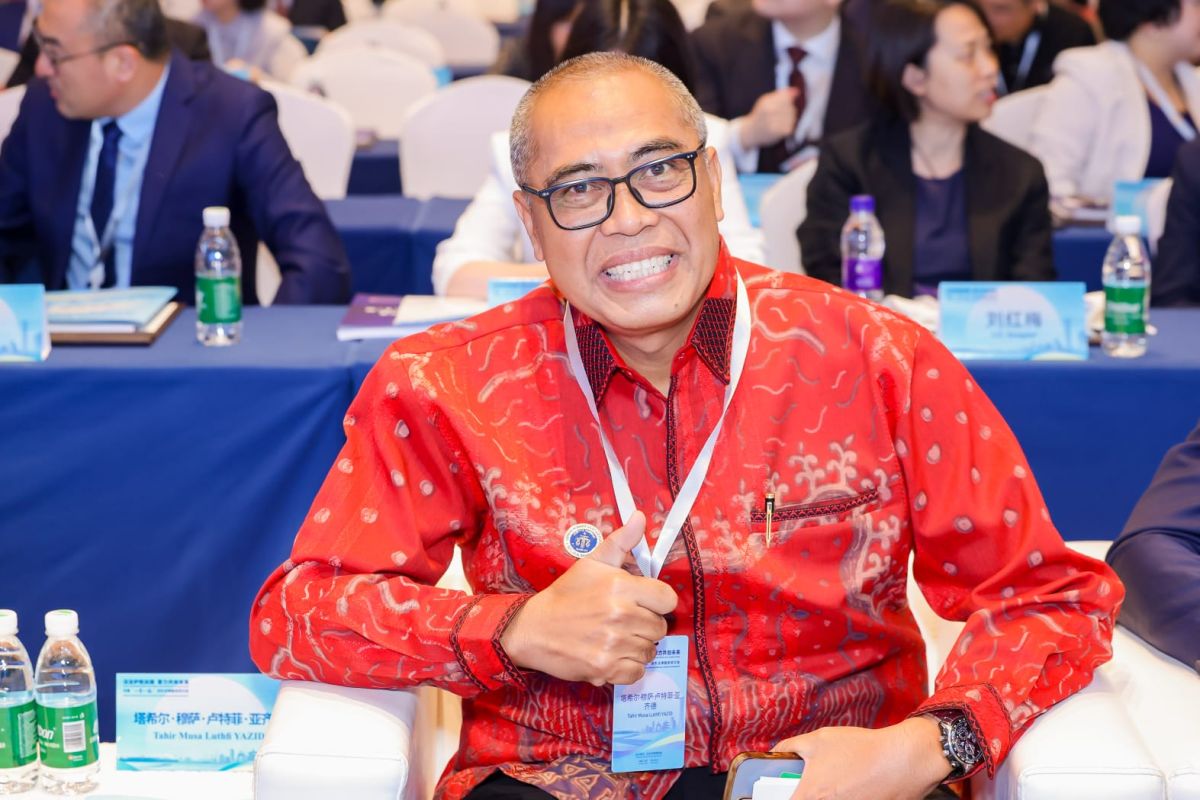
The Indonesian Advocates Movement Council (DePA-RI) is urging a revision of the Advocates Law to strengthen professional quality and protection for justice seekers, following Constitutional Court (MK) Decision Number 126/PUU-XXIV/2026. According to DePA-RI, the update to Law Number 18 of 2003 concerning Advocates must also be directed towards strengthening more accountable professional governance through a transparent supervisory system, raising professional standards, and establishing regulations capable of addressing law enforcement challenges and the needs of justice-seeking communities.
DePA-RI Chairman Tahir Musa Luthfi Yazid stated in Jakarta on Wednesday that the MK ruling, which instructs lawmakers to update the Advocates Law within two years, must be seized as a momentum for comprehensive reform of the advocate profession. “We consider the MK ruling as an important momentum to carry out comprehensive reform of the advocate profession to strengthen the quality of law enforcement, increase professional accountability, and expand access for justice seekers,” Tahir said.
According to him, the revision of the Advocates Law needs to be based on three main principles: protection of justice-seeking communities, strengthening the independence of the advocate profession as law enforcers, and increasing accountability through a transparent and effective supervisory system. One of the proposals from DePA-RI is the reconstruction of the advocate’s position as a constitutional officer or constitutional legal profession that has a public function in safeguarding a fair judicial process. “Advocates must be positioned as a constitutional legal profession. The function of an advocate is not only to defend clients but to safeguard due process of law and help realise a free and impartial tribunal,” he said.
He assessed that the position of advocates needs to be functionally aligned with judges, prosecutors, and investigators as pillars of law enforcement. Consequently, the state-recognised advocate organisation must have a single national ethical standard, a single national education standard, and an independent national supervisory system. DePA-RI also proposed the establishment of a National Bar Council, a national-level advocate profession regulatory body, to overcome the fragmentation of advocate organisations that has occurred so far. According to Tahir, the establishment of such a body is not to restrict freedom of association, but to ensure more integrated and accountable professional governance. “The solution is not to suppress freedom of association, but to form an independent or semi-independent body that functions as a national advocate profession regulator,” he said.
The proposed body would have authority over national advocate registration, professional certification, professional education, disciplinary and ethical enforcement, and management of a national advocate database. In addition, DePA-RI is pushing for the implementation of a One Lawyer-One License-One National Registration System so that every advocate has a National Advocate Identification Number, is registered in a national system, and can practise throughout Indonesia. According to Tahir, an integrated national registration system will provide legal certainty while increasing transparency for the public in choosing legal services.
To strengthen professional integrity, DePA-RI also proposed the formation of an independent National Disciplinary Board to handle ethical and disciplinary violations by advocates. The body is expected to have the authority to impose sanctions ranging from warnings and suspension to licence revocation for advocates proven to have violated the code of ethics. “Independent, professional, and accountable enforcement of the code of ethics is a way to create public trust in the advocate profession as an instrument of protection for the community as well as a means of safeguarding the honour of the advocate profession,” Tahir said.
Furthermore, the revision of the Advocates Law is deemed necessary to accommodate technological developments, including the utilisation of artificial intelligence (AI) and the digitalisation of legal systems. Strengthening technology-based legal education and integrating advocate data nationally are considered important to prepare the advocate profession to face legal challenges in the digital era. The MK Decision Number 126/PUU-XXIV/2026 previously gave lawmakers two years to update the governance arrangements of advocate organisations within the Advocates Law.
Source: jawawa.id (https://jawawa.id/newsitem/depa-ri-urges-revision-of-advocates-law-to-strengthen-professional-quality-1782312833)
Originally published by Antara (Indonesian) (https://www.antaranews.com/berita/5621752/depa-ri-dorong-revisi-uu-advokat-perkuat-kualitas-profesi), translated from Indonesian