
Densus 88 Invites Teachers and Students to Dissect Film 'Jihad Selfie' to Prevent Radicalism
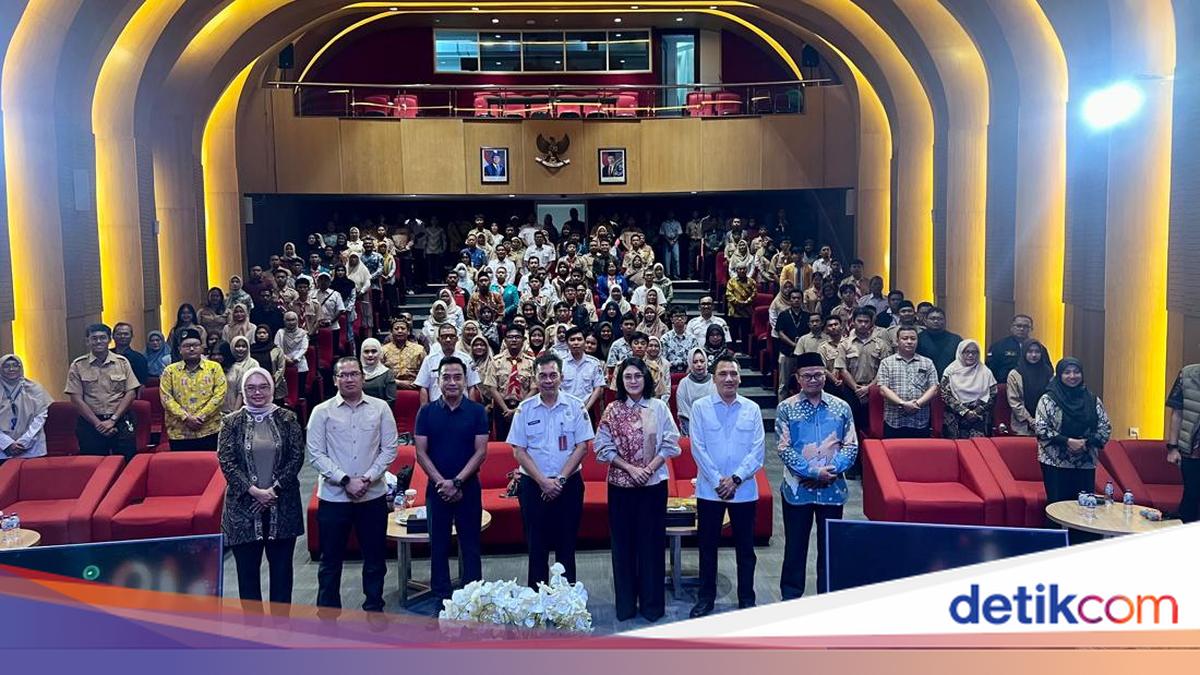
The Special Detachment (Densus) 88 Anti-terror of the Indonesian National Police continues to strengthen efforts to prevent radical ideologies among the younger generation. This time, Densus 88, in collaboration with the Jakarta Education Office and the Jakarta Regional Office of the Ministry of Religious Affairs, held a film discussion on a film titled ‘Jihad Selfie’.
The activity involved 200 participants consisting of student council presidents, teachers, school committees, and parents of senior high school and Islamic senior high school students across Jakarta Province. The interactive discussion also highlighted the dangers of bullying and propaganda on social media.
Head of the Counter-Ideology Sub-directorate of the Prevention Directorate of Densus 88 Anti-terror, Senior Commissioner Moh Dofir, representing the Director of Prevention, emphasised how crucial the position of family and school is in safeguarding the future of the nation’s children.
“Family and school have a very important role in providing a sense of security, attention, space for dialogue, as well as a comfortable environment free from bullying,” Dofir said in a statement on Wednesday (19/8/2026).
In line with Dofir, the Head of the Jakarta Regional Office of the Ministry of Religious Affairs, Adib, encouraged the strengthening of moderate religious understanding in the educational environment. According to him, religion must be practised in line with the principles of nationhood.
“The Regional Office of the Ministry of Religious Affairs certainly encourages the continued development of moderate religious understanding, religious understanding that is in line with the principles of nationhood, understanding and practice of religious teachings that uphold diversity and difference and reject any form of violence,” Adib said.
On the same occasion, the Head of the Senior High School Division of the Jakarta Education Office, Ali Mukodas, assessed that terrorism prevention is part of a long-term effort to build students’ character so that they are not easily incited by hatred.
“Terrorism prevention is ultimately not only about preventing an act of violence, but we are building a generation that is not easily divided by differences and not easily incited by hatred,” Ali said.
However, the challenges in the digital era are not easy. A representative of Densus 88, Police Commissioner Agus Isnaini, explained how extreme narratives have now penetrated the digital world, even infiltrating through teenagers’ hobbies such as playing games.
“Children are introduced to content or figures with nuances of grievance, injustice, or hatred—often through online games, forums, or social media,” Agus said.
Responding to this challenge, the Head of the Centre for Character Strengthening of the Ministry of Primary and Secondary Education, Ruspita Putri Utami, asked schools to be more open and inclusive. She emphasised the importance of schools’ ability to recognise early symptoms or conduct early detection.
“There should no longer be exclusivism in schools. They must be inclusive, truly inclusive, and the most important thing is the school’s ability to conduct early detection,” Ruspita said.
Meanwhile, UNICEF Indonesia Child Protection Specialist, Ignatius Setiawan Cahyo Nugroho, reminded that the issues of radicalism and child exploitation must be resolved comprehensively from upstream to downstream.
“We often provide non-systemic answers, whereas the problem is systemic. In order for us to think systemically, we need to think comprehensively,” Ignatius said.
The film discussion activity is expected to be a turning point for parents and teachers to be more sensitive to children’s communication patterns. With early detection and an inclusive environment, it is hoped that schools in Jakarta will become safe places free from the influence of extreme ideology.