
Denpasar Industry Reaches 16,882 Units, Skilled Footwear Workforce Lacking
The number of industries in Denpasar City in 2025 reached 16,882 units. This figure represents a 25.7% increase compared to 2024, when 13,425 units were recorded.
The Denpasar City Government (Pemkot Denpasar), through the Denpasar City Industry and Trade Office (Disperindag), sees further opportunities in the footwear industry, which remains limited. Currently, only 60 units are registered in 2025, up from 51 in 2024.
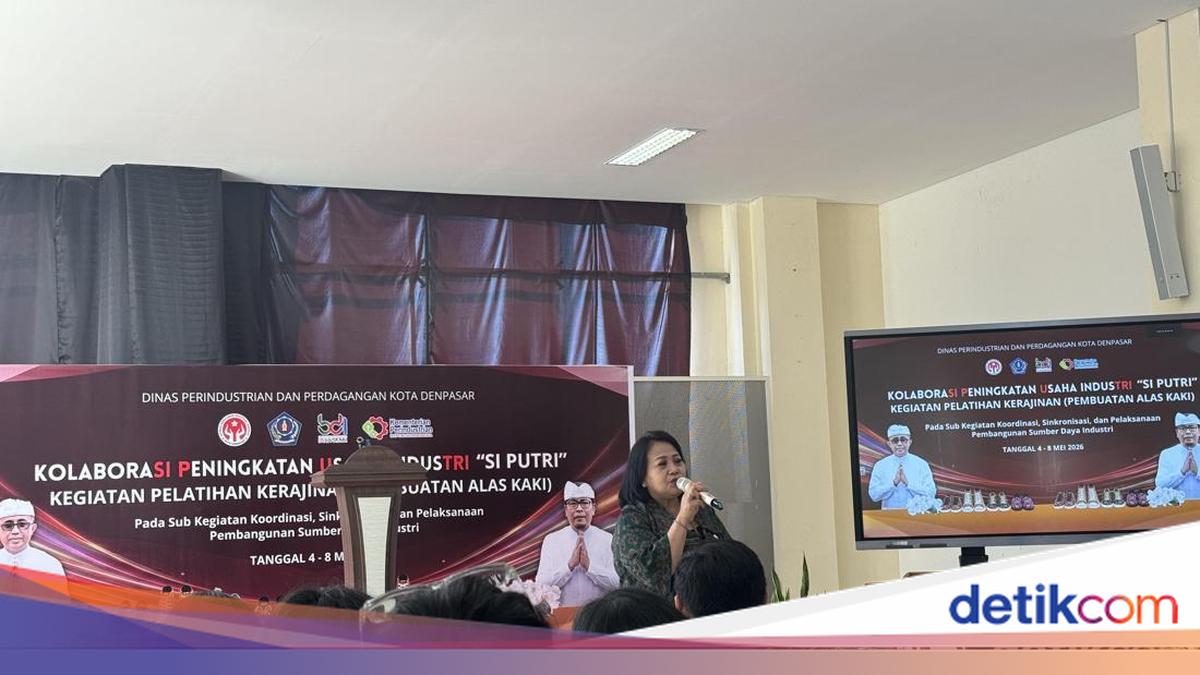
“There is still a limited supply of skilled workers who master standard pattern-making and footwear assembly techniques,” said Tjokorda Istri Agung Diah Kencana Wati, Chair of the Organising Committee for the Collaboration to Enhance the ‘Si Putri’ Craft Training (Footwear Production) Industry for 2026, on Monday (4/5/2026).
In collaboration with the Denpasar Industrial Training Centre (BDI), the training is taking place over five days until 8 May 2026. It involves 20 business actors from small and medium industries (IKM) in Denpasar City operating in the craft sector, as well as beginners.
“There will be various materials, from design thinking theory, shoe-making techniques, product photography, to social media marketing,” explained Tjok.
The training aims to produce more competitive products with added value by utilising Balinese endek woven fabric. It also seeks to expand global markets and appeal to young people through modern footwear design applications, such as sneakers.
“It will continue. After the training is completed, we will form groups to facilitate coordination with the artisans. We will then assist them, and after production, we will market their products,” said Ni Nyoman Sri Utari, Head of the Denpasar City Disperindag, when interviewed by detikBali on Monday.
Utari added that marketing strategies can be implemented through festivals and booths at various events organised by offices and banks.
“In the future, we will also coordinate with the Head of the Tourism Office to reach hotels, so they can provide booths for promotion,” Utari added.
Nevertheless, Utari stated that the industry is currently experiencing a labour crisis. She assessed that the current generation tends to prefer practical options due to media digitalisation.
“Generation Z children now prefer digital means. They seek what is practical and quick to yield results. We usually conduct door-to-door socialisation to our assisted industrial business actors and organisations for outreach,” explained Utari.
She mentioned a successful example in Kwace Bali, one of the clothing sector industries involving Family Empowerment and Welfare Groups (PKK) as weaving labour.
On the other hand, the woven fabric industry in Denpasar City remains limited, with only 15 businesses recorded in 2025. This also serves as an effort to ensure that the weaving industry has a strong downstream ecosystem in the craft and fashion sectors.
“MSMEs themselves offer many business opportunities. The development of the creative sector is currently extraordinary, and whatever is gained from this training will undoubtedly have a very positive impact,” said I Gusti Ayu Putu Swandewi Edy Mulya, Deputy Chair of the Denpasar City Dekranasda Daily Board, when met by the detikBali team after the training opening.