
Denpasar Adopts Jakarta's Strategy for Sanur Low Emission Zone
Denpasar, as the centre of activity in Bali Province, now faces a serious challenge regarding vehicle density and air pollution. With motorised vehicles numbering 1.85 million units, Denpasar accounts for the largest share on the Island of the Gods. This condition has a direct impact on the high level of greenhouse gas (GHG) emissions from the transport sector, far exceeding the national average.
In response, the Denpasar City Government has taken progressive steps by enacting Denpasar Mayoral Regulation (Perwali) No. 39 of 2025 concerning the Low Emission Zone (KRE).
This move makes Denpasar the first city in Indonesia to have a Low Emission Zone regulation at the regional level. As part of the implementation, the Denpasar City KRE Regional Action Plan (RAD) drafting team conducted a study visit to Jakarta to learn from good practices already applied in the capital.
The Head of the Denpasar City Transportation Office, I Ketut Sriawan, affirmed that intervention through the transport sector is the fastest route to sustainability.
“KRE Sanur, as a tourist destination, requires good air quality support so that tourism facilities feel safe and comfortable,” he said.
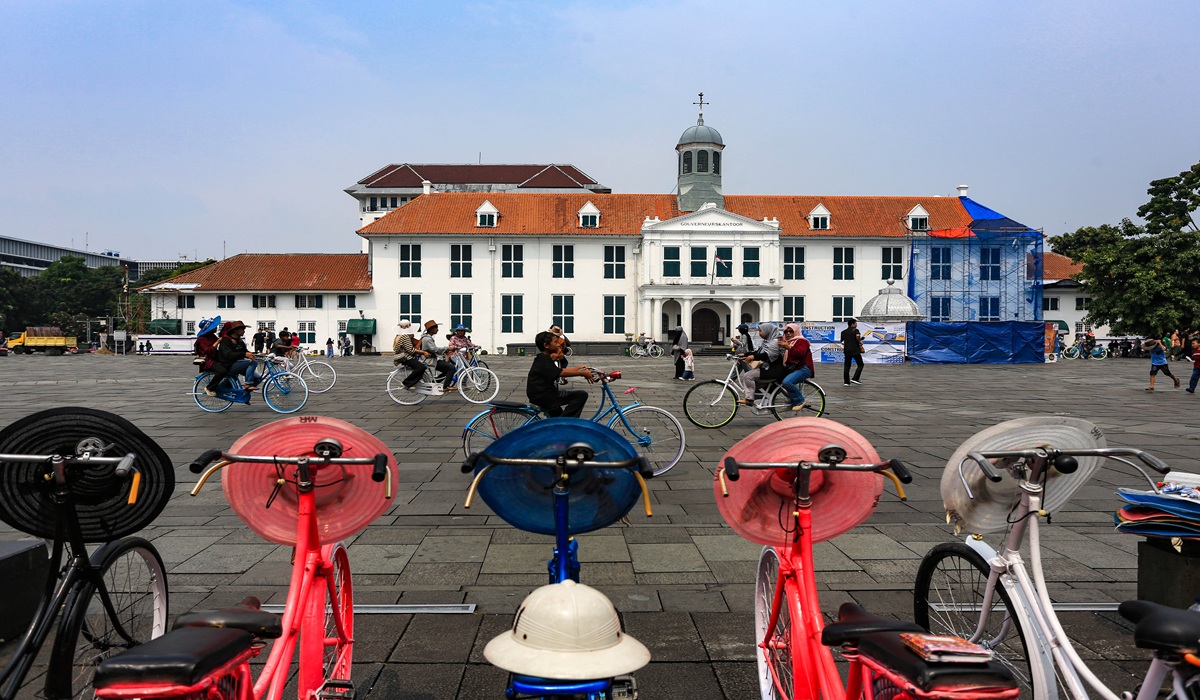
Jakarta has already implemented the Low Emission Zone (LEZ) concept, such as in the Kota Tua area, which has been piloted since late 2020.
There, private vehicle access is strictly restricted, leaving room only for local residents and logistics at certain hours. In exchange, the government provides integrated mass transport such as TransJakarta, the KRL commuter rail, and plans to extend the MRT to Glodok by 2029.
Irani Handalia, Head of the Administrative Sub-Division of UPSPLL at the DKI Jakarta Transportation Office, emphasised that the key to a successful Low Emission Zone is cross-sector collaboration.
“Coordination falls under a single command mandate, not merely at the technical agency level, because it involves aspects ranging from logistics and MSMEs to pedestrian infrastructure,” she explained.
A similar view was expressed by Made Jony Sasrawan from the DKI Jakarta Transportation Office, who cited the arrangement of Tebet Eco Park as an example. The concept prioritises pedestrians and cyclists without completely closing vehicle access, so that people’s mobility needs remain accommodated.
In drawing up the action plan for Sanur, Denpasar is not merely copying, but adapting to local characteristics. Her Pramtama, Principal Architect at US&P, sees great potential in Denpasar but cautioned that problem-solving should not only touch on “beautification” aspects.
“We need to identify inhibiting factors, such as congestion in Sanur. Transit and congestion problems must be resolved first before thinking about inter-area integration, as was done in the Tanah Abang area,” said Her.
Research support also forms the main foundation through the Bali Low Emission Zone Initiatives (BLEZI) driven by WRI Indonesia. I Made Vikananda, Senior Manager for Resilient Cities & Transport at WRI Indonesia, explained that good area planning will make it easier for people to transition from private vehicles to walking, cycling, or shuttle services.
“Area design that prioritises pedestrians will reduce emissions while improving air quality. We are working together to translate this KRE Mayoral Regulation into a strategic plan that is adaptive and relevant to the needs of the Sanur community,” Vikananda concluded.
Source: jawawa.id (https://jawawa.id/newsitem/denpasar-adopts-jakartas-strategy-for-sanur-low-emission-zone-1784382622)
Originally published by Media Indonesia (https://mediaindonesia.com/nusantara/912211/denpasar-adopsi-strategi-jakarta-untuk-kawasan-rendah-emisi-sanur), translated from Indonesian