
Dengue Fever Can Worsen as Fever Subsides, Recognise the Danger Signs
Dengue Haemorrhagic Fever (DHF) can initially appear like an ordinary fever. However, a patient’s condition can change rapidly, even when the fever begins to subside. Therefore, families need to continue monitoring the patient’s condition and recognise the danger signs of dengue.
Doctor and content creator Dr Gia Pratama Putra stated that in the early stages, DHF is not always easily distinguishable from other febrile illnesses. The condition that needs to be watched is when families assume a patient is improving simply because their body temperature begins to drop.
“What makes dengue dangerous is when families feel the fever is improving, whereas in certain phases, the patient’s condition can deteriorate rapidly,” Gia said in a written statement.
According to him, families need to closely observe the patient’s condition, especially if several danger signs appear. These symptoms include severe abdominal pain, continuous vomiting, bleeding, extreme weakness, restlessness, and a decrease in consciousness.
If these signs appear, patients must receive immediate medical assistance. Rapid and appropriate handling is essential to prevent dengue from developing into a more severe condition.
“In the Emergency Department, we work to save patients when dengue has already become severe. But the greatest victory actually occurs long before the patient reaches the ED,” said Gia.
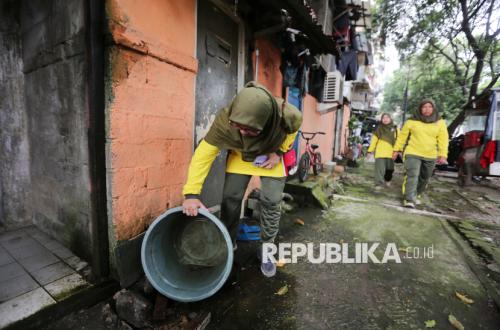
He believes that prevention remains the first line of defence against dengue. The public can consistently implement the ‘3M Plus’ strategy (draining, covering, and recycling), reduce exposure to mosquito bites, and pay attention to the environmental conditions at home and in places of activity.
Families can also consult healthcare professionals regarding other prevention options, including dengue vaccination.
Dengue is not a new disease in Indonesia. The first DHF cases were recorded in 1968 during an extraordinary event in Jakarta and Surabaya. At that time, 58 cases were reported with 24 deaths, representing a mortality rate of 41.3 per cent.
Case management and disease control have since progressed, allowing the mortality rate from DHF to be suppressed to below one per cent. However, dengue remains a public health threat and can occur year-round, not just during the rainy season.
A study by the Burden of Disease at Gadjah Mada University estimates that more than two million hospitalisations due to dengue occurred in Indonesia in 2024. The economic burden is estimated to reach almost Rp 9 trillion.
The magnitude of this burden is not only seen in healthcare costs. When a family member contracts dengue, the family must also face caretaking time, loss of productive time, and the risk of the patient’s condition worsening.
Indonesia itself targets zero deaths from dengue by 2030. The Ministry of Health has led the formulation of the National Action Plan for Dengue Control 2026–2029, involving various parties, including ministries, agencies, professional organisations, academics, international organisations, civil society, and philanthropic institutions.
These efforts include strengthening surveillance, case detection and management, early warning systems, vector control, and the utilisation of various prevention innovations. Wolbachia technology and dengue vaccination are also part of the intervention options that can support disease control.
Gia emphasised that efforts to reduce dengue deaths do not solely depend on healthcare services. Families play a vital role even before a patient arrives at a healthcare facility.
“We must not treat this as just a normal part of our daily lives,” he said.
Therefore, when a family member experiences a fever, the public is advised not to merely wait for the body temperature to drop. Monitoring the condition, being vigilant about danger signs, and deciding to seek medical help are essential parts of preventing dengue from progressing into a more severe state.
Commitment to dengue control is also supported by various parties, including the pharmaceutical company Takeda. Takeda’s Country Head for Malaysia & Indonesia, Simon Gallagher, stated that protection from dengue requires the involvement of the government, healthcare workers, the business world, and the community.
He believes that families need to be placed as a vital part of prevention efforts because the impact of dengue is felt not only by the patient but also by the family members providing care.
The 2030 target of zero deaths from dengue ultimately requires collective action, ranging from environmental prevention and recognising danger signs to accessing healthcare services and providing rapid, appropriate patient management.
“DHF does not only affect the patient. When one person falls ill, the entire family feels the impact, from anxiety and time spent caretaking to the financial burden. Therefore, the journey towards zero dengue deaths needs to place families as a key part of prevention efforts,” said Simon.
He added that the 2030 target can be brought closer if every party takes a role and moves together. Vaccines prevent 3.5 to 5 million deaths annually and have transformed global public health. For over 70 years, Takeda has provided vaccines to protect public health in Japan. Currently, Takeda’s global vaccine unit focuses on applying innovation to tackle some of the world’s most challenging infectious diseases, such as dengue.
Source: jawawa.id (https://jawawa.id/newsitem/dengue-fever-can-worsen-as-fever-subsides-recognise-the-danger-signs-1788609297)
Originally published by Republika (https://ameera.republika.co.id/berita/tkw0pa328/dbd-bisa-memburuk-saat-demam-mereda-kenali-tanda-bahayanya), translated from Indonesian