
Dengue Cases in West Jakarta Decline, Health Agency Warns Against Neglecting Mosquito Nest Eradication
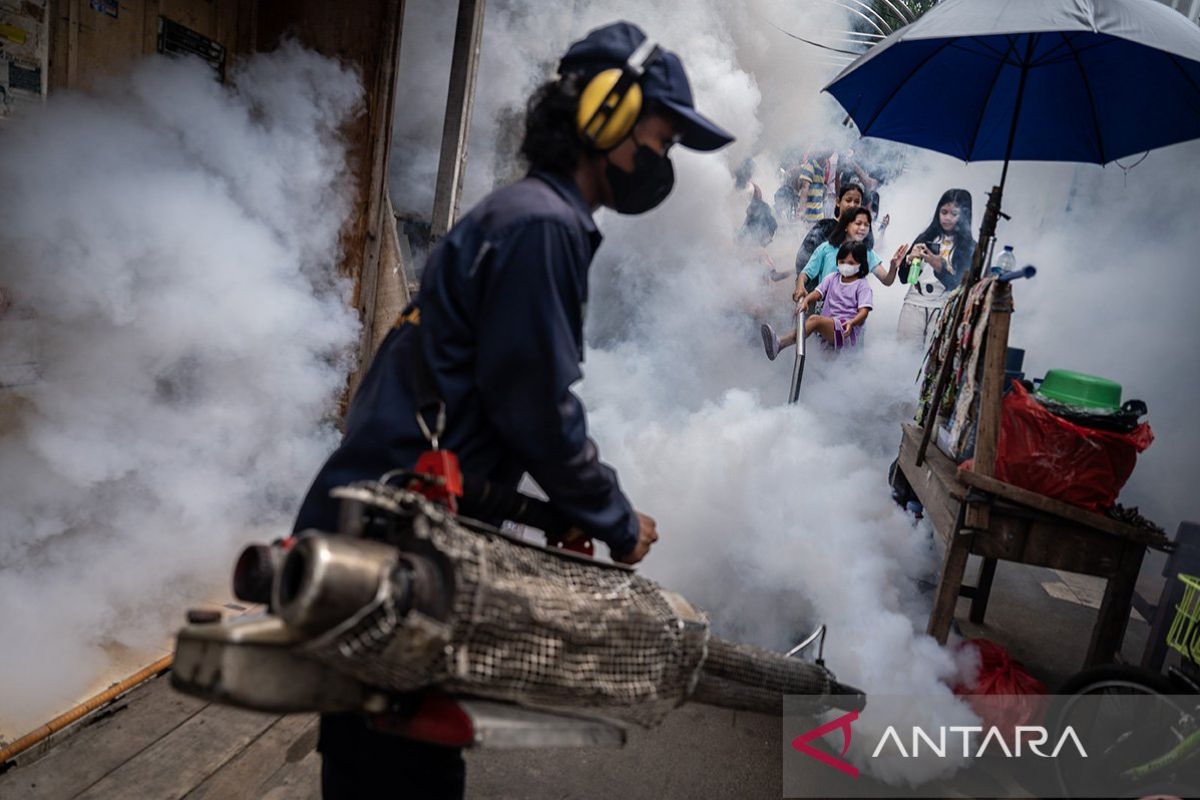
The West Jakarta Health Sub-agency has urged the public not to become complacent, even though the trend of Dengue Haemorrhagic Fever (DBD) cases has shown a significant decline over the past three months. Weather conditions with humidity and temperature levels that remain ideal for the breeding of the Aedes aegypti mosquito are considered to have the potential to trigger an increase in cases if mosquito nest eradication (PSN) efforts are not carried out routinely. “Considering that current weather conditions are still very supportive of Aedes aegypti mosquito breeding, do not be complacent; continue to carry out PSN routinely at home and in the surrounding areas,” said Head of the West Jakarta Health Sub-agency, Sahruna, when confirmed in Jakarta on Monday. Sahruna continued that, based on predictions from the Meteorology, Climatology, and Geophysics Agency (BMKG), the climate suitability for DBD in June 2026 shows an average relative humidity (RH) level reaching 80 percent. “This figure falls within the optimum humidity range for mosquito growth, which is 71 to 83 percent,” he said. Furthermore, he added, the air temperature in West Jakarta is predicted to range between 24 and 31 degrees Celsius, approaching the average optimum temperature for mosquito development of 25 to 27 degrees Celsius. “BMKG also predicts that the monthly DBD Incident Rate (IR) could potentially reach 7.6 cases per 100,000 population,” he said. In response to these climate challenges, he continued, all Community Health Centres (Puskesmas) in West Jakarta are currently tightening periodic monitoring of the Incident Rate and the speed of transmission in the field. Rapid intervention measures are also being implemented immediately through Epidemiological Investigations (PE) and the strengthening of the 3M Plus PSN movement. “Puskesmas are intensively monitoring DBD vectors or larvae in residential environments, coupled with increased health promotion regarding the dangers of DBD on a broad scale,” he revealed. Sahruna stressed that the main key to the success of DBD control lies in the early detection of mosquito larvae, which depends on the awareness of the community. “In its implementation, we prioritise the active and independent participation of the community as Jumantik (Larvae Monitoring Officers) in their own homes,” he added. Previously, the West Jakarta Health Sub-agency recorded that the trend of Dengue Haemorrhagic Fever cases in its area had experienced a significant decline in the last three months. The Head of the West Jakarta Health Sub-agency, Sahruna, in Jakarta on Friday, presented the latest data showing that in April 2026, 335 DBD cases were recorded. This number then decreased in May 2026 to 197 cases, and as of 4 June 2026 at 09.00 WIB, only one case had been reported. “The trend over the last three months indeed shows a fairly good decline. However, this decline should not make us negligent, because climate predictions from BMKG show that our environmental conditions are still at an optimum level for the life cycle of the mosquito that transmits DBD,” said Sahruna when contacted by ANTARA in Jakarta, Friday (5/6).