
DEN Sets Out Three Key Measures for Indonesia to Succeed in the Electric Vehicle Industry
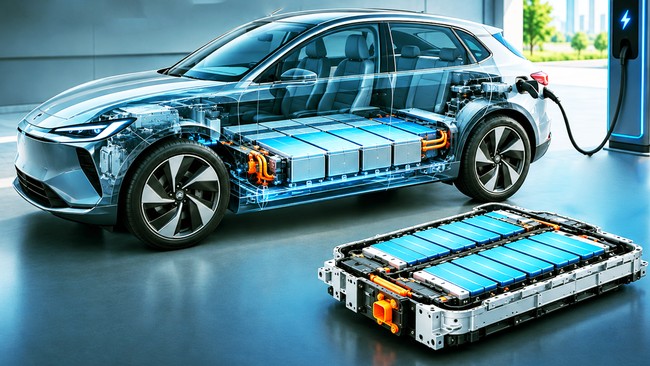
Jakarta, CNBC Indonesia — Indonesia’s National Economic Council (DEN) says the government must align three policy instruments to develop a domestic electric vehicle (EV) industry ecosystem. They are coordinating nickel mining quotas under the Work Plan and Budget (RKAB), implementing domestic content requirements (TKDN), and providing industrial incentives.
DEN Executive Secretary Septian Hario Seto said the first measure is to calibrate upstream mining RKAB policies against forecasts of global nickel-market demand and the needs of downstream smelters. This is important to balance supply and demand and prevent oversupply, which could undermine domestic nickel prices.
“We need to calibrate our RKAB to match the needs of the global nickel market and smelters. Several factors need to be considered. Looking at the ecosystem as a whole, we need to synchronise mining and processing,” Seto said at the Minerba Convention & Exhibition (Convex) 2026 at JIExpo, according to remarks cited on Wednesday (4 November 2026).
The second measure is to refine and consistently implement EV domestic-content regulations in stages. The government has set a minimum domestic-content requirement of 60% for electric cars from next year, requiring battery packs to be assembled in Indonesia. The threshold will rise to 80% in 2029, when battery cells will also have to be produced locally.
“We have said that domestic content will be 60% next year and 80% in 2029. We need to be consistent so that the industry can grow here. Our electric-car market is quite large: last year, we sold around 100,000, putting us among the world’s 20 largest electric-car markets,” he said.
The third measure concerns incentives to develop midstream industries and local battery supply chains, as well as incentives to encourage the adoption of electric two-wheelers. Such support is important to ensure investment remains sustainable and that battery products have a reliable domestic market.
“We need to consider incentives to boost the midstream sector. For electric vehicles, we should build on what is already in place. We will need to design specific incentives for electric motorbikes,” he said.
DEN stressed that the three policy instruments should be brought together in regulation so Indonesia can become a major player in the global EV supply chain without repeating the regulatory instability seen in other countries.
“This also includes supporting the domestic battery ecosystem so that it can meet the needs of electric cars in Indonesia,” he added.
Source: jawawa.id (https://jawawa.id/newsitem/den-sets-out-three-key-measures-for-indonesia-to-succeed-in-the-electric-vehicle-industry-1793785849)
Originally published by CNBC Indonesia (https://www.cnbcindonesia.com/news/20261104145825-4-782295/den-ungkap-3-cara-penting-buat-ri-sukses-di-industri-kendaraan-listrik), translated from Indonesian