
DEN says nuclear could be a 'dark horse' in accelerating decarbonisation
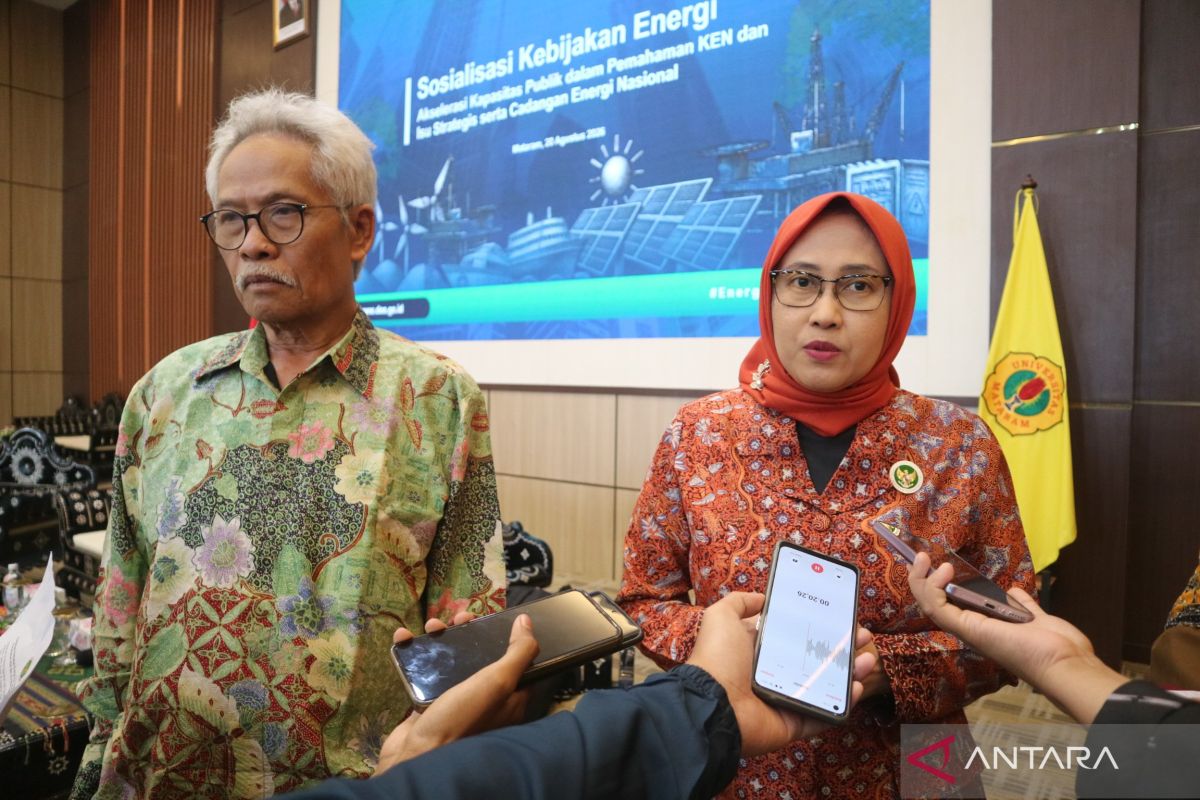
Mataram (ANTARA) - National Energy Council (DEN) member Sripeni Inten Cahyani said nuclear energy could potentially be a ‘dark horse’ in accelerating the decarbonisation process and achieving carbon neutrality targets in Indonesia.
“Previously, nuclear was the last option. Now nuclear is no longer the last option, but rather a dark horse that can drive the acceleration of achieving net zero emission,” she said during a National Energy Policy socialisation event at Mataram University, Mataram, West Nusa Tenggara, on Thursday.
The nuclear energy development programme has become increasingly relevant because Indonesia needs an energy source capable of meeting industrial and public energy demand while simultaneously supporting efforts to reduce carbon emissions.
Sripeni said several countries in the ASEAN region have placed nuclear power as part of their long-term energy strategies. Malaysia and the Philippines are reportedly beginning to enter nuclear energy projects in 2031, while Vietnam has a target in the range of 2031 to 2035.
According to her, Indonesia has strong foundations in developing nuclear technology for energy, both in terms of human resources and research facilities.
Indonesia has a nuclear education programme at Gadjah Mada University (UGM), while the nuclear reactor facility in Serpong, Banten, has a capacity of around 30 megawatts for research purposes.
“Nuclear power already exists at 30 megawatts in Serpong, and it is functioning well, but it has not yet been utilised for electricity and is still only at research capacity,” Sripeni said.
She further stated that the nuclear development programme now has a concrete direction through site identification and the inclusion of nuclear power plant (PLTN) plans in PLN’s Electricity Supply Business Plan (RUPTL) for the 2025 to 2034 period.
In the RUPTL, nuclear power plant development is targeted to reach a total of 500 megawatts, with 250 megawatts in 2032 and 250 megawatts in 2034.
The National Research and Innovation Agency (BRIN) has also identified 28 potential locations for nuclear power plant sites. Of these locations, current development is more focused on West Kalimantan and Bangka Belitung.
Sripeni stressed that nuclear development no longer needs to be viewed as something frightening because radiation technology has been widely used in various aspects of life, including medical X-ray services.
“So, it is just a matter of how we now unite for Indonesia to build nuclear power. Without nuclear, we cannot accelerate the preparation of energy demand needs that will eventually be exponential and accelerate decarbonisation,” she concluded.