
DEN member: Rapid power restoration after NTT earthquake accelerates community recovery
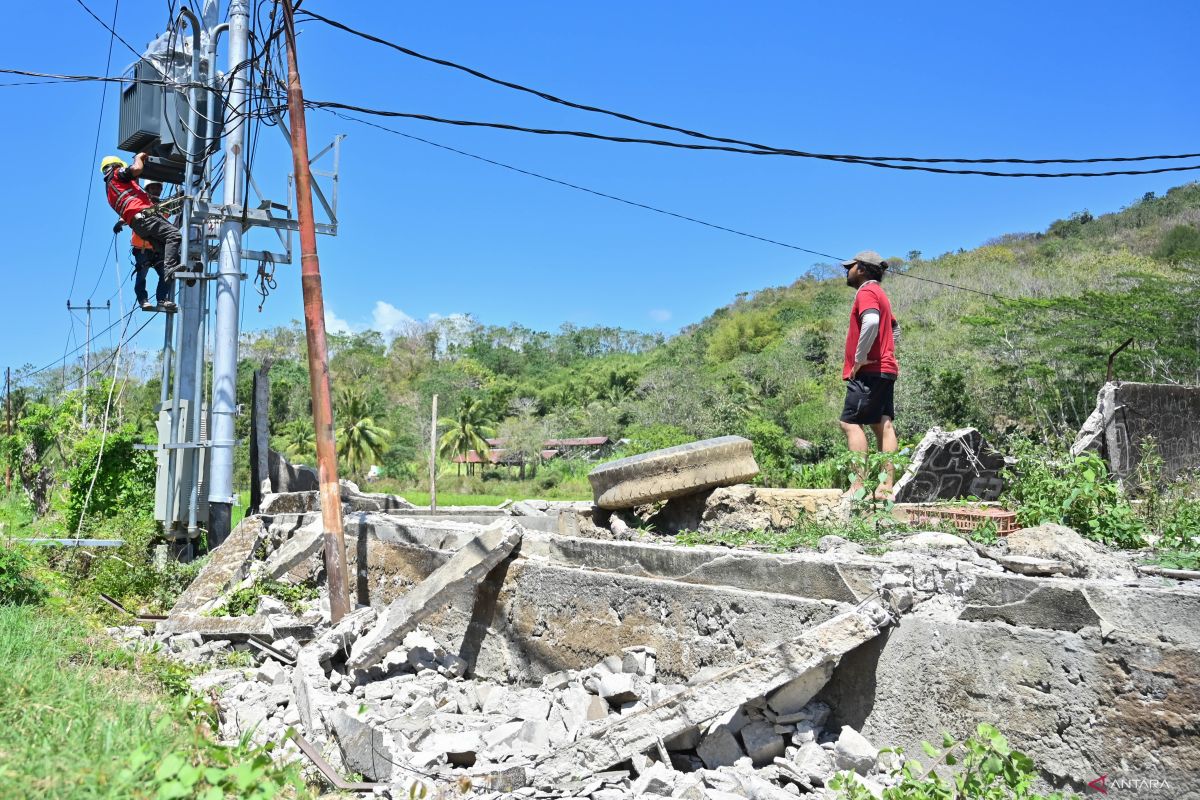
The speed of electricity restoration, as seen in NTT, is important because electricity is a basic need for the public, especially in post-disaster situations.
Jakarta (ANTARA) - National Energy Council (DEN) member M Kholid Syeirazi has assessed that the restoration of the electricity network following the earthquake in East Nusa Tenggara (NTT) proceeded quickly, thereby helping to accelerate the recovery of community activities in the affected areas.
The magnitude 7.7 earthquake that struck the Flores region on Saturday (15/8) temporarily disrupted electricity supply in the Flores power system. Around 11 substations, or all affected substations, were successfully restored and returned to operation in less than 12 hours.
“The speed of electricity restoration as seen in NTT is important because electricity is a basic need for the public, especially in post-disaster situations,” Kholid said in his statement in Jakarta on Thursday.
Restoration data shows that the process continued until Sunday (16/8) morning at 09.00 WITA, with electricity restoration progress across the entire Flores mainland reaching 92 percent for distribution substation recovery.
Subsequently, on 18 August 2026 at around 17.00 WITA, all affected customers in Flores were reported to have regained access to electricity.
According to him, this achievement demonstrates the importance of energy system preparedness in facing emergency conditions, while ensuring that the public can promptly resume their activities after a disaster.
The former Executive Director of the Center for Energy Policy stated that in disaster conditions, electricity restoration is not merely about reactivating the network, but also about ensuring that hospitals, public service facilities, disaster posts, and community activities can resume functioning.
He added that the speed of restoration should become part of strengthening national energy resilience, particularly in facing the risks of natural disasters that can disrupt strategic infrastructure.
“Energy resilience is not only about supply availability, but also about the system’s ability to recover quickly when disruptions or disasters occur,” he said.
He also assessed that coordination among stakeholders needs to be continuously strengthened, so that energy disruption handling in emergency conditions can be carried out quickly, measurably, and while prioritising the safety of the public and personnel.
“The experience in NTT shows that preparedness and rapid response are important factors in maintaining the continuity of energy services to the public,” Kholid said.