
DEN: GovTech to Boost State Revenue and Expand MSME Tax Base
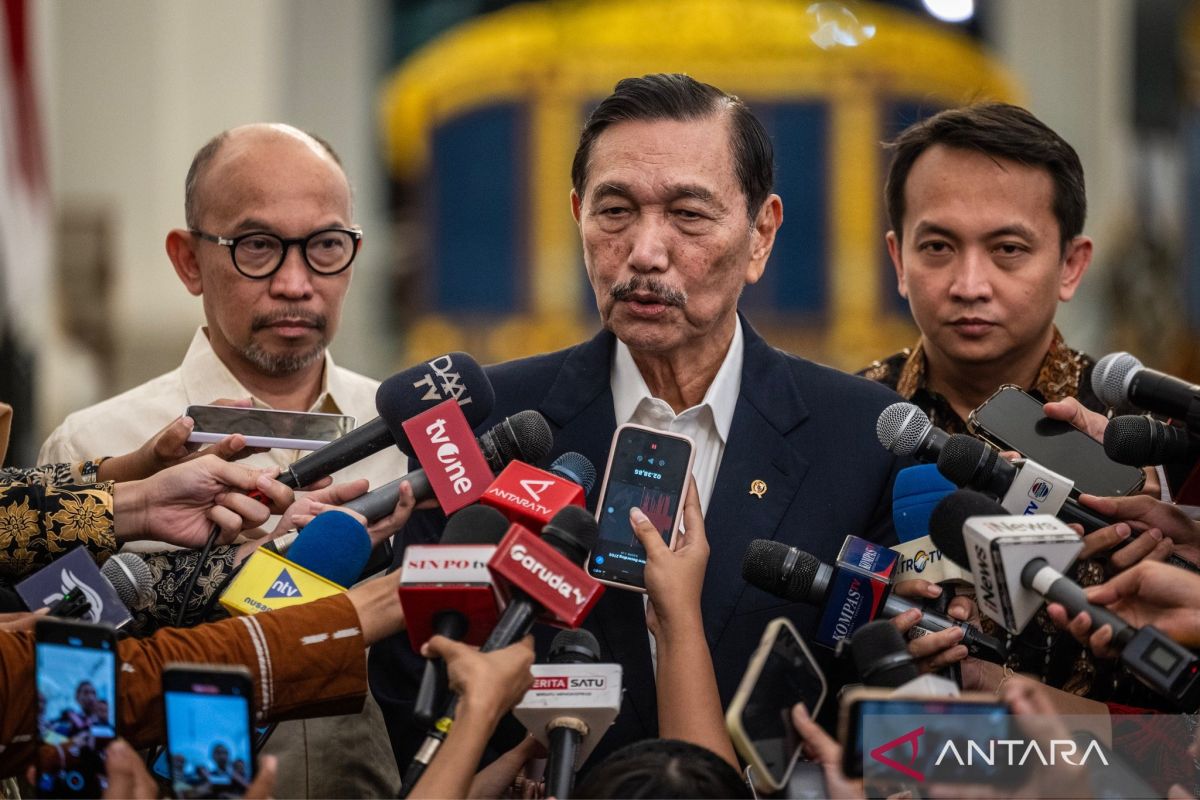
The Chairman of the National Economic Council (DEN), Luhut Binsar Pandjaitan, has stated that the implementation of Government Technology (GovTech) can increase state revenue, expand the tax base for micro, small and medium enterprises (MSMEs), and strengthen oversight of the natural resources sector.
Luhut said that currently, about 80 per cent of the GovTech system has been integrated across ministries and agencies. According to him, for the first time since Indonesia’s independence, eight ministries and agencies have successfully integrated data into a single system that will be operational on 1 June 2026.
‘All data will be properly collected, and nothing can escape the system,’ said Luhut at the Presidential Palace Complex in Jakarta on Tuesday.
He explained that GovTech will later connect with the National Single Window at the Ministry of Finance, thereby expanding the reach of tax administration, including to approximately 64 million micro, small and medium enterprise (MSME) operators.
With a more integrated system, the government hopes that more MSMEs will enter the formal ecosystem and participate in the MSME tax scheme of 0.5 per cent.
According to Luhut, expanding the tax base has the potential to increase Indonesia’s tax ratio, which currently stands at around 9 per cent, to 12-13 per cent in the long term.
‘If that happens, state revenue will increase quite significantly,’ said Luhut.
On the same occasion, DEN Member Septian Hario Seto explained that the digitalisation being built by the government, including by PT Danantara Sumberdaya Indonesia (DSI), will also strengthen governance of strategic commodity sectors such as coal, crude palm oil (CPO), and ferroalloys.
According to him, the results of the DEN study show that digitalisation can suppress the practice of under-invoicing, or reporting export values lower than the actual value, which has the potential to cause losses to state revenue.
‘We have also conducted studies on several of these commodities. The indications of under-invoicing are quite real, and the figures, in terms of billions of dollars, are not small,’ Seto explained.
He cited the example of the SIMBARA system currently used in the coal sector, which could be developed into an AI-based auto-blocking system.
With such a system, companies indicated to have committed violations, such as non-compliant royalty payments or incorrect contract reporting, can be blocked directly and automatically without intervention.
Furthermore, Seto said digitalisation could also become an important instrument in eradicating illegal mining practices through a traceability system capable of identifying the origin of every exported commodity.
‘This will also eradicate illegal mining. Because with this system there will be traceability; we can check that every ton of CPO, every ton of coal must come from legal sources, from mines whose licences are indeed valid,’ added Seto.