
Democrats Take Control of US Congress, Threatening to Stall Trump’s Agenda
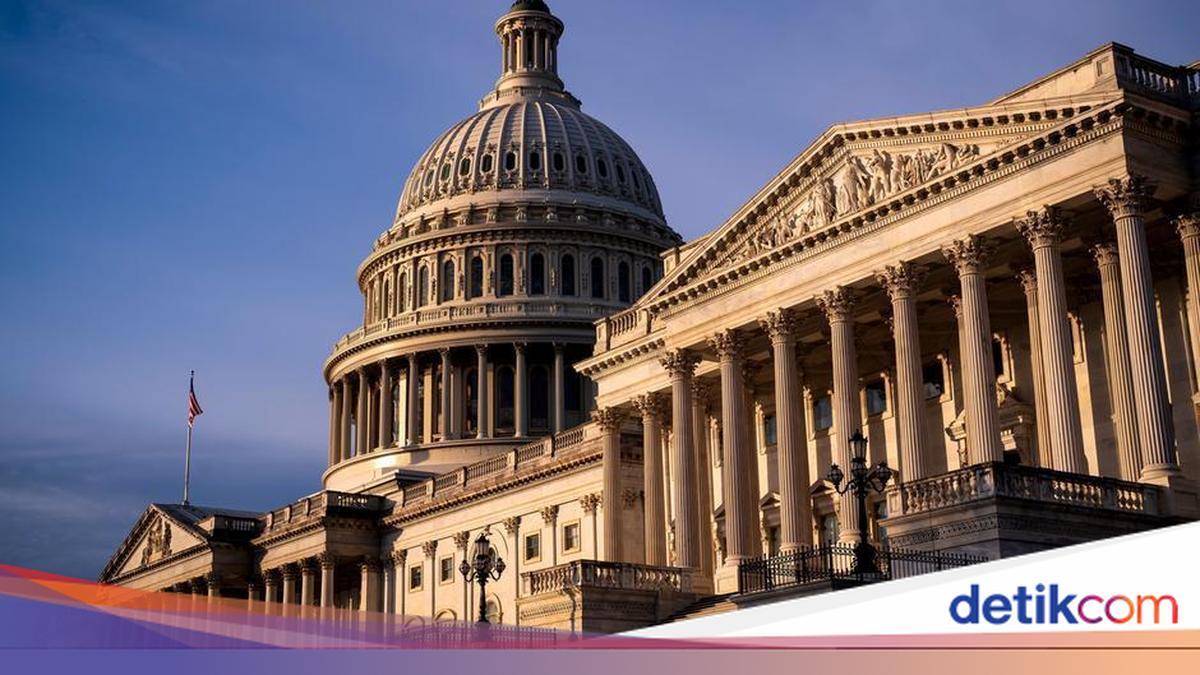
The US Democratic Party has won a majority in the Senate, with more than 51 seats, ending the Republican Party’s dominance in Congress. The result is seen as a sharp decline in support for Trump in traditionally conservative strongholds.
Democrats are also projected to win a majority in the US House of Representatives. Several American media outlets, including CNN, forecast that the party would control the chamber, although vote counting was still under way when this report was filed.
The midterm elections were seen as an important test of public opinion on Trump, almost two years after his return to the White House. All 435 seats in the House of Representatives and 35 of the Senate’s 100 seats were contested. Republicans had previously controlled both chambers.
Trump said he was prepared to accept the election results. In an interview with The New York Times, he also said he was ready to work with the Democrats.
“We will work with the Democrats, and we look forward to doing so,” Trump said.
Wins in traditional Republican strongholds
Democrats’ success in taking a Senate majority was underpinned by victories in several states long regarded as Republican strongholds.
In North Carolina, former governor Roy Cooper won a Senate seat previously held by a Republican. In South Carolina, paediatrician Annie Andrews became the first Democratic candidate in more than 20 years to win a Senate seat.
Another significant victory came in Texas, where 37-year-old Democratic politician James Talarico defeated Republican candidate Ken Paxton.
The result was historic: for the first time in decades, Texas again had a Democratic senator. Paxton had received Trump’s direct backing, while technology billionaire Elon Musk contributed more than US$150 million to support his campaign.
Democrats also secured a historic victory in Kansas. For the first time in 94 years, the party won a Senate seat in the state after Adam Hamilton defeated Roger Marshall.
Republicans also lost several other seats, including in Ohio.
In the House, Democrats gained seats in at least 12 districts previously held by Republicans. The shift included districts in Pennsylvania, North Carolina, New Jersey and Kentucky.
Trump’s agenda at risk of stalling
A Democratic majority in Congress could make it harder for the Trump administration to pursue its political agenda.
If they control the House, Democrats can block various bills proposed by the White House and increase pressure during negotiations over the national budget.
They could also launch investigations into Trump and his administration. Potential targets include the Trump family’s business interests, immigration enforcement policy and controversial development projects.
Democratic figure Hakeem Jeffries could make history as the first Black speaker of the US House of Representatives.
The possibility of another attempt to impeach Trump has also emerged. However, removing the president from office through impeachment would still require the support of two-thirds of the Senate.
Economy a decisive factor
The election also served as a public assessment of the Trump administration’s economic performance.
According to a poll of about 100,000 voters, 62 per cent blamed Trump for the rising cost of living. Some 37 per cent said they were dissatisfied with the state of the country, while 38 per cent said they were angry about the current situation.
For 39 per cent of voters, the economy was the most important issue in deciding how to vote.
A sharp rise in fuel prices amid conflict with Iran was one of the main factors shaping public perceptions. In some parts of the US, petrol prices were reported to have climbed by more than 70 per cent.
The same poll found that nearly two-thirds of respondents believed Trump’s import tariffs were harming the economy. On economic issues, Democrats had the confidence of 43 per cent of respondents, compared with 38 per cent for Republicans.
Throughout the campaign, Trump actively backed Republican candidates. He repeatedly urged supporters to imagine that he himself was running in the election.
Georgia makes history
The gubernatorial elections also produced several notable results.
In Georgia, Democrat Keisha Lance Bottoms defeated Republican Rick Jackson. The former mayor of Atlanta became the first Black woman elected governor of Georgia.
Her victory also ended the Democrats’ wait for a gubernatorial win in the state, where they had not won such an election since 1998.
Bottoms won despite her opponent spending more than US$200 million of his personal fortune on the campaign. She pledged to raise the minimum wage and expand the Medicaid health-insurance programme.
Meanwhile, Republicans maintained their dominance in Florida. Trump-backed candidate Byron Donalds won the gubernatorial election, becoming the state’s first Black governor.
Technical problems disrupt voting
The election did not run entirely smoothly. Several states reported problems with voting machines.
In Westchester County, New York, technical issues meant many ballots could not be scanned. Local authorities estimated that as many as 250,000 ballots were affected.
Controversy also arose after the US Department of Justice deployed about 1,000 election monitors across the states. Democrats argued that the move could intimidate voters.
The US government denied the allegation, describing the deployment as the largest election-monitoring operation in the country’s history.
The midterm results mark a significant shift in the United States’ political landscape. Alongside changing the balance of power in Congress, the Democrats’ gains could limit President Donald Trump’s room to advance his administration’s agenda for the remainder of his term.
Source: jawawa.id (https://jawawa.id/newsitem/democrats-take-control-of-us-congress-threatening-to-stall-trumps-agenda-1793793143)
Originally published by detikcom (https://news.detik.com/dw/d-8738392/demokrat-kuasai-kongres-as-agenda-trump-terancam-tersendat), translated from Indonesian