
Demand for Innovation and Efficiency Makes Industrial Robot Use in Manufacturing More Competitive
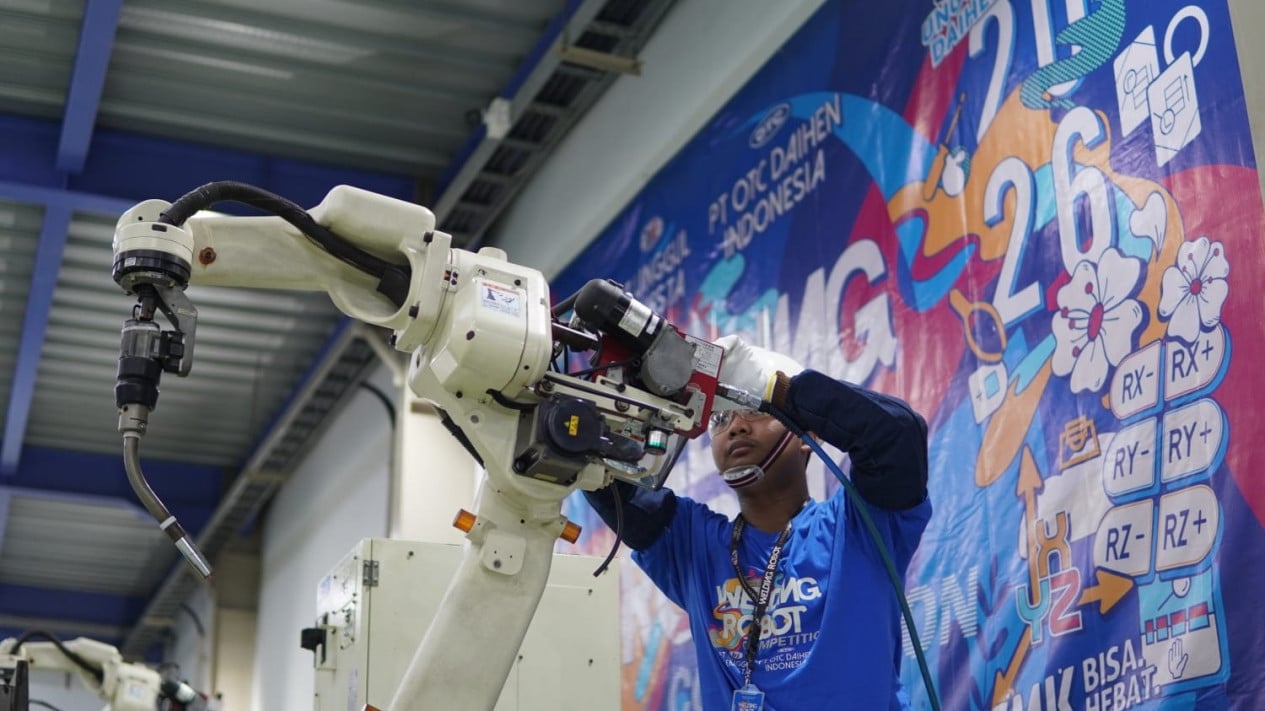
Jakarta (VIVA) – Proficiency in industrial robotics is becoming an increasingly relevant skill for the manufacturing sector. Amid demands for innovation and efficiency, the use of industrial robots in manufacturing is becoming more competitive.
Companies no longer rely solely on manual labour; they also need workers able to operate, programme and maintain robotic systems integrated into production processes.
Mastering industrial robotics is directly linked to manufacturing needs, including improving process and time efficiency, increasing output, controlling costs, reducing defective products, maintaining consistent quality and enhancing workplace safety.
Welding robots, for example, can work with high precision, deliver consistent weld quality and reduce the risk of workplace accidents often associated with manual tasks involving high temperatures and sparks.
More effort is therefore needed to introduce and develop these skills in vocational education. Vocational training cannot rely solely on teaching basic welding theory or general programming.
Introducing industrial robotics skills in vocational education is also intended to help address the skills gap in industrial robot programming.
Many vocational high-school graduates have basic technical skills but lack experience in robot programming, parameter-setting and troubleshooting required by industry. This gap must be bridged so that graduates are not left behind by developments in manufacturing technology.
In this context, collaboration between education providers and industry is crucial. Schools cannot prepare curricula, facilities and trainers that meet industrial needs on their own.
At the same time, industry needs a supply of skilled workers familiar with the latest technologies. Collaboration enables both sides to complement one another, from providing equipment and training teachers to developing learning materials based on real workplace needs.
Co-operation between education providers and industry is also important to ensure that the skills students learn are relevant to workplace requirements.
Skills taught in schools must align with workplace standards, safety procedures and industry productivity demands. Without such alignment, students risk learning skills that have become outdated or are no longer used in the workplace.
Source: jawawa.id (https://jawawa.id/newsitem/demand-for-innovation-and-efficiency-makes-industrial-robot-use-in-manufacturing-more-competitive-1794235885)
Originally published by VIVA.co.id (https://www.viva.co.id/bisnis/1942285-tuntutan-inovasi-dan-efisiensi-pemanfaatan-robot-industri-di-sektor-manufaktur-makin-kompetitif), translated from Indonesian