
Demak's Babon River Polluted by Years of Illegal Septic Tank Waste Dumping
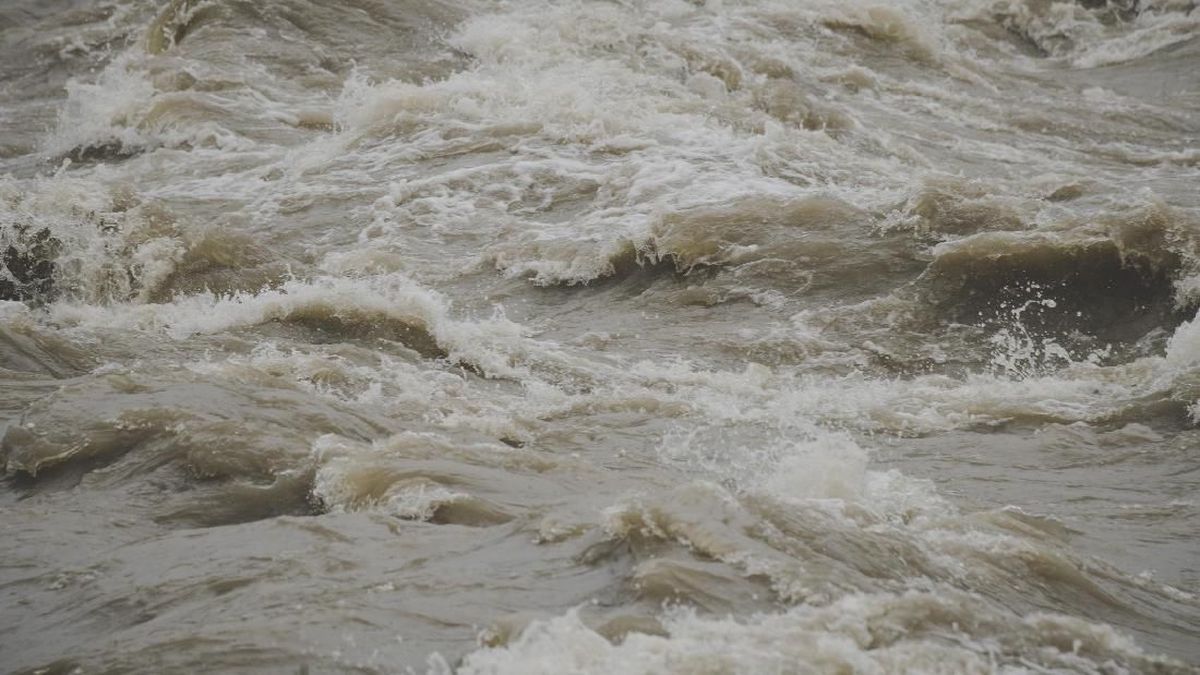
Septic tank trucks are suspected of having dumped faecal waste into the Babon River in Demak, Central Java, for years, causing environmental pollution.
“There are indeed individuals or members of the public who run septic tank suction businesses and dump the waste on the riverbank land of the Babon River. But however it happens, if it rains, it still flows into the river, causing pollution,” said Demak Environmental Agency (DLH) head Mulyanto at his office on Wednesday (19/8), as quoted by detikJateng.
He said the septic tank trucks are suspected of deliberately dumping the waste they collect onto the riverbank land of the Babon River in Kebonbatur Village, Mranggen, Demak, over recent years. As a result, the river has become polluted.
Given the Babon River’s position on the Semarang–Demak border, Mulyanto revealed that the septic tank trucks dumping faecal waste there do not only come from Demak. There are also trucks from Semarang.
“The Babon River flows through two areas. So part of it is in Semarang City and another part is in Demak Regency,” said Mulyanto.
“They also actually operate on both sides. That means they also collect waste in the Demak area and possibly also in parts of Semarang,” he added.
Mulyanto said faecal waste should be disposed of at the faecal sludge treatment plant (IPLT) that has been provided. However, he said the septic tank suction business operators are suspected of being reluctant to dispose of the waste at the IPLT due to cost reasons.
“According to the rules, they should actually dispose of it at the IPLT provided by the government. The nearest one from Mranggen is near Tambaklorok, and in Demak itself there is one in Berahan Kulon,” Mulyanto explained.
“But of course it is paid, there is a levy, so to reduce costs they deliberately dump it into the river,” he added.
According to him, the practice of dumping faecal waste on the Babon River banks has been going on for years. Mulyanto said the activity had temporarily stopped when his office carried out surveillance at the location.
“I don’t know exactly when the dumping of faecal waste on the Babon River banks began, but it has been going on for years,” Mulyanto revealed.
“When I first came here eight months ago as agency head, the practice already existed and we handled it at that time, and it temporarily stopped. By putting up signs and keeping watch, it stopped,” he added.
Mulyanto admitted his office has also made various efforts to stop the practice.
Besides deploying guards, he has also issued warning letters to septic tank suction business operators.
“We also coordinated with the Civil Service Police Unit and the village government. At that time we also made a large MMT banner with a bamboo fence. We installed it there and for several days we also kept watch to deter them from dumping there,” he added.
However, he suspects the efforts made by the Demak Environmental Agency were not met with awareness from the septic tank suction business operators. Mulyanto said they still frequently play cat and mouse to dump faecal waste on the Babon River banks.
“But after a few months of us not keeping watch, they came back again. So now they are actually starting to come again, sneaking around. For example, if the village head is around, they won’t dump it,” Mulyanto revealed.
“We don’t know what time they come, maybe at night or around Maghrib time. That is an effective time, when people are at home about to pray Maghrib, they go there,” he added.
Mulyanto also explained that the Demak Regency Government actually has its own septic tank suction truck service and IPLT. According to him, septic tank suction business operators can dispose of the faecal waste they collect at the IPLT.
“The Public Works Department has a septic tank suction service, but the fleet is limited. We also have an IPLT in Berahan Kulon. Actually, septic tank suction business operators can dispose of their collected waste at the government IPLT,” said Mulyanto.
Head of the Cipta Karya Division of the Demak Public Works and Spatial Planning Agency, Andi Erwin Prastyo, confirmed that the IPLT in Berahan Kulon can be used by septic tank suction business operators to dispose of faecal waste.
“Private septic tank suction business operators are allowed to dispose of the faecal waste they collect at the IPLT. The capacity there is still ample,” said Erwin when met by detikJateng in his office.
Erwin revealed that there is no regional regulation yet governing the amount of levy for disposing of faecal waste there. So for the time being, disposal of faecal waste for septic tank suction business operators is free.
“The official fee has not been regulated by regional regulation yet. Before there is a regional regulation, they are welcome to dispose of it there for free,” said Erwin.
Previously, the Environmental Agency revealed laboratory test results showing that the polluted Babon River water exceeded quality standards.
Head of the Environmental Supervision and Empowerment Division of the Semarang City Environmental Agency, Wahyu Heryawan, revealed that the water samples taken were from pollution on Friday (17/7). Most recently, the Babon River was found to be polluted again since Wednesday (5/8) and laboratory tests were carried out again.
“There are several parameters that exceed quality standards. But from what I see, they are not too high, but they do exceed the standards,” said Wahyu on Monday (10/8), as quoted by detikJateng.
Wahyu explained that the parameters exceeding quality standards are Biochemical Oxygen Demand (BOD) and Chemical Oxygen Demand (COD). Both parameters are related to organic waste.
“Several parameters such as COD and BOD exceed the standards. COD and BOD are more related to organic waste,” he said.
Source: jawawa.id (https://jawawa.id/newsitem/demaks-babon-river-polluted-by-years-of-illegal-septic-tank-waste-dumping-1787187100)
Originally published by CNN Indonesia (https://www.cnnindonesia.com/nasional/20260819204913-20-1394215/sungai-babon-demak-tercemar-tinja-dibuang-truk-sedot-wc-bertahun-tahun), translated from Indonesian