
Deliberations Begin on the State Finance Bill as House Summons Four Economists
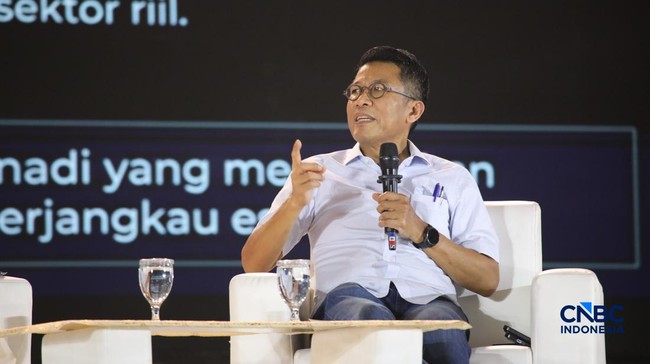
Jakarta, CNBC Indonesia – Commission XI of the House of Representatives (DPR) held a public hearing (RDPU) with several economics and legal experts to deliberate the State Finance Bill (RUU Keuangan Negara).
Four economists and legal scholars took part in the hearing: Dr Dewi Kania Sugiharti, a law lecturer at Universitas Padjadjaran; Tauhid Ahmad, senior economist at the Institute for Development Economics and Finance (INDEF); Prof Candra Fajri Ananda, an economics expert at Universitas Brawijaya; and Dr Dian Puji Nugraha Simatupang, a lecturer in state administrative law at Universitas Indonesia.
The hearing gathered input from the economics and legal experts, particularly concerning non-tax state revenues (PNBP) and separated state assets.
The chairman of Commission XI, Mukhamad Misbakhun, said the bill had been drafted using the omnibus law method.
“This meeting concerns the State Finance Bill, which uses the omnibus law system. We are listening to input as part of meaningful participation, to be taken into consideration in the bill’s substance during the working committee meetings,” said Misbakhun as he opened the meeting on Monday (14/9/2026).
The bill is being drafted to follow up on the revision of Law Number 19 of 2003 on State-Owned Enterprises (BUMN) through Law Number 1 of 2025 and Law Number 16 of 2025.
Several economists highlighted the issue of PNBP, which they deemed still not yet optimal.
Tauhid Ahmad, senior economist at INDEF, said PNBP was underperforming for several reasons, including diverse tariff policies, tariffs that had not been accompanied by improvements in service quality, and non-optimal PNBP tariffs in the natural resources (SDA) sector.
“There are many issues currently being faced, from relevant ministries and agencies where manual services still occur and are often slow, tariffs not accompanied by quality improvements, especially at the institutions implementing PNBP, through to matters relating to PNBP receivables,” said Tauhid.
He added that PNBP remained suboptimal, particularly in natural resources, because several commodities were not yet accommodated in regulations, whether government regulations (PP) or laws.
“For example, PNBP on new and renewable energy (EBT) currently only covers geothermal. Solar, wind, and bioenergy are not yet accommodated because the government regulation does not exist. I believe natural resources hold very promising prospects for optimisation,” said Tauhid.
He therefore proposed periodic evaluations of PNBP types and tariffs, comprehensive data integration, a shift towards simpler, service-based tariffs, and ensuring that natural resources remain under state control.
“Tariff optimisation is also needed, including imposing windfall profit taxes on natural resources,” Tauhid proposed.
He also made recommendations regarding consistency should BUMN dividends no longer count as separated state assets.
“There must still be a clause on synchronisation and coordination in the utilisation of BUMN dividends with the financial authorities,” he asserted.
Meanwhile, Professor of Economics at the Faculty of Economics and Business, Universitas Brawijaya, Prof Candra Fajri Ananda, revealed that Indonesia’s PNBP appeared to be running on the spot.
He gave the example of Middle Eastern countries such as Qatar, which have already exploited natural resources to reap PNBP through hydrocarbons.
“What we need to look at from several countries is the direct ownership model, in which state ownership affects how PNBP can be levied. In the implementations seen in Kuwait, Qatar, and Saudi Arabia, the state holds the majority of shares in natural resource companies,” said Prof Candra.
He therefore also offered recommendations to make PNBP more optimal. First, the state’s right should accommodate developments in new sources of economic value, such as the use of limited public resources, data, public infrastructure, digital space, spectrum, and other economic rights granted and controlled by the state.
Second, mechanisms for identifying and evaluating new revenue sources should be strengthened.
“Strengthening is necessary so that technological developments, business models, strategic commodities, and new forms of resource utilisation can be responded to promptly within the PNBP framework,” explained Prof Candra.
Third, flexibility in developing PNBP types and tariffs should be increased.
“So ideally, tariffs for PNBP on natural resources should incorporate externalities. In other words, the tariff should not simply equal the marginal cost; the marginal cost composition should include an externality element,” he said.
Source: jawawa.id (https://jawawa.id/newsitem/deliberations-begin-on-the-state-finance-bill-as-house-summons-four-economists-1789444331)
Originally published by CNBC Indonesia (https://www.cnbcindonesia.com/news/20260915034020-4-767882/ruu-keuangan-negara-mulai-dibahas-dpr-panggil-4-pakar-ekonomi), translated from Indonesian