
Delegates from 13 Countries Study Inclusive Plastic Recycling Model in Indonesia
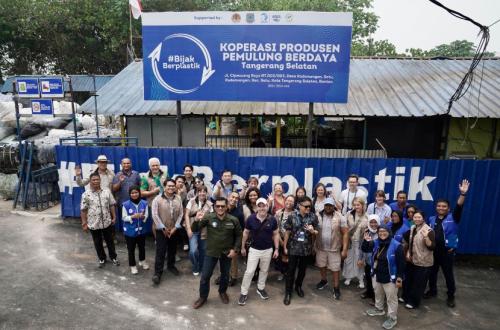
Delegates from 13 countries visited Koperasi Pemulung Berdaya in Serpong, South Tangerang, to study a plastic waste management model linking collection, recycling and support for informal workers. The visit highlighted the importance of maintaining waste pickers’ role in the transition to a more inclusive circular economy.
The visit was part of the Jakarta Informal Consultation Meeting – Intergovernmental Negotiating Committee on Plastic Pollution, hosted by the Indonesian and Norwegian governments on 13–14 October 2026. The forum discussed measures to address plastic pollution, including the concept of a just transition.
In Indonesia, informal workers have long played a role in collecting and recovering plastic materials. A transition to a more modern waste management system is therefore not only about infrastructure, but also working conditions, health protection, market access and the sustainability of livelihoods.
Koperasi Pemulung Berdaya collects and sorts used PET plastic bottles from the Greater Jakarta area for return to the recycling chain. The facility, initiated by Aqua in 2010 and legally established as a cooperative in 2013, receives up to six tonnes of used PET bottles a day.
Its operations support the livelihoods of 59 cooperative members and are connected to the livelihoods of around 4,000 waste pickers. The cooperative model is intended to strengthen informal workers’ organisation, provide more structured access to recycled-material markets and support sustainable livelihoods.
Danone Indonesia’s Public Affairs and Sustainability Director, Karyanto Wibowo, said informal workers must continue to be taken into account as the circular economy develops. Strengthening the system, he said, should not eliminate roles that are already being performed. Informal workers have long been part of the functioning circular economy, he added.
“A just transition is therefore not about replacing their role, but about strengthening pathways to better working conditions, access to protection, infrastructure and markets, as well as more resilient economic opportunities. Through Koperasi Pemulung Berdaya, Aqua shows how collaboration among industry, government, cooperatives and informal workers can strengthen the recycling value chain while advancing a more inclusive circular economy,” Karyanto said in a press release on Saturday (17 October 2026).
Support through the Recycling Business Unit model also covers improving business and organisational capacity, workplace safety practices, assured uptake of PET materials and access to health facilities such as Indonesia’s BPJS social security scheme.
Agus Rusly, Director of Waste Reduction and Circular Economy Development at the Ministry of Environment, said stronger collection systems were needed to improve national waste management. He said producer responsibility also needed to involve local governments and the informal sector.
Indonesia is continuing to strengthen policies to reduce waste, including by refining Environment and Forestry Ministerial Regulation No. P.75 of 2019 on the Roadmap for Waste Reduction by Producers, he said. Strengthening producer responsibility is important to encourage waste reduction at source and increase accountability for products and packaging after use.
“Implementation needs to be backed by infrastructure readiness, business capacity, local government involvement and cooperation with the informal sector, so that waste reduction systems become more integrated and responsive to national needs. The visit to Koperasi Pemulung Berdaya in South Tangerang demonstrates good collaboration between industry and the informal sector in the recycling chain,” he said.
Koperasi Pemulung Berdaya is part of the #BijakBerplastik movement, which Aqua has run since 2018. Under its collection pillar, the company has developed and supported 10 Recycling Business Units in several regions. Together with partners, these are linked to around 25,000 waste pickers and collected 51,000 tonnes of plastic in 2024.
The visit by the 13-country delegation showed that connecting material collection, cooperatives, informal workers and access to recycling chains is one model that can inform circular economy discussions. The challenge is to ensure that improvements to waste management systems also bring stronger protections and greater economic opportunities for the workers involved.