
Dekranasda, PKK, and Posyandu Programmes Urged to be Integrated into Regional Planning
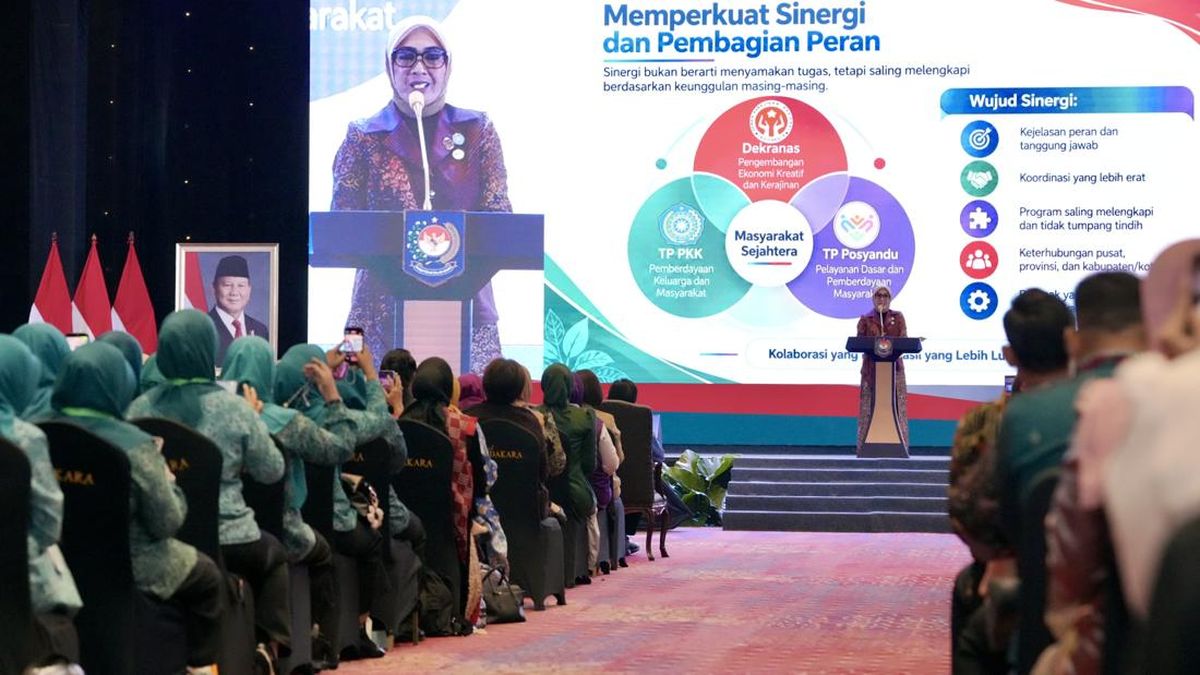
The Chairperson of the Empowering and Welfare of Family (TP PKK) Movement, Chairperson of the Posyandu Supervisory Team, and Daily Chairperson of Dekranas, Tri Tito Karnavian, stated that regional governments must ensure the integration of regional planning and budgeting for the programmes of Dekranasda, TP PKK, and the Posyandu Supervisory Team.
Speaking at the event for the Strengthening of Governance for Dekranas, TP PKK, and TP Posyandu Institutions for the Western Region of Indonesia for 202 लं6 in Jakarta, Tri stated that this is in line with the legal foundations that mandate these three institutions to partner with the government in community empowerment.
Tri explained that Dekranas, TP PKK, and TP Posyandu possess regulatory bases governing their existence and the execution of their respective duties. Dekranas was established through a Joint Decree of the Minister of Industry and the Minister of Education and Culture, Number 85/M/SK/3/1980 and Number 072b/P/1980, dated 3 March 1980.
Meanwhile, the PKK Movement is based on Presidential Regulation Number 99 of 2017 and the Ministry of Home Affairs Regulation (Permendagri) Number 36 of 2020.
As for Posyandu, its legal basis is Permendagri Number 13 of 2024, which serves as the foundation for the transformation of Posyandu in providing services to the community through six Minimum Service Standards (SPM).
According to Tri, these regulations serve as a foothold for regional administrators to build partnerships with Regional Government Organisations (OPD), including ensuring support for the programmes being implemented.
“Therefore, if we request activities from the OPD or departments, it is indeed our duty because we are fulfilling the mandate given to us,” said Tri on Monday (21/9).
He emphasised that programmes related to Dekranasda, TP PKK, and TP Posyandu should be reflected in regional planning and budgeting documents. Consequently, programme implementation should not stop at institutional coordination but must have adequate resource support.
Tri also requested that regional administrators understand the planning and budgeting mechanisms of regional governments. According to him, various programmes that align with the vision and duties of the three institutions can be coordinated with relevant OPDs and ensured to be included in the regional planning system.
Furthermore, he reminded that strengthening inter-institutional synergy does not mean standardising tasks and functions. Each institution must continue to perform its role according to its authority and strengths, while building collaboration in community empowerment programmes.
To this end, Tri hopes that the Chairpersons of Dekranasda, TP PKK, and TP Posyandu at the provincial and regency/city levels can follow up on the results of this meeting through synergy with OPDs, covering planning, budgeting, implementation, as well as monitoring and evaluation.
“Let us use this meeting to strengthen our commitment to unifying our steps and building collaboration between Dekranasda, the PKK Driving Team, the Posyandu Supervisory Team, the central government, regional governments, and all stakeholders,” concluded Tri Tito.