
Deindustrialisation Narrative Rebutted as Sarmuji Says Indonesia’s Industry Is Expanding
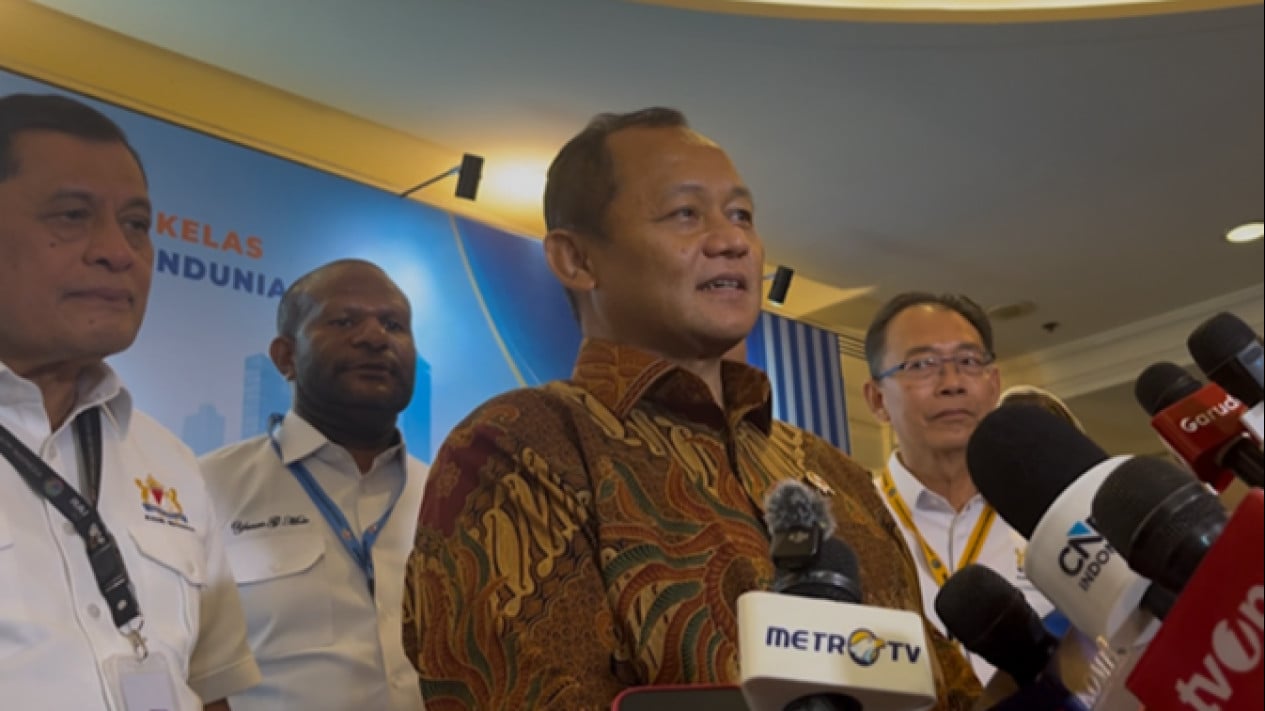
Industry Minister Sarmuji has rejected the view that Indonesia is experiencing deindustrialisation. He said the non-oil and gas manufacturing sector is growing faster than the national economy in 2026.
Speaking at the 2026 Kadin National Leadership Meeting, Sarmuji said non-oil and gas manufacturing grew by 5.32 per cent, compared with national economic growth of 5.29 per cent. The same trend was visible throughout 2025, when manufacturing grew by 5.3 per cent and the national economy by 5.11 per cent.
He said this marked an important change after industrial growth had tended to lag behind national economic growth for many years.
“Actually, our industry’s performance is not as it is portrayed by narratives elsewhere. It is as if we are experiencing deindustrialisation that poses a serious threat to industrial activity. But the actual data show something different,” he said in Jakarta on Friday (30 October 2026).
Sarmuji also outlined several indicators of manufacturing’s substantial contribution to the economy. Manufacturing accounted for 38.98 per cent of realised national investment. In August 2026, manufactured exports reached US$159.55 billion, or 82.40 per cent of total exports.
The sector employed around 19.98 million people as of May 2026. Another indicator, the Industrial Confidence Index (IKI), stood at 53.77 in October 2026, up from 51.9 the previous month.
A figure above 50 indicates that industry is in an expansion phase, he said. “So, we can see that our industry is not contracting at present, but is instead expanding,” he said.
Despite the positive growth, Sarmuji said there was considerable scope to increase the production capacity of domestic industry. Non-oil and gas manufacturing capacity utilisation stood at 66.13 per cent in February 2026, and the government aims to raise it to between 80 and 85 per cent.
He said higher utilisation could increase industry’s contribution without always relying on the construction of new factories or additional investment. However, this would require reliable supplies of raw materials at competitive prices.
Sarmuji cited an industrial company facing a shortage of 15,000 tonnes of refined raw material. If the requirement is not met by December, the company risks halting production.
Raw material prices are also a challenge. He said one commodity was priced at around Rp5,700–Rp6,000 on international markets but cost Rp11,000 domestically. This leaves manufacturers facing a difficult choice between buying locally or importing supplies.
Source: jawawa.id (https://jawawa.id/newsitem/deindustrialisation-narrative-rebutted-as-sarmuji-says-indonesias-industry-is-expanding-1793357577)
Originally published by VIVA.co.id (https://www.viva.co.id/bisnis/1939839-narasi-deindustrialisasi-dipatahkan-sarmuji-ungkap-industri-ri-justru-sedang-ekspansi), translated from Indonesian