
Defiance at the Heart of Power: A Critical Juncture for National Political Consolidation
Perhaps since yesterday, online motorcycle taxi drivers, market traders, teachers, students and the wider public have been wondering what is really happening in the country. Why has an issue involving senior police officials and the circles of power developed into a serious case implicating several state officials? There is a simple but fundamental public concern: what is happening to our government?
Public attention has focused on allegations of wiretapping targeting President Prabowo Subianto and several state officials, politicians, media outlets and non-governmental organisations (NGOs). The matter has attracted even greater attention because those named in developments in the case are not ordinary figures. They have access, positions and strategic roles within the government and the police institution.
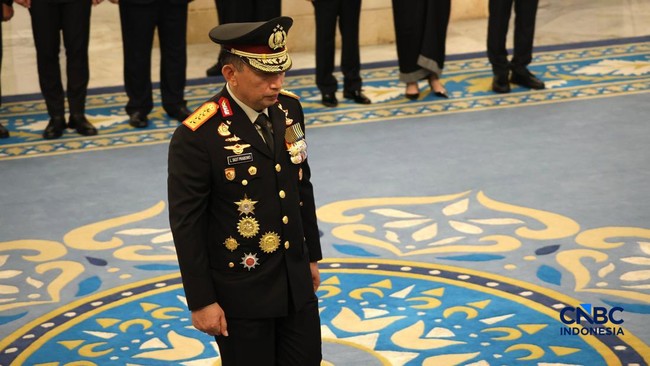
The Indonesian National Police (Polri) have named four people as suspects in the case. Polri Criminal Investigation Agency chief Commissioner General Asep Safrudin said the three included the head of the Presidential Staff Office (KSP), General Listyo Sigit; his former private secretary, Inspector General Ahrie Sonta; and Inspector General Eko Hadi Santoso, who serves as a senior police instructor at the Police Education and Training Institute’s Sespim. Most recently, Inspector General Slamet Uliandi, a senior Criminal Investigation Agency officer currently serving outside the organisational structure, was named as a suspect.
Following developments in the case, Coordinating Minister for Law, Human Rights, Immigration and Corrections Yusril Ihza Mahendra said there were indications of alleged treason. Those indications, of course, still need to be examined and proven through an objective and transparent legal process that upholds the presumption of innocence. But regardless of how the legal process unfolds, a case with these dimensions is already a serious warning sign for national political consolidation.
The questions that must be answered are not only who was involved and which charges may be brought, but also how an issue with such far-reaching implications could emerge from an environment that should be helping to safeguard stability and implement government policy. Amid these developments, former president Susilo Bambang Yudhoyono (SBY), writing on his personal X account on Wednesday (4 November 2026), also voiced concern about power struggles that he said were increasingly disregarding morality and ethics.
SBY questioned the direction of national politics, which appears to sanction any means of attaining power without regard for right and wrong or moral boundaries. He also warned of the danger that people might ultimately feel afraid and unsafe in their own country.
Those remarks warrant reflection. The issue we face is not merely alleged legal violations by particular individuals; it also raises a broader question: what are the ethics of power and the state of our government’s political consolidation?
Defiance at the Heart of Power
I must be clear: imagine that allegations of wiretapping the President were proven and involved officials who had previously held important positions in the police. The problem would not be the wiretapping alone. What would be most dangerous is that it had been carried out by people inside the circles of government who had access to the state’s strategic information.
We need to understand that wiretapping a head of state is not simply a matter of privacy. It can affect national security, institutional integrity and the authority of the government. The investigation must therefore answer fundamental questions: what was the purpose of the wiretapping, who ordered it, whose interests were served by the information-gathering, and how was the information used?
It would make little sense for an operation involving resources, access and particular technical capabilities to have been conducted without a clear purpose. But all these questions must be answered on the basis of evidence, not assumptions or political speculation alone.
That is where the more serious issue lies. If there was indeed defiance from within the circles of power, we are facing a problem of government consolidation that must not be taken lightly.
The public is also bound to ask how someone with a record and strategic position in a state institution could remain within an important part of the government when serious allegations concerning institutional integrity have emerged.
The position of head of the Presidential Staff Office (KSP), for example, is not an ordinary ministerial post. It is strategically important for coordinating and overseeing the implementation of the President’s priority programmes and ensuring they proceed as intended.
We must not confuse allegations with legal conclusions. But the government must not ignore the political and institutional dimensions of a case of this kind. The President’s confidence in the machinery of government and the public’s confidence in state institutions must both be safeguarded.
Safeguarding the President as a State Institution
There is a fundamental point to emphasise in considering this issue: the President’s position in Indonesia’s constitutional system. The President is not merely an individual holding political office, but a constitutional organ that holds executive power and carries out the state’s mandate.
Therefore, actions deliberately intended to disrupt, weaken or take over the functions of the presidency cannot simply be treated as a personal matter.
The Constitution provides a clear foundation. Article 4, paragraph (1) of the 1945 Constitution states: “The President of the Republic of Indonesia holds the power of government in accordance with the Constitution.” This provision establishes the President as the holder of executive power under the presidential system.
That power is not personal authority to be exercised arbitrarily, but a constitutional mandate that is limited, regulated and accountable under the 1945 Constitution of the Republic of Indonesia.
These provisions show that the President has a central role in the administration of government, defence, security and foreign relations. Accordingly, if allegations that the President was systematically wiretapped by people with access and authority within state institutions are proven, the matter could extend far beyond an infringement of personal interests. It would involve institutional, national-security and government-integrity dimensions that must be investigated seriously.
If the alleged defiance is proven, then, we are not talking merely about disobedience towards an official. We are talking about potential defiance of the constitutional order governing the exercise of state power.
Public officials’ loyalty is not unlimited personal loyalty to the President; it is loyalty to the Constitution, the law and the mandate of the legitimate government. Precisely because the President holds executive power under the 1945 Constitution, no institution or group within government should act as though it has its own command centre and “independent legitimacy to wield power”.
There Must Not Be Two Suns
I see these developments as an opportunity to question the effectiveness of political consolidation in President Prabowo Subianto’s government. Are all elements of the Cabinet truly following one line of leadership and one national agenda?
Are coordination among ministries, agencies and strategic government bodies, and their work, guided by a shared purpose? Or does fragmentation of interests persist, with the potential to obstruct the President’s agenda?
There is a saying that a ship cannot have two captains. Likewise, there cannot be two suns in one system of government. In a presidential system, the President holds the constitutional mandate and is the centre of executive decision-making. All parts of government should operate with a clear division of responsibilities and accountability within a single government agenda.
A shared direction does not mean that officials must lose their critical faculties or their ability to advocate for the people. Differences of opinion, internal criticism and policy correction are necessary in a healthy government. But such differences must be resolved through institutional mechanisms, not through practices that undermine trust, weaken coordination or even endanger the national interest.
The Cabinet must not be merely a collection of office-holders pursuing separate interests and agendas. It must function as a unified government, with institutional discipline, collective responsibility and the courage to make decisions in the public interest.
I recall an argument I made in a national media outlet on the second anniversary of President Prabowo’s administration, in an article entitled “Two Years of Prabowo: Political Consolidation Moves Faster than Technocratic Consolidation”. One of my main points was the importance of maintaining a balance between political and technocratic consolidation.
Political consolidation is necessary to ensure government stability. But it must not become an end in itself. The energy of government must not be spent on securing positions, maintaining elite compromises and resolving internal conflicts while the government’s technocratic capacity to formulate policy and deliver development moves more slowly.
National and People-Centred Politics
The public today wants a government that is present, works and delivers tangible results. Politics must therefore be revived as national politics, fundamentally a means of serving the public interest rather than merely an arena for preserving influence and expanding power.
Amid these internal problems, Indonesia’s challenges are becoming more complex. Global geopolitical developments—particularly the escalation of conflict in the Middle East, tensions between the United States, Israel and Iran, and the potential disruption of strategic global shipping routes—could put pressure on energy security, exchange-rate stability, investment and the national fiscal position.
Volatile global oil prices, supply-chain uncertainty and shifts in investment flows are not remote concerns. Their effects can spread to the prices of basic goods, production costs, purchasing power and the government’s fiscal room to fund development.
In other words, the challenges that should be the government’s main focus lie beyond the walls of power. Indonesia needs the capacity to anticipate global changes, maintain economic stability, strengthen energy security and ensure that fiscal policy remains responsive to people’s needs.
The National Interest Comes First
The nation’s founders taught that power must be subordinated to the interests of the nation and state. Unity does not mean eliminating differences; it means bringing diverse interests together in pursuit of a greater national purpose.
The case currently drawing public attention should therefore be an opportunity for President Prabowo to conduct a comprehensive review of his government’s consolidation. This should involve more than replacing or reshuffling officials: it must ensure that every part of the Cabinet has the commitment, integrity and work orientation required by the government’s mandate.
There must be no room for conflicts of interest that sacrifice the national interest. Nor should abuse of authority be allowed to hide behind office or proximity to the centre of power. Every official must understand that public office is not a privilege for preserving influence, but a trust to deliver services and results for the public.
At the same time, political consolidation must go hand in hand with technocratic consolidation. The President needs a government that is not only politically united, but also capable of translating a vision into policy, turning policy into programmes, and ensuring those programmes produce measurable results.
Ultimately, the energy of government must not be drained by elite conflicts that bring no benefit to the public. Indonesia needs national political consolidation, not defiance at the heart of power. What we must ensure is not merely that the government remains in power, but that the state continues to function and people truly feel its presence.
Source: jawawa.id (https://jawawa.id/newsitem/defiance-at-the-heart-of-power-a-critical-juncture-for-national-political-consolidation-1794156643)
Originally published by CNBC Indonesia (https://www.cnbcindonesia.com/opini/20261108224441-14-783333/pembangkangan-di-jantung-kekuasaan-genting-konsolidasi-politik-bangsa), translated from Indonesian