
Defiance and Revenge: The Message from Iran at Khamenei's Funeral
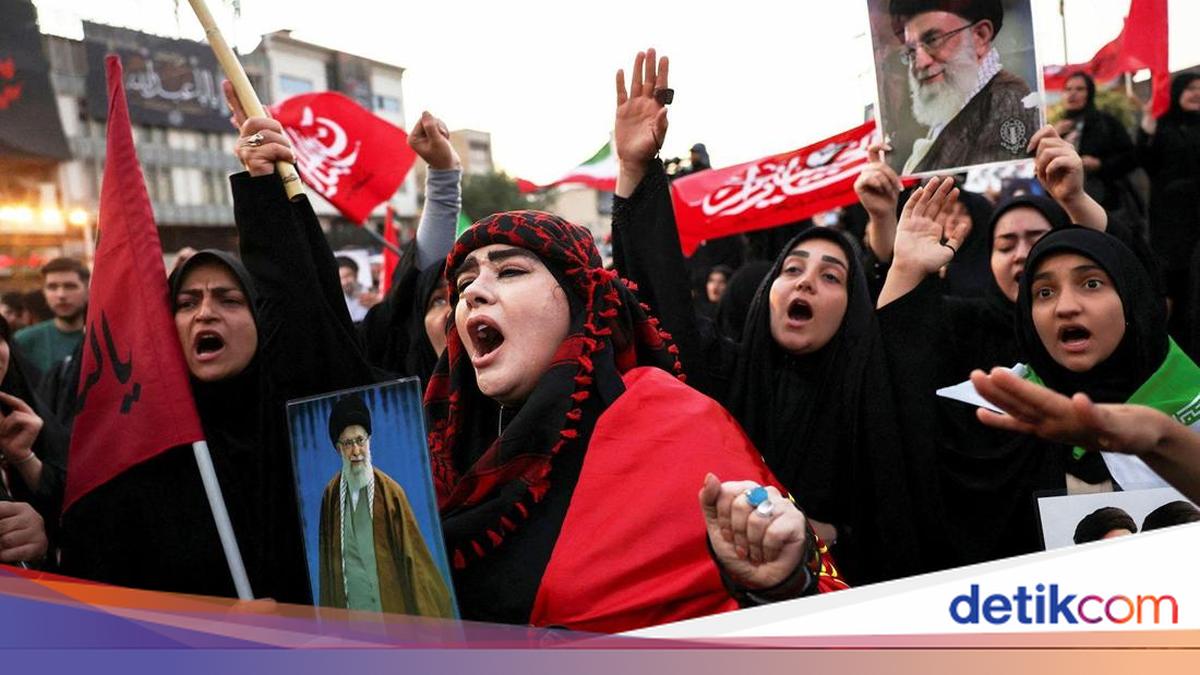
Several days of public mourning in Iran have turned into a political spectacle that the country’s leaders wish to show the world.
Large crowds filled the streets of the holy city of Mashhad on Thursday (09/07) to attend the funeral of Iran’s deceased Supreme Leader, Ayatollah Ali Khamenei.
Khamenei was buried at the Imam Reza shrine complex, the holiest Shia Muslim site in Iran.
The procession marked the end of six days of public mourning held across five Iranian cities as well as in neighbouring Iraq.
According to the state news agency IRNA, the funeral took place after exchanges of attacks between Iran and the United States that threatened initial efforts to reach a deal to end the war that killed Khamenei.
Earlier, Iran’s Revolutionary Guards accused the United States of bombing two railway bridges connecting the capital, Tehran, with Mashhad overnight.
According to them, the attack was carried out “to divert attention” from the funeral procession.
Khamenei and several members of his family were killed in an Israeli strike on his residence in Tehran on 28 February 2026, the first day of Iran’s war against the United States and Israel.
He was succeeded as supreme leader by his son, Mojtaba Khamenei, who has not been seen in public since reportedly suffering serious injuries in the same attack.
Mojtaba, now 56, did not attend the series of funeral ceremonies in either Tehran or Qom. There was no indication that he took part in the procession in Mashhad.
On Thursday morning, a plane carrying the coffins of Ali Khamenei, his granddaughter, his son-in-law, his daughter, and Mojtaba’s wife, landed in Mashhad after flying from Iraq.
Earlier, huge crowds had followed the funeral cortège to two holy Shia shrines in the cities of Najaf and Karbala.
Mourners attended the funeral of Ali Khamenei, along with several members of his family, before he was buried at the Imam Reza shrine complex in Mashhad on 9 July 2026.
In the afternoon, Iranian television broadcasts showed thousands of mourners dressed in black walking along one of the main boulevards in central Mashhad.
Many waved Iranian flags and red banners symbolising demands for revenge.
Some mourners also carried photographs of the late supreme leader, as well as posters calling for the death of US President Donald Trump.
Together with Israeli Prime Minister Benjamin Netanyahu, Trump ordered the joint attack on Iran four months ago that sparked the war.
Banners bearing official slogans hung above the boulevard, including the cry “we must rise”.
“The loss of our leader feels heavier than losing a parent,” said Hoda, a 35-year-old housewife, told the AFP news agency.
“Only the deaths of Trump and Netanyahu can ease our grief.”
Later, a truck carrying Khamenei’s coffin slowly made its way through the sea of people towards the Imam Reza shrine complex. The cortege finally arrived at the site as night fell.
Imam Reza is the eighth imam in the Shia tradition and the only one of the 12 imams believed to be buried on Iranian soil.
His mausoleum, which dates from the 9th century and features a golden dome and towering minarets, is visited by millions of pilgrims each year.
Ali Khamenei was born in Mashhad, Iran’s second-largest city, located in the country’s north-east.
He received religious education at several seminaries in the city before moving to Qom, the centre of Iran’s Shia clergy.
He was appointed Iran’s supreme leader in 1989 following the death of the founder of the Islamic Republic, Ayatollah Ruhollah Khomeini.
During his 37 years in power, Khamenei maintained a firm grip on Iran’s politics and military.
He suppressed various domestic challenges, in some cases with an iron fist.
In foreign affairs, he also consistently took a hard line, including in Iran’s confrontation with the United States and Israel.
Iran’s leadership hopes the carefully organised series of funeral ceremonies for Khamenei will project an image of unity and strength following a war that killed thousands, as well as a wave of mass protests last January when a crackdown by security forces left thousands more dead.
However, the national mourning period was overshadowed by renewed escalation of the conflict with the United States.
Trump warned that US strikes could become “far worse” after a second night of attacks on Thursday.
The US military said the operations aimed to weaken Iran’s ability to threaten commercial shipping in the Strait of Hormuz.
Meanwhile, Iran’s Revolutionary Guards said Iranian forces had attacked US military facilities and infrastructure in Kuwait, Bahrain and Qatar in response to the strikes.
Three weeks ago, the United States and Iran signed a memorandum of understanding calling for an end to hostilities on all fronts and the reopening of the Strait of Hormuz.
The agreement also gave both sides two months to reach a final deal covering Iran’s nuclear programme, the lifting of US sanctions, and a permanent ceasefire.
Last week, Qatar, acting as mediator, said Iranian and US negotiators had made progress in indirect talks in Doha after the two countries exchanged attacks over four days.
Qatar also said the next meeting would be held after the series of ceremonies for Khamenei had concluded.
‘Tears flow from surging pain and grief’
Of the week-long series of funeral events, Monday’s (06/07) procession was the most significant moment in the meticulously choreographed ceremonies, laden with political messages of resistance and revenge.
The funeral cortège carrying the coffins of Ayatollah Ali Khamenei and four members of his family moved slowly along a 10-kilometre route.
The procession often slowed, and even stopped several times, as millions of mourners packed the streets in one of the largest public gatherings seen in recent years.
Not everyone took part, however. Many stayed away, still wounded by two wars in less than a year, inflation soaring to around 80 per cent, and the trauma of last January’s wave of anti-government demonstrations.
Some blamed Khamenei, who also served as commander-in-chief of the armed forces, for the security crackdown that killed thousands.
“Of course I will not be attending that funeral,” one man told us outside one of the many mookeb, rest stations set up at various points in Tehran and its outskirts providing free food and drink, largely funded by public donations.
“Many people have no jobs and live in deep discontent,” he said.
Aerial footage of Monday’s procession showed one of Tehran’s main thoroughfares filled with a sea of government supporters engulfed in mourning.
They chanted slogans characteristic of the Islamic Republic, such as “Death to America” and “Death to Israel”.
“Tears flow from the pain and grief churning inside a person, and the world can see that reality,” said Iranian President Masoud Pezeshkian, responding to US President Donald Trump’s claim that the mourners’ tears were “fake tears”.
Commemorations were held at several of the holiest sites for Shia Muslims, including in the city of Qom, south of Tehran, on Tuesday (07/07).
The procession then continued to Najaf and Karbala in neighbouring Iraq.
The final burial took place on Thursday (09/07) at the Imam Reza shrine complex in Mashhad, the ayatollah’s birthplace and Iran’s holiest city.
“This funeral procession was designed to present him not merely as a national leader, but as a religious and political figure transcending national boundaries, with authority reaching across the Muslim world, particularly the Shia community,” said Mohammad Eslami, a researcher at the University of Tehran.
There were far more critical assessments of his legacy, however.
“The revolution he preserved was really meant for a world that no longer exists,” said Karim Sadjadpour, author of Reading Khamenei: The World View of Iran’s Most Powerful Leader.
In Tehran, a flatbed truck decorated with intricate lattice ornaments and Islamic-themed Arabic calligraphy carried five coffins draped in green, white and red, the colours of the Iranian flag.
One of the smallest coffins belonged to Zara, Khamenei’s 14-month-old granddaughter.
They were all killed in Israeli and US air strikes on 28 February 2026, in the first hours after the war broke out.
Amid the sea of mourners dressed in black, red was the most prominent colour.
Religious banners symbolising blood and martyrdom reinforced the calls to avenge the supreme leader’s killing.
English-language posters featuring US President Donald Trump as the primary target were held aloft, clearly visible to the hundreds of foreign journalists granted rare access to cover the funeral.
An Iranian messaging application was even said to urge government supporters to chant slogans such as “Our revenge is inevitable” and “They will pay dearly”.
“I want to convey one sentence to President Trump and to the world,” said a grey-haired man named Mojtaba, who approached BBC journalists saying he had a message to deliver.
“Soon, in the near future, you will see signs of retribution on top of the White House. And before long, the colour of the White House will change to the colour of my red flag.”
“Some of these slogans are symbolic and ritualistic,” said a government official.
“But the anger is real, especially among hardline factions within the system who oppose the new deal with the United States, the country that killed our leader.”
To address the severe economic crisis, Iran’s new leaders, having survived weeks of warfare, must continue negotiations if they wish to secure much-needed relief through the easing of sanctions and the unfreezing of frozen assets.
Among the crowd of government supporters warmly welcoming foreign guests, many locals approached people from abroad, including some 400 social media influencers who, according to the Iranian government, attended the event, to ask, “Where are you from?”
They also frequently urged foreign journalists to “tell the truth”.
Yet even amid the sea of people, other voices could still be heard.
Two young Iranian women, wearing black chadors like most other female mourners, pulled us aside and whispered that the “true voice of the revolution” had in fact been heard in the protests held a few months earlier on these same streets.
Iran’s future remains shrouded in uncertainty as the country buries the last figure of the founding generation of the 1979 Islamic Revolution.
Nearly four decades ago, I was in Iran when the country buried its first supreme leader, Ayatollah Ruhollah Khomeini.
In the crush of the crowd, the fragile wooden coffin broke apart, and his body, wrapped in a white shroud, fell among the throngs.
Iran now enters a new era under its third Supreme Leader, 56-year-old Mojtaba Khamenei.
To this day, he has not been seen in public since the air strike that killed his father and left him seriously injured.
His absence was all the more striking as his three brothers appeared at the Grand Mosalla complex, where his father’s body lay in state for final tributes.
Iranian officials said Israel’s threat to kill Mojtaba Khamenei also remains in place.
“He is in my heart, and I pray he is safe from Trump and Netanyahu,” said a woman who came with her family from Hamadan, about four hours’ drive from Tehran, to attend the funeral procession.
The organisers of what they called “the event of the century” sought to maximise other symbols to convey their message.
The most striking is a giant sculpture shaped like a clenched fist now towering over Enqelab Square, or Revolution Square.
The monument, dubbed the “fist of resistance”, is intended to send a message to Iran’s enemies, both abroad and at home, that the Islamic Republic of Iran cannot be defeated.