
Deer Found Dead in Semeru Forest Fires; Leopards Forced to Migrate
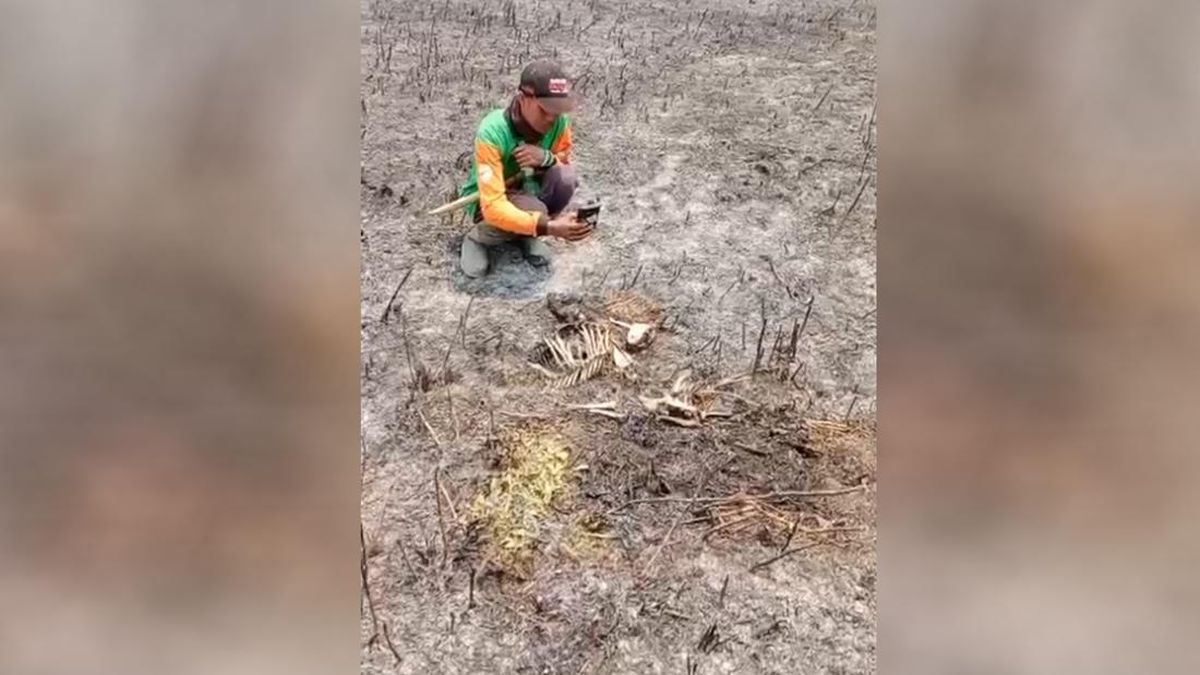
Forest and land fires (karhutla) in the Bromo Tengger Semeru National Park (TNBTS) area, Lumajang Regency, East Java, are not only destroying vegetation but also impacting local fauna.
Officers discovered a deer that had died from burns within the affected area. Additionally, animal skulls were found in the burnt zones.
“We have documented three instances: dead wildlife and animal skulls,” said Bambang Suriyante, Head of Administration at the TNBTS Grand Office, on Tuesday (1/9).
In the affected areas, officers also discovered tracks of a leopard (Panthera pardus melas). Suriyono noted that these tracks serve as an important indicator that the protected species likely managed to escape the raging fire.
The tracks suggest that the animal is still alive and has migrated out of the burnt area in search of a safer habitat.
“We also found tracks of a living leopard, which likely indicates it has migrated,” explained Bambang.
In addition to the leopard, several other animals are believed to have moved to unburnt forest areas to save themselves. Species observed migrating include wild boars and various types of birds.
“Birds and others are also migrating,” Bambang concluded.
Currently, fire hotspots are located in four areas, including the Ayek-Ayek and Kalimati regions. From a distance, plumes of smoke from the flames can still be seen rising high above the TNBTS area.
Joint task forces continue their efforts to extinguish the flames while monitoring the migration of wildlife to safer locations.
The Head of the Lumajang Regency Disaster Management Agency (BPBD), Isnugroho, explained that the forest fires have not yet been fully extinguished due to several field challenges.
A primary obstacle is the dry vegetation caused by the dry season, which allows the fire to spread rapidly through the surrounding forest.
“The firefighting efforts are hindered by the abundance of dry vegetation due to the dry season,” said Isnugroho on Monday.
In addition to the dry vegetation, officers are facing steep and rugged terrain. The significant distance to water sources is also complicating the firefighting process.