
Deepal S05 REEV: Bridging the Gap Between EVs and Petrol Cars
The Indonesian automotive market is poised to enter a new phase. Following the popularity of pure electric vehicles (EVs) and hybrids, several brands are now preparing Range Extended Electric Vehicle (REEV) technology, including Changan Automobile.
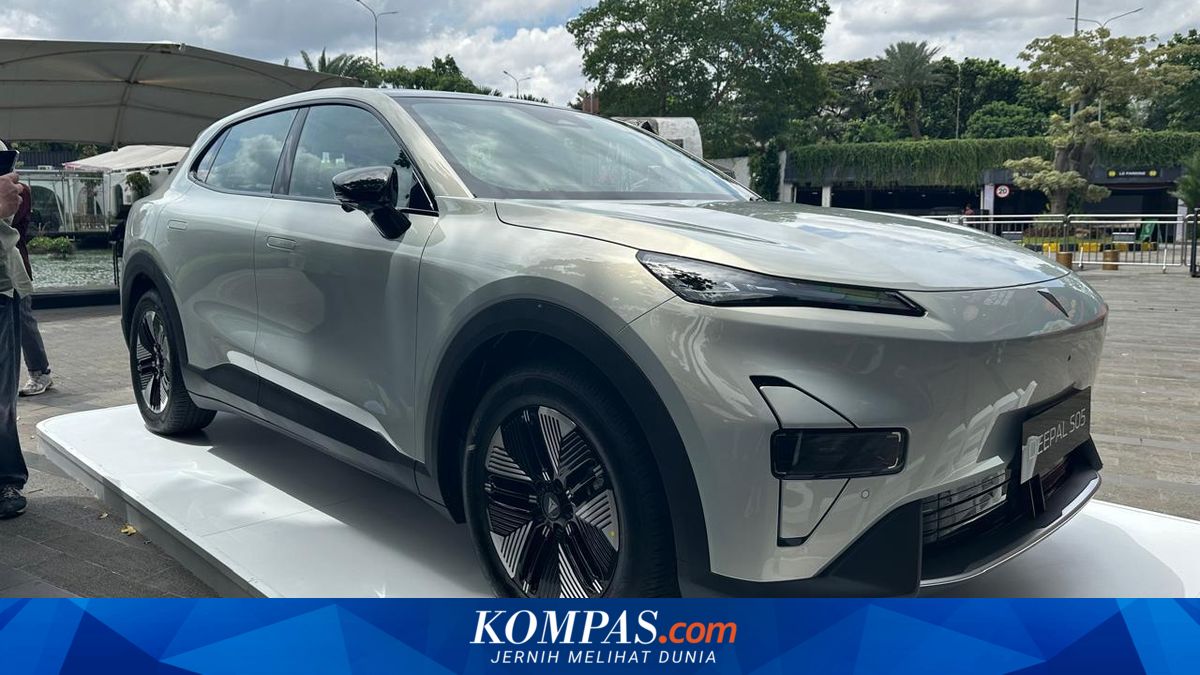
The Chinese manufacturer is gearing up the Deepal S05 REEV for the Indonesian market. This electrified SUV is projected to serve as a new alternative for consumers seeking the driving experience of an electric car but not yet fully confident in switching to pure EVs.
Regarding Changan Indonesia’s business strategy, the Deepal S05 REEV is being prepared for the Indonesian market and is expected to be ready for sale once documentation and homologation processes are complete.
Lately, REEV technology has gained popularity in China’s automotive industry. This system is seen as a “middle path” between pure electric cars and conventional hybrids.
Conceptually, REEV vehicles are fully driven by electric motors. However, unlike pure EVs, these cars still have a petrol engine that functions as a generator to recharge the battery when the electric capacity runs low.
Unlike standard hybrids where the petrol engine also drives the wheels, in REEV systems, the engine only generates electricity.
“This technology is deemed suitable for the Indonesian market, which still faces challenges such as uneven charging infrastructure, consumer concerns about range, and the ongoing transition from petrol cars to EVs,” explained CEO of Changan Indonesia, Setiawan Surya, in a recent statement.
In their explanation, Changan noted that REEV technology could be a solution for users outside major cities who lack access to many public electric vehicle charging stations (SPKLU).
Since the wheels are entirely driven by electric motors, the REEV driving character remains similar to EVs, with instant acceleration, a quiet cabin, and responsive power.
However, when the battery starts to deplete or during long journeys, the petrol engine automatically activates as a generator to supply additional electricity.
This means users do not need to worry excessively about finding charging stations on long trips.
The technology also ensures efficient fuel consumption because the petrol engine does not operate continuously like in conventional cars.
“The goal is still fuel efficiency,” Setiawan added, highlighting one of the points discussed in Changan Indonesia’s product strategy.
Globally, the Deepal S05 is presented as a modern SUV with a futuristic design typical of Chinese electrified vehicles.
The car is expected to compete in the mid-range electrified SUV segment and could become a new rival to Japanese hybrid SUVs, Chinese PHEVs, and pure EVs in the Rp 400-600 million class.
Changan acknowledges that the electrified vehicle market in Indonesia is highly price-sensitive. Even a difference of tens of millions of rupiah can influence consumer decisions.
Therefore, negotiations for the Deepal S05 REEV’s price are ongoing to ensure competitiveness upon official launch.
With the arrival of the Deepal S05 REEV, the Indonesian automotive market is set to become even more dynamic. REEV technology could serve as a transitional solution for consumers shifting to electrified vehicles without fully abandoning the security of a petrol engine.