
Deep Wells Become Farmers' Mainstay Against Drought During Dry Season
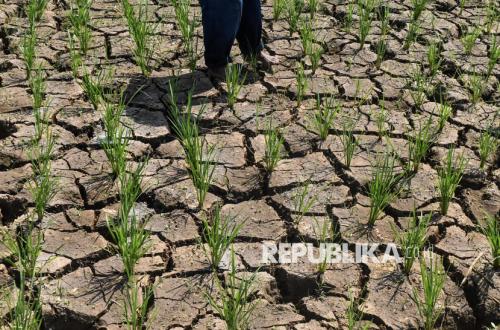
The General Chairman of the National Farmers and Fishermen Contact (KTNA), Mohammad Yadi Sofyan Noor, stated that farmers are utilising deep wells as an alternative water source when supplies become limited during the dry season. This measure is taken to maintain water availability so that agricultural cultivation and production activities can continue. Before resorting to deep wells, farmers initially rely on water pumps if water sources are still available. If water sources completely dry up, water needs are met using tanker trucks according to field requirements.
"To face the impact of drought, KTNA is accustomed to adapting. If there is still a water source, we use the available water pump machines. For limited water sources, we use deep wells. If the water is truly dry, we usually use tanker trucks for sufficient water needs," Sofyan told Republika. He explained that several regions have begun to be affected by drought. In West Java, this condition has started in Indramayu and Subang regencies. Meanwhile, in Central Java, Purworejo Regency is relatively safe because it is supported by technical irrigation systems and available water sources. In South Kalimantan, the affected areas include Banjar, Tanah Laut, and Tanah Bumbu regencies.
The Ministry of Agriculture previously outlined various mitigation strategies prepared by the government to face the potential drought due to the dry season and the threat of El Niño. Deputy Minister of Agriculture Sudaryono said this strategy is implemented to maintain national food production. According to him, mitigation is carried out through the Early Warning System (Si-PERDITAN), strengthening water infrastructure, pumping systems, rehabilitating irrigation networks, providing drought-resistant seeds, and intensive coordination with ministries, agencies, and local governments.
"Data shows that our mitigation efforts are running effectively. The area of crop failure due to El Niño up to July 2026 is around 12,000 hectares, far lower than in 2015 which reached around 217,000 hectares. This means the government’s preparedness is increasingly strong and we can still maintain national food production," Sudaryono said during a working meeting with Commission IV of the Indonesian House of Representatives in Jakarta. To strengthen readiness for the dry season, the Ministry of Agriculture is also accelerating the provision of agricultural machinery, such as water pumps, tractors, rice transplanters, and various other supporting facilities so that agricultural land productivity remains optimal in various regions. Sudaryono stated that these mitigation measures are aimed at reducing the risk of crop failure while maintaining land productivity amidst the threat of climate change. The government will continue to strengthen preparedness so that national food security is maintained and the food self-sufficiency target can be achieved.
Previously, the Meteorology, Climatology, and Geophysics Agency (BMKG) stated that weather modification operations could not yet be carried out to address the drought in several regions of Indonesia. This is because the effectiveness of the operations depends on the availability of rain clouds that can be seeded.