
Deep Learning: Will It Change When the Minister Changes?
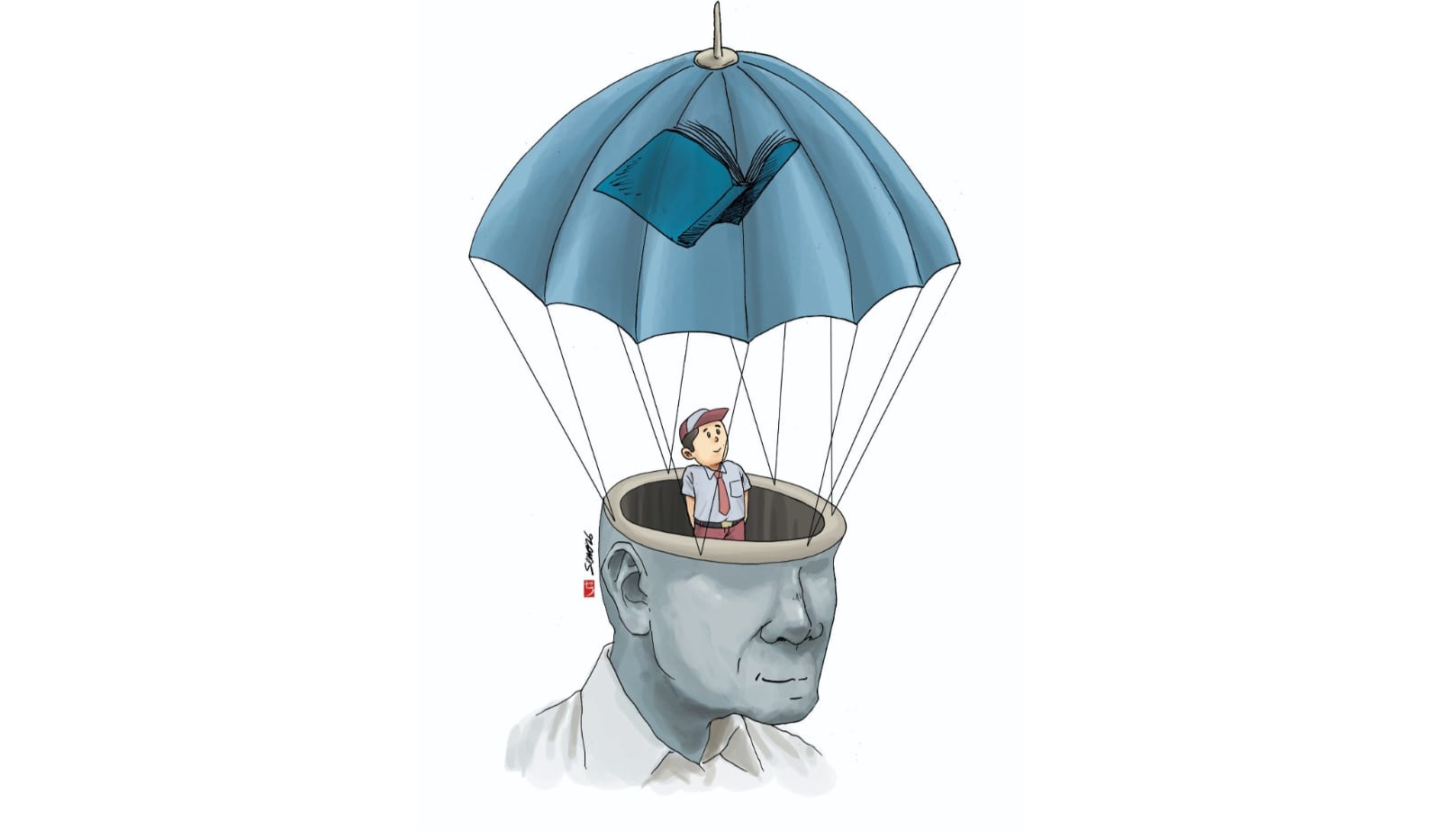
Every time there is a change of minister, Indonesian education almost always faces the same question: what will change? A new curriculum? A new learning approach? New terminology? This kind of policy shift is not a small matter. Schools must adjust documents, teachers attend orientation sessions, books change, and the public must learn to understand new terms once again. When the Ministry of Primary and Secondary Education introduced deep learning as a pedagogical approach, the more important question was not whether the approach is good. The more strategic question is: will deep learning survive when the government and minister change? The answer must not depend on the name. What must be preserved is the essence of the learning. Do not immortalise the label; immortalise the principle.
In several developed countries’ education systems, the term deep learning is indeed recognised and used. Australia, for example, in its curriculum documents pays attention to deep learning, evidence-based pedagogy, the development of strong knowledge, systematic sequencing of learning, and students’ ability to use and transfer knowledge. However, Australia does not make ‘deep learning’ the sole official name for a national pedagogical approach. Some schools and school networks in Australia do explicitly use deep learning or new pedagogies for deep learning. Yet, at the national system level, the emphasis is on the quality of learning and its pedagogical practices, not the obligation to use one particular label. The important lesson is simple: learning can be deep without always having to be named deep learning.
Indonesia actually has the opportunity to learn from that lesson. We may have an official nomenclature for the deep learning approach because a national policy does require a shared language. However, the name must not become the goal. If one day a new minister replaces the term ‘deep learning’ with another term, but still maintains learning that is conscious, meaningful, and joyful, enabling students to understand, apply, and reflect on knowledge, does that mean deep learning has disappeared? Certainly not. Conversely, if the name ‘deep learning’ is retained in documents, but classroom practice is still dominated by rote memorisation, chasing material coverage, drill exercises, and exam preparation, is the learning truly deep? Also no.
The issue is policy continuity. Education policy should not become the policy of a minister. We need a national curriculum that transcends ministerial tenures. The learning approach should also not be positioned as the ‘property’ of a minister or one administration period. Deep learning must be placed as part of the evolution of national educational thought, not as an administrative project of the ministry. Its essence lies in the question: how do schools make students truly learn? Students need to understand, not merely remember. They need to be able to apply knowledge, not just answer questions about knowledge. They need to connect what is learned to real life, transfer it to new situations, and reflect on their learning process. That is what must be passed on from one administration to the next.
However, saying that labels are unimportant does not mean the government does not need a framework. Quite the opposite. A framework is necessary so that the idea does not stop at being a slogan. In the Ministry of Primary and Secondary Education’s policy, deep learning has been formulated with several interrelated components: pedagogical practices; learning experiences through understanding, applying, and reflecting; the principles of conscious, meaningful, and joyful learning; and orientation towards the eight dimensions of the graduate profile. This kind of framework is important to provide a shared language for teachers, principals, supervisors, curriculum developers, teacher training institutions, and policymakers. However, the framework should not turn into a new administrative format. The greatest danger arises if teachers start asking: ‘Is my lesson plan already deep learning? Does my method follow the deep learning syntax? Does every lesson have to be a project?’ If these questions become the focus, we risk repeating an old pattern: a good educational idea turns into administrative compliance.
Deep learning does not have one specific method. Teachers can use direct instruction, discussion, experiments, extensive reading, problem-solving, project-based learning, collaboration, structured exercises, or various other strategies. What matters is not the name of the method, but the depth of the learning experience it produces. A student who reads a text seriously, understands the ideas, connects them to experience, uses them to solve a problem, and then reflects on their understanding can experience deep learning. No complicated project is necessary. The success of deep learning should not primarily be measured by how many schools put the term in their documents. The more important measure is the change that occurs in the classroom. Are teachers’ questions increasingly encouraging reasoning? Are students increasingly able to explain reasons, not just give answers? Can knowledge from one subject be used in another context? Are students able to apply knowledge to real-life problems?