
Deep Blue Aerospace completes long-duration engine test for reusable rocket
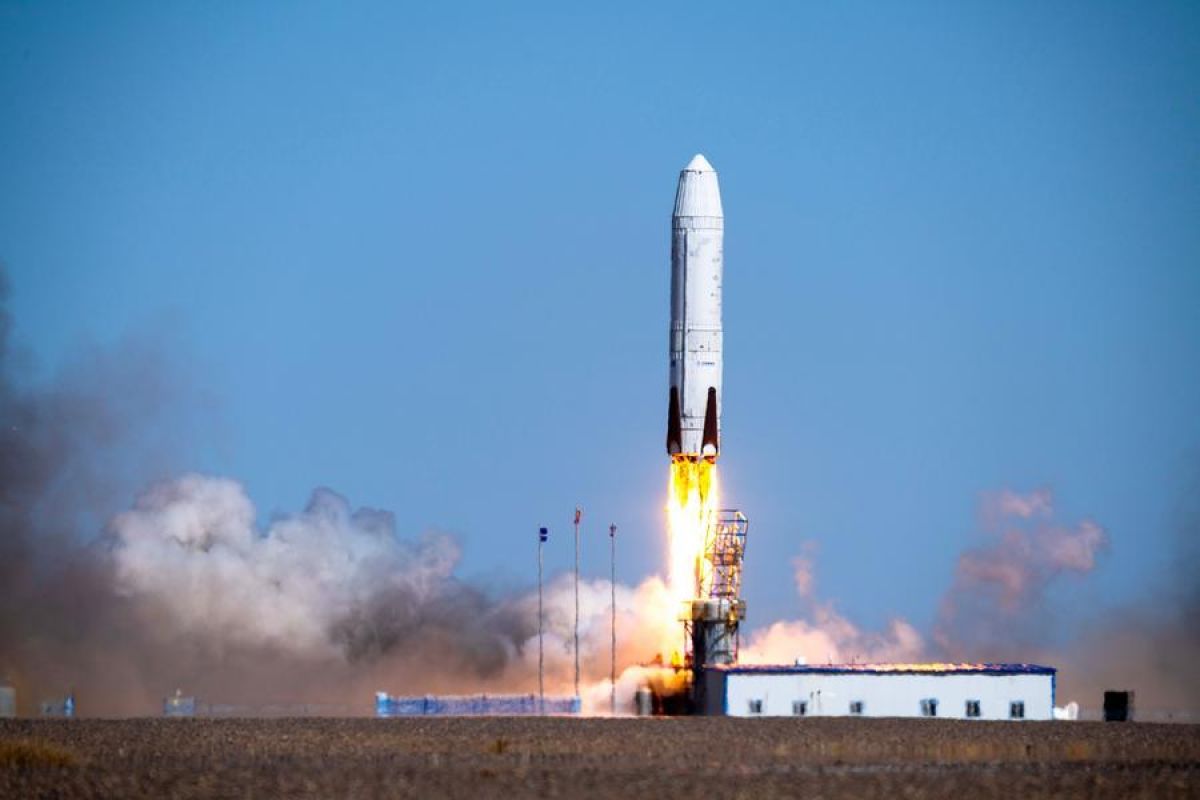
The reusable commercial launch vehicle sector in China continues to make steady progress, with a company announcing on Friday (21/8) that it has completed a long-duration engine ignition test for a large recoverable carrier rocket.
Rocket reusability can significantly reduce launch costs and increase launch frequency, making it an important factor in achieving large-scale and routine access to space.
Deep Blue Aerospace, a commercial space startup based in Wuxi, Jiangsu Province, eastern China, said it recently completed a 100-second static fire test of the Thunder-RS engine, a 130-tonne-class liquid oxygen and kerosene engine designed for the company’s large reusable rocket, Nebula-2.
The ignition test achieved a thrust of 1,297.5 kilonewtons, or approximately 132.3 tonnes. The company said several short-duration ignition tests had previously been conducted to evaluate engine performance, and no anomalies were found.
The company said the recent 100-second test marked the first time the engine exceeded its steady-state duration threshold, serving as a comprehensive verification of its performance.
China launched a reusable rocket, Zhuque-3, on Wednesday (19/8) morning local time and successfully carried out the first ground recovery of the rocket’s first stage, marking China’s first successful ground recovery of a rocket. This mission followed the successful recovery of the Long March-10B first stage using a net at sea on 10 July.
More Chinese reusable rocket models are scheduled to undergo testing this year.