
Dedication of Landis Officers in Safeguarding the Worship Rights of Elderly Pilgrims
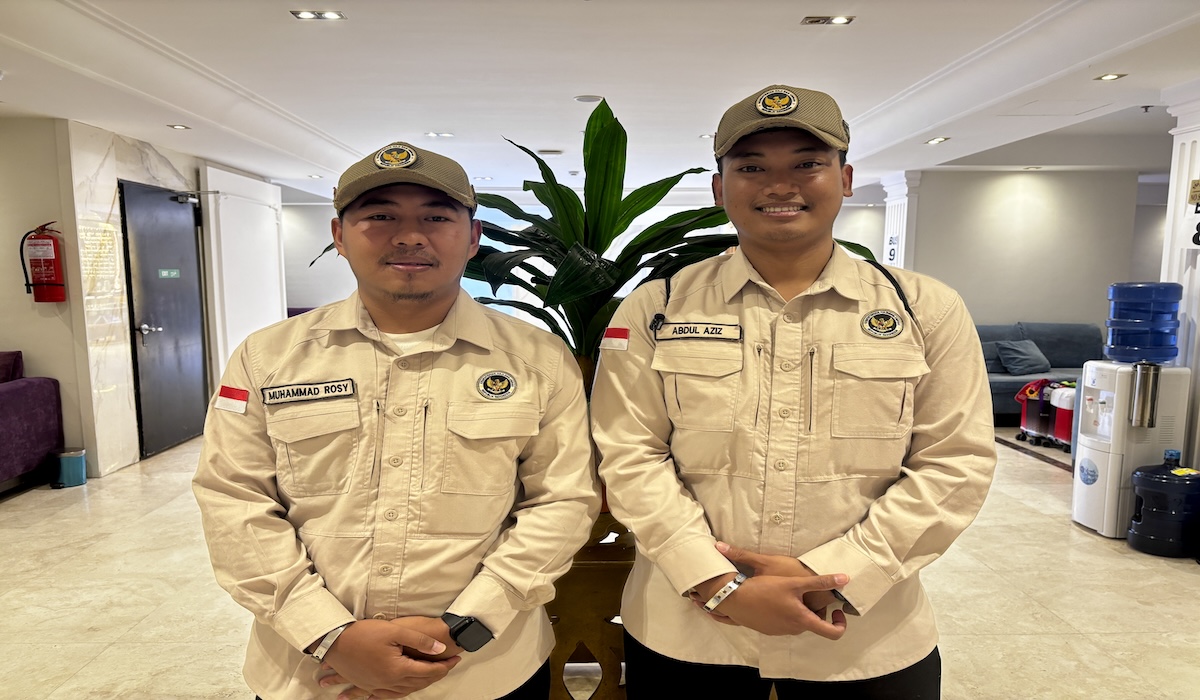
Serving Indonesian Hajj pilgrims is a profound test of sincerity and humanitarian devotion. Over nearly two months of duty in the Mecca Working Area, the Elderly and Disability Services Team (Landis) has proven its dedication, meticulously caring for and accompanying thousands of elderly pilgrims so they can perform the fifth pillar of Islam flawlessly.
Two Landis officers from Sector 5, Abdul Aziz and Muhammad Rosi, recounted the ups and downs of their service. Sector 5 in Mecca encompasses 18 hotels with a total of around 3,800 elderly pilgrims. Of these, approximately 800 require intensive escorting, from the mandatory umrah to the peak of the Hajj.
“We focus our services on hotel visitations, routine health checks, organising elderly exercise sessions, and escorting them for the mandatory umrah,” Abdul Aziz explained when met by the Hajj Media Center on Wednesday (17/6).
To preserve the stamina of elderly pilgrims, the team grants a full day of rest after arrival before scheduling their trip to the Grand Mosque. This policy differs from that for healthy pilgrims, who typically depart after just six hours of rest.
The service of escorting pilgrims to the mandatory umrah often becomes the most touching moment. Officers accompany pilgrims from their hotels, help them board buses, and stay with them until they arrive at the Syib Amir Terminal. At the terminal, officers coordinate with the Special Sector to order wheelchairs and ensure the pilgrims, along with their flight group companions, can worship safely.
“There are many emotional moments at the terminal. We calm confused pilgrims and guide them from the heart. When they realise they can see the Kaaba and complete their umrah, the feeling is one of immense relief. Many of them cry with emotion and thank the Landis team,” Abdul Aziz said.
The team’s duties extend beyond fulfilling worship requirements. At the hotels where pilgrims stay, the care provided often touches deeply personal realms. When dealing with elderly pilgrims travelling independently without family companions, Rosi and Aziz sincerely step in to replace the role of children or relatives back home.
“We conduct visitations and find pilgrims who genuinely need personal assistance. From feeding them, changing adult diapers, bathing them, to cleaning them in the bathroom. There are also non-elderly pilgrims who have suffered strokes and routinely call us via mobile phone whenever they need to use the toilet,” Muhammad Rosi recalled.
Performing such personal tasks as bathing someone you have just met is certainly not easy. Initially, some pilgrims were reluctant and embarrassed because they had only just met the officers. However, through a persuasive approach and sincerity, the awkwardness faded and was replaced by trust.
“Over time, they opened up. While bathing them, we would chat about their families back home. Afterwards, they would always ask for our help again because they didn’t know who else to turn to besides the officers,” Aziz added.
The Challenge of Dementia
The team’s ultimate effort was tested during the Armuzna phase (Arafah, Muzdalifah, and Mina) through the Safari Wukuf programme for the elderly. Sector 5 included 38 elderly pilgrims in a special transit hotel. Over a period of five to seven days, officers maintained a constant vigil with a patrol system every 15 minutes to ensure all pilgrims’ conditions were monitored.
Rosi revealed that officers’ sleep during this critical phase was limited to just one or two hours per day. The greatest challenge arose when caring for pilgrims exhibiting active dementia symptoms with unpredictable behaviour.
“At night they couldn’t sleep and would suddenly leave their room wearing only shorts, saying they wanted to go home to their village,” Rosi detailed.
Beyond physical care, the officers also held full responsibility for managing the pilgrims’ health. To ensure this, the Landis team coordinated with the flight medical teams to screen medications. All pilgrims’ medicines were specially labelled according to consumption times—morning, afternoon, and evening. Officers then conducted regular visitations to ensure pilgrims took their medication on time.
Now, as the Hajj operational period draws to a close and pilgrims prepare to return to Indonesia, an atmosphere of emotion fills the hotel rooms in Sector 5. The impending separation brings tears from the elderly pilgrims, who feel they have been embraced and cared for like biological family by the officers.
“All the elderly safari wukuf pilgrims expressed their deepest gratitude because they did not feel alone in the Holy Land. We simply wanted to ensure their rights to worship were properly fulfilled, their Hajj pillars were valid, and they could return home as mabrur and healthy pilgrims,” Aziz said.
Source: jawawa.id (https://jawawa.id/newsitem/dedication-of-landis-officers-in-safeguarding-the-worship-rights-of-elderly-pilgrims-1781787029)
Originally published by Media Indonesia (https://mediaindonesia.com/humaniora/901857/dedikasi-petugas-landis-menjaga-hak-ibadah-jemaah-lansia), translated from Indonesian