
Decoding what was said and achieved - or not - over key issues at Trump-Xi summit
analysis East Asia
Decoding what was said and achieved - or not - over key issues at Trump-Xi summit
Choreographed diplomacy, cordial optics and symbolic gestures defined the high-stakes Sino-US summit in Beijing, but whether these translate to concrete and lasting outcomes remains uncertain, say analysts.
BEIJING/SHENZHEN: A 15-second handshake, “fantastic trade deals” and upbeat promises of more stable relations between the world’s two biggest superpowers.
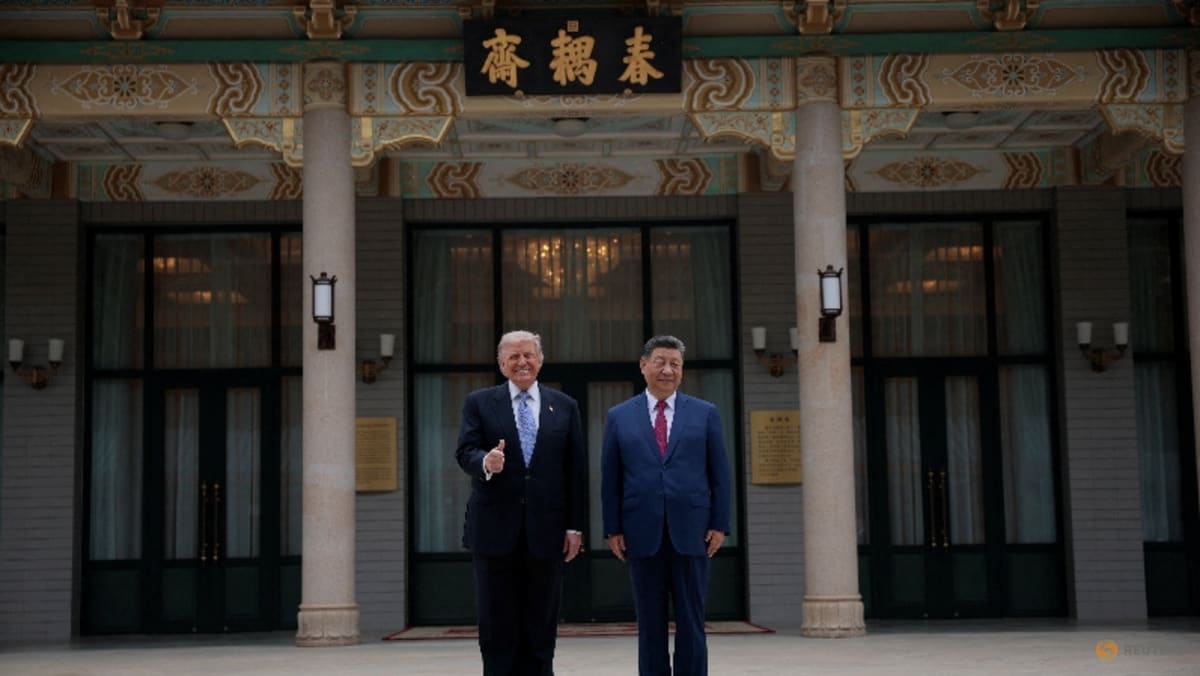
The optics of this week’s summit between US President Donald Trump and Chinese leader Xi Jinping were visibly warm and reassuring.
But beneath the carefully choreographed diplomacy and cultural symbolism, observers say major issues remain over trade, Taiwan, global security and the AI chip war - with no signs of a breakthrough on selling Nvidia’s advanced H200 chips to China, despite CEO Jensen Huang’s dramatic last-minute addition to the trip.
The warmer tone and symbolic gestures may help ease market anxieties but analysts say the summit is more likely to produce temporary stabilisation than any substantive reset in ties.
There were “not too many surprises based on the known substance from the summit”, said William Yang, a senior analyst for Northeast Asia at the International Crisis Group, noting that careful preparation by both sides helped keep the meeting on a relatively smooth track.
Here’s what was said and achieved - or not - at the “historic” Trump-Xi summit.
BILATERAL PAGEANTRY
The summit was filled with diplomatic pageantry - carefully chosen venues, choreographed visits and symbolic imagery throughout Trump’s Beijing visit.
Xi described the visit as “historic” and “symbolic” during a small group meeting at Zhongnanhai, while Trump called it a “very successful” and “unforgettable” visit - “watched by the world”.
The Great Hall of the People hosted the formal talks and state banquet, while the Temple of Heaven - where Chinese emperors once prayed for good harvests - carries historical associations with harmony and political order.
More notably, Xi also hosted Trump at Zhongnanhai, the heavily guarded leadership compound associated with China’s top political leadership and rarely opened to foreign guests.
The summit also appeared to put a more positive gloss on US-China ties, with both sides trying to project stability after months of turbulence, analysts said.
Yang told CNA that both leaders used the summit to showcase a shared desire to find common ground and manage differences, especially against the backdrop of the ongoing Middle East conflict and wider geopolitical tensions.
Trump and Xi both emphasised cooperation and stability in their opening remarks, though Trump leaned more heavily into personal praise, he added.
“Based on the readouts from both sides, it is also evident that both leaders tried to emphasise areas where mutually beneficial cooperation is possible,” Yang said, pointing to trade and economic ties.
But at the same time, they also avoided direct confrontation over more contentious issues such as Taiwan and Iran, Yang added.
Chong Ja Ian, an associate professor at the National University of Singapore and non-resident scholar at Carnegie China, said the summit created “a tone of positivity” in bilateral ties - while also allowing Beijing to project strength.
Trump’s praise of Xi and China went largely unreciprocated, noted Chong - while Xi’s reference to the Thucydides Trap gave Beijing a broader historical frame for the relationship.
In official Chinese readouts, Xi and Trump agreed to build a relationship based on “constructive strategic stability” - a new vision for bilateral ties over the next three years and beyond.
The formulation should be centred on cooperation as the mainstay, competition kept within bounds, differences kept controllable and “lasting stability” where peace can be expected, said the Chinese supremo.
The new formulation fits into Beijing’s effort to define the next stage of ties, analysts said.
Su Yue, chief China economist at the Economist Intelligence Unit (EIU), said Beijing appeared to use the summit not just to stabilise ties - but to also introduce a broader new framework for managing relations with the US.
“This time, Xi has put forward several new ideas … while also emphasising the cooperative dimensions of the bilateral relationship within the new framework both sides hope to develop over the next three years,” Su said.
“In some ways, this reflects a shift from China’s previous strategy of mainly reacting to US policies.”
She added that Beijing maintains “realistic expectations” that friction will continue even under the best circumstances.
Listen:
Yang said the framework suggests Beijing wants competition to remain limited and differences managed, while preserving enough stability to strengthen strategic sectors such as artificial intelligence and energy security.
But Chong cautioned against reading the phrase as a fundamental shift.
“Stability means no change essentially,” he said, adding that the language suggests no major change in US-China ties, only the placing of guardrails.
IRAN WAR
The Iran war had been widely expected to be a major talking point going into the Trump-Xi summit.
For Washington, the issue was whether Beijing could use its ties with Tehran to help ease the crisis, analysts said. China remains a major buyer of Iranian oil and has maintained close political and economic links with Iran, giving it channels of influence that the US lacks.
The White House readout following bilateral talks on Thursday said that both leaders agreed the Strait of Hormuz should remain open to support the free flow of energy and that Iran should not acquire nuclear weapons. China’s readout said only that the two leaders exchanged views on the Middle East situation.
Yang from the International Crisis Group said the gap between the two readouts suggested that the summit did not produce meaningful consensus on Iran.
While Beijing may have acknowledged Washington’s position and