
Decoding the Meaning Behind Jokowi's Thumbs-Up Gesture After Prabowo's State Address
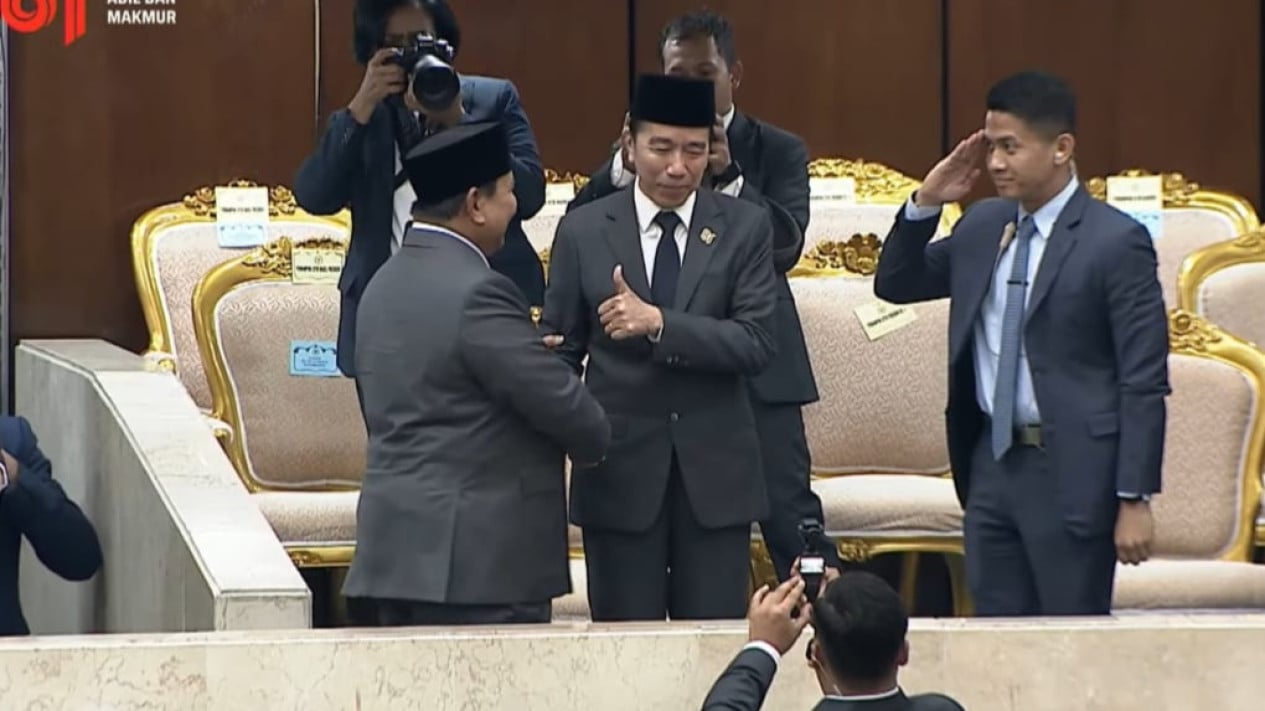
A simple gesture from Indonesia’s seventh President, Joko Widodo (Jokowi), after President Prabowo Subianto delivered his speech at the MPR Annual Session has drawn attention. Jokowi was seen giving Prabowo a thumbs-up following the state address. The moment appeared simple, but hand gestures like the thumbs-up are often used in nonverbal communication to convey agreement, support, or that something is considered positive. In modern communication culture, raising the thumb is one of the most easily recognised gestures. Cambridge Dictionary explains that the thumbs-up gesture can be used to show that a person agrees with something or thinks something is good. In this context, Jokowi’s thumbs-up can be read as a positive nonverbal response. However, the gesture does not inherently prove the content of Jokowi’s thoughts or his political stance on the entirety of the speech. Research in cross-cultural communication, including studies published in the Proceedings of the National Academy of Sciences, has found that expressions and gestures can carry different meanings depending on the culture and context. Therefore, when interpreting the gestures of public figures, one should avoid drawing immediate political conclusions from a single hand movement. In everyday conversation, a thumbs-up often conveys a short message such as ‘good’, ‘I agree’, ‘okay’, or ‘go ahead’. Oxford Learner’s Dictionaries similarly defines the thumbs-up as a gesture used to show that you approve of something or that something is good. The gesture can thus be understood as a form of brief communication that requires no words. The interaction is particularly noteworthy given the long political history between Jokowi and Prabowo, who were once political rivals before becoming allies within the government.