
Declining Water Quality Demands Site-Specific Treatment Systems
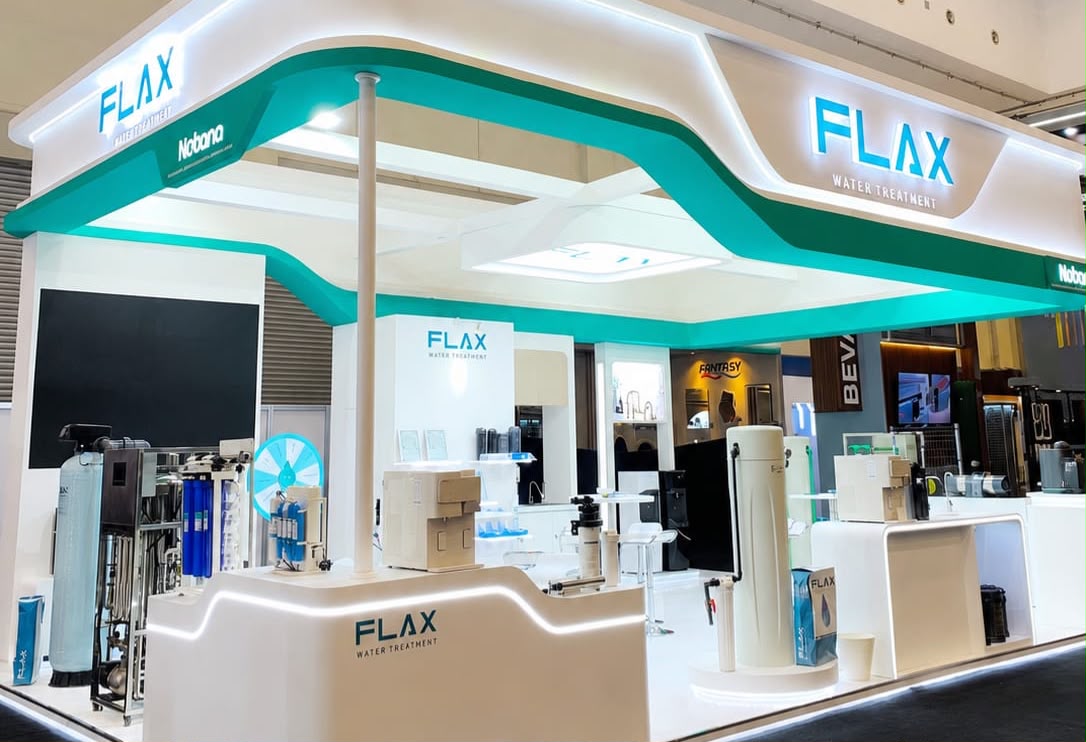
The quality of clean water sources in various regions, whether from groundwater or piped networks, continues to decline. High levels of pollution triggered by pipe leaks, flooding, and heavy metal and microbiological contamination demand more comprehensive handling than the use of conventional water filters. Responding to these conditions, at the Indonesia Building Technology (IBT) 2026 event at ICE BSD, Tangerang, held on Saturday (11/7), a Korean water treatment solutions provider, FLAX, introduced an integrated filtration system. The technology offered focuses on two main systems: Point of Entry (POE), which filters water when it first enters a building, and Point of Use (POU), which processes water further to a potable stage.
FLAX Sales Manager Willy Chandra emphasised that water treatment cannot be generalised. The biggest challenge in the field, particularly on Java Island, is the high content of iron, manganese, silica, and microbiological contamination due to water sources being too close to septic tank seepage.
“We do not just sell water filters, but a purification system designed according to each consumer’s needs. The ultimate goal is to help people get better water, because water quality greatly determines the quality of life,” said Willy.
To ensure the system works effectively, water treatment must always begin with a site survey and laboratory testing. “Every water source has different characteristics. Therefore, we always start with a site survey and water quality testing before recommending the most appropriate system. Not all water can be treated with the same machine,” he explained.
In terms of specifications, the filtration devices used employ industrial-grade components, are halal-certified, and meet the eligibility standards of the United States Food and Drug Administration (FDA). At this year’s exhibition, the highlighted innovations included large-capacity units for institutional scale, as well as portable filtration units designed for emergency conditions.
“We want to provide flexible solutions, ranging from residential homes, apartments, hotels, resorts, cafes, to institutional needs. We even now have portable units that are easy to carry to locations that need clean water,” said Willy.
In the water treatment industry, technology and device specifications must go hand in hand with after-sales guarantees. “We want customers to have peace of mind. What they buy is not just the product, but also the after-sales service. Our technician team is ready to provide 24-hour support if problems occur,” he said.
The trend of public awareness regarding the importance of water health has a direct impact on the growth of this industry. Over six years of operating in Indonesia, FLAX’s services have reached nearly 20 major cities. Investment for this water treatment system ranges from IDR 10 million to over IDR 30 million, adjusted for capacity and the complexity of water problems, with device warranty support and periodic maintenance packages.
“We are optimistic that business growth this year can increase by 50% compared to the previous year. The trend of public awareness of the importance of water quality is also increasing,” he said.
Going forward, the adoption of filtration technology is expected to support the mitigation of the clean water crisis and improve public health. “We hope that what we do today can have a long-term impact. Cleaner water is not just about comfort, but also an investment in the health and quality of life of the Indonesian people,” he concluded.