
Declining Irrigation Function Poses Challenge for Forest Fire Mitigation and Food Security
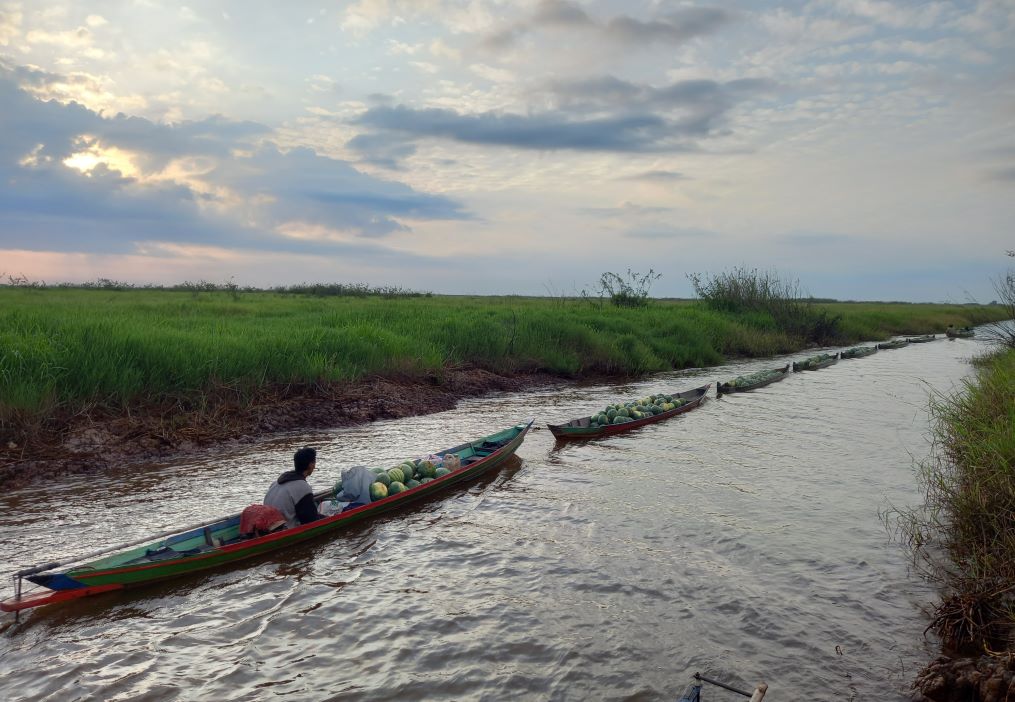
The condition of irrigation systems in South Kalimantan Province is continuing to decline in function, with some in a state of disrepair. The province’s Public Works and Spatial Planning (PUPR) Agency is strengthening mitigation measures against the threat of forest and land fires (karhutla) and ensuring water supply for the agricultural, fisheries, and raw water sectors.
This was stated by the Head of the Irrigation and Raw Water Section at the South Kalimantan PUPR Agency, Herry Ade Permana, on Thursday (9/7). “There are three types of irrigation according to authority: central, provincial, and district/city. The condition of some is quite concerning and experiencing functional decline due to limited maintenance budgets,” he said.
This situation presents a distinct challenge amidst the threat of forest and land fires and the needs of the agricultural, fisheries, and raw water sectors, which require a continuous water supply from irrigation channels. During the dry season, water discharge in reservoirs, weirs, and irrigation channels decreases. “Poorly maintained irrigation will certainly affect the smooth distribution or supply of water for various purposes,” said Herry.
There are seven surface irrigation areas and 34 swamp irrigation areas under the authority of the South Kalimantan province. However, budget constraints have caused some networks to experience functional decline, requiring immediate attention. “If we talk about food security, then this irrigation network must be a priority,” he stated.
Herry noted that only the Riam Kanan irrigation network is in good condition because it is continuously maintained. Even then, the last maintenance or cleaning of the irrigation channels was carried out five years ago. The rest of the irrigation channels in South Kalimantan are in poor condition.
Herry explained that the South Kalimantan PUPR Agency has also developed a concept for handling drought-prone areas based on a joint study with Brawijaya University. The study produced a handling pattern divided into several zones according to regional characteristics.
According to him, the experience of facing El Niño in 2023 serves as an important reference for improving preparedness. Various physical works have been carried out, ranging from the construction of water control facilities and repairs to irrigation channels, to the normalisation or deepening of channels, which is routinely conducted every year.
Furthermore, the PUPR Agency is collaborating with various stakeholders, including the forestry sector, to maintain the area around Syamsudin Noor Airport to ensure sufficient water availability. One step taken is opening certain sluice gates starting in May 2026 to maintain soil moisture and prevent the area from drying out.
Previously, Governor Muhidin had requested cross-sector preparedness in facing the threat of drought and forest and land fires due to El Niño. South Kalimantan is currently under an emergency alert status for forest and land fires.