
Decades-Old Bomb Rain Still Haunts Laotian Villagers
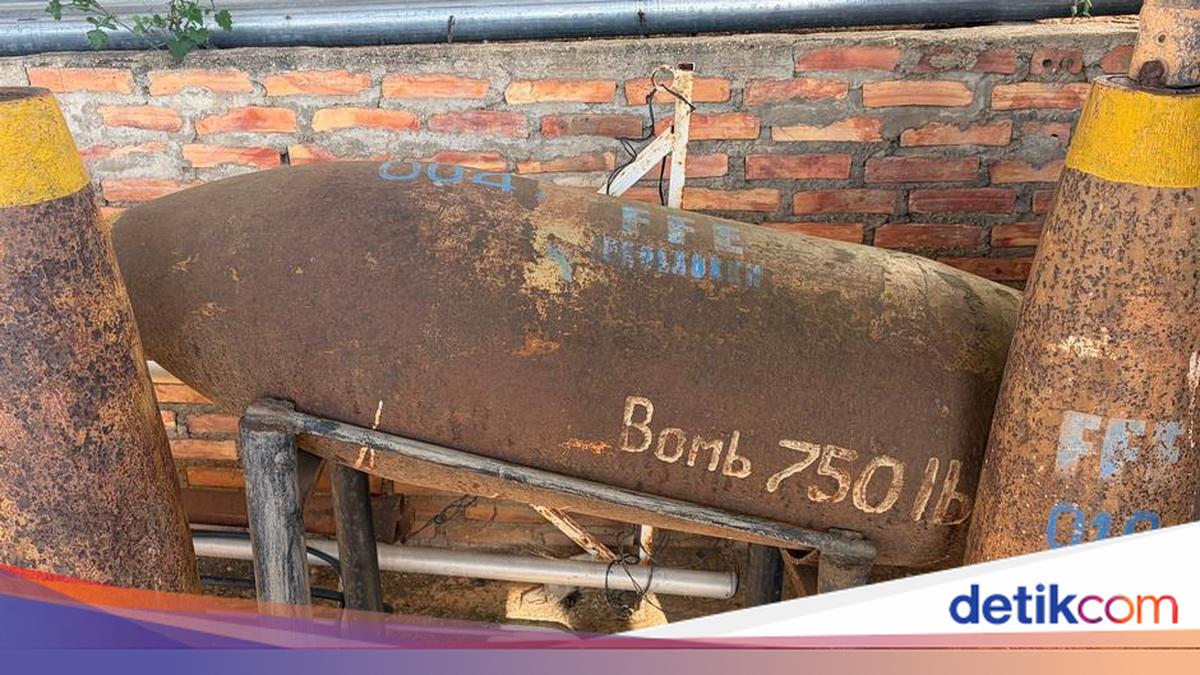
Thong Phet was an 18-year-old novice monk when a single machete strike in a field changed his life. Unknowingly, his blade hit a leftover war bomb, triggering an explosion. “A friend took me to the hospital. I remained conscious the whole time. They had to amputate my left arm below the elbow, and my right hand was also badly injured,” he told DW. Today, expert teams from the Lao National Programme for Unexploded Ordnance are systematically sweeping one of Thong Phet’s fields on the outskirts of Ban Napia village in northeastern Laos. The year 1973 was a terrifying time throughout Xiangkhouang Province, he said, caused by the war raging in Vietnam, about 100 kilometres to the east. Laos was not officially involved in the Vietnam War, which raged between communist rebels in the north and the United States in the south. However, the mountainous country was used as a logistics route by the rebel army to move weapons and supplies southwards. This was enough reason for the United States to launch a massive bombing campaign over Laos. The attacks also devastated Xiangkhouang Province, which was then a base for the Pathet Lao communist movement. More than 2 million tonnes of explosives were dropped by the US between 1964 and 1973, making Laos the most heavily bombed country in the world per capita. The ordnance used included incendiary munitions, rockets, and 907-kilogramme bombs. However, the most terrifying weapon for local residents is the cluster bomb. Designed to break apart in the air, cluster bombs release up to 600 mini-bombs, each smaller than a fist, capable of contaminating an area the size of several football pitches. An estimated 270 million of these submunitions, known locally as ‘bombies’, were dropped by the US over Laos, but 30 per cent failed to detonate. Many remain buried where they fell half a century ago and continue to threaten local residents. “I still remember clearly when the bombs were dropped,” Phet said. “I remember seeing the planes approaching and hiding in caves near here with my parents when I was a child.” Now Phet hopes the UXO clearance team can finally certify one of his fields as safe. The undulating fields are marked with strips of red tape fluttering in the wind. Two women wearing Lao UXO field uniforms carry detectors over a seemingly ordinary stretch of grass, stopping when a signal is detected. They mark the spot and move on. Behind them, another team member follows with a smaller metal detector to pinpoint the target’s location. With extreme care, he digs around the site until the source of the signal can be identified. Sometimes it is just a piece of metal scrap. Sometimes it is the remains of a long-exploded and harmless weapon. But often, what is hidden there is a ‘bombie’. Each find is carefully barricaded with sandbags, a small explosive charge, and a warning sign bearing a skull. At the end of each working day, a warning sounds over a loudspeaker, echoing across the valley and alerting local residents to what is about to happen. A loud explosion is heard, and three plumes of smoke simultaneously billow into the air from the day’s finds. In just one week, the seven-member team neutralised 19 bombies and five large-calibre bullets found on a 10,594-square-metre plot of farmland. Yet the area still to be cleared remains vast. The village covers more than 23,000 hectares of land, with previous search efforts having found five large bombs and over 6,000 bombies. Continued efforts are clearly needed, as the village has lost five residents to unexploded ordnance. The risk also looms over the bomb disposal teams themselves, with two Lao UXO experts killed in an explosion in 2002. Once Phet’s field is declared safe, the team will move on to the next plot of land marked with red tape. “Unexploded ordnance is a major obstacle to development in Laos because it makes everything more expensive and slower, given that land must be surveyed and cleared to ensure there is no risk,” Martine Therer, the UNDP Resident Representative in Laos, told DW. Speaking at her office in Vientiane, Therer said Laos is one of the few countries in the world to adopt an 18th Sustainable Development Goal, ‘Lives Safe from Unexploded Ordnance’, which focuses on achieving measurable targets so that UXO no longer hinders human development and poverty alleviation efforts in rural areas. “If you look at the poverty map, it is clear that these areas largely overlap with areas of high UXO contamination,” Therer said. “It is clear that the number of casualties has decreased, but there is still fear in these communities. Farmers routinely risk their lives when ploughing rice paddies, digging, or clearing scrubland, in a country where more than 70 per cent of the rural population depends on agriculture and natural resources.” “UXO has a direct impact on efforts to generate income and reduce poverty,” Therer said, “because contaminated land could actually be used productively for agriculture, industrial and tourism development, and infrastructure construction.” In the 1980s, UXO casualties numbered in the thousands each year. Bomb disposal efforts and comprehensive education campaigns have since reduced the annual death toll significantly.